Artist page

Where to See Michelangelo

Michelangelo's works are concentrated in three cities. Florence holds the David at the Accademia, the Medici Tombs in San Lorenzo's New Sacristy, the Doni Tondo in the Uffizi, and early sculptures at the Bargello. Rome holds the Sistine Chapel ceiling and Last Judgment (Vatican Museums), the Pietà in St. Peter's Basilica, the Moses at San Pietro in Vincoli, and the architecture of St. Peter's dome. Milan holds the Rondanini Pietà at the Castello Sforzesco, still unfinished when he died in 1564.

Use this page to locate all major works, plan the visits that require advance booking, and move between cities without missing anything.

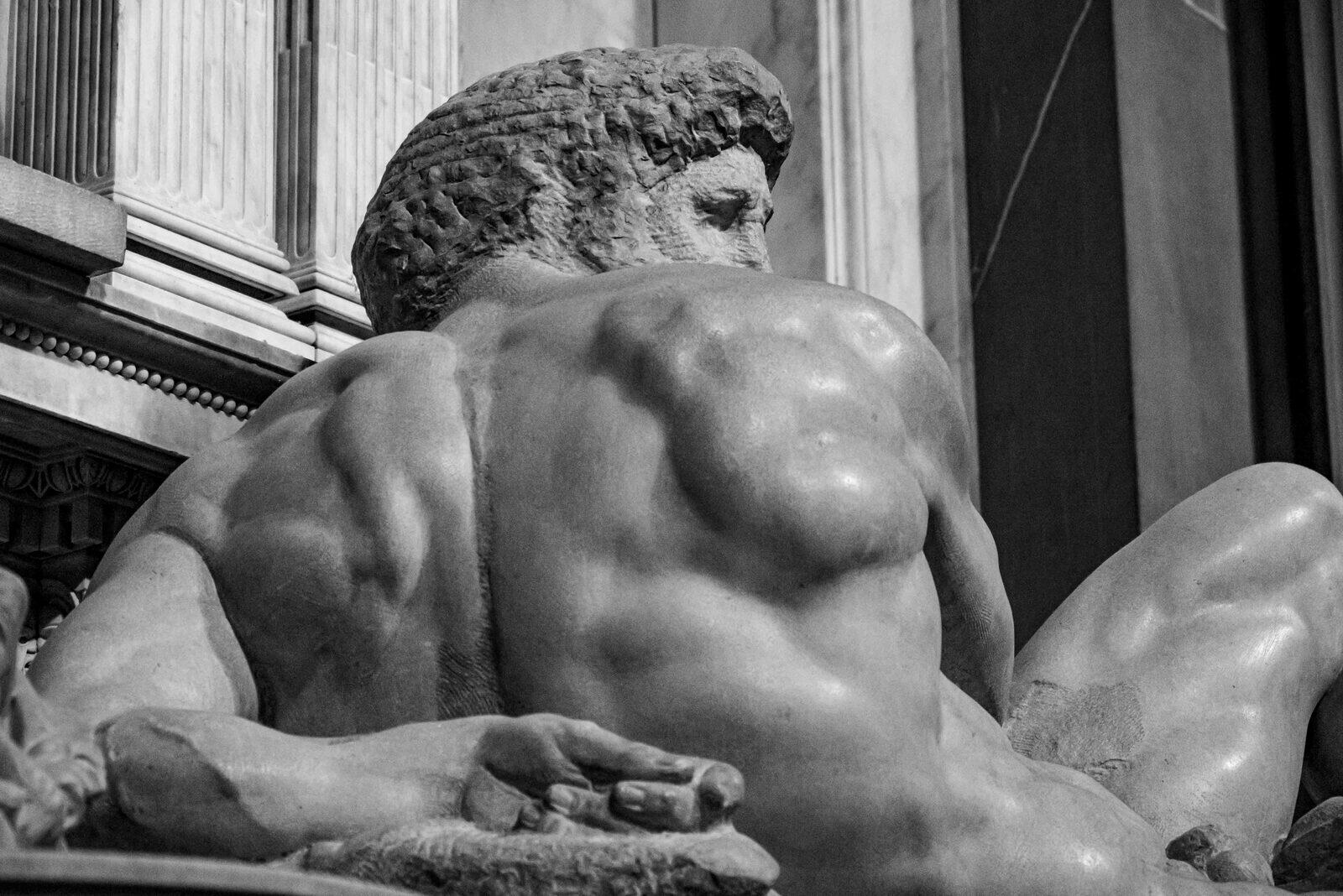
Michelangelo Buonarroti, Medici Chapel, New Sacristy, San Lorenzo, Florence

Explore Michelangelo on the map

Tap to activate map

What to book and what is free

Most priority Michelangelo sites require advance booking. A few major works are free to visit. Here is the breakdown by city.

  • Florence (must-book): Galleria dell'Accademia for the David (Tribune hall), Medici Chapels for the New Sacristy and Medici Tombs, Bargello for Bacchus, Brutus, and Tondo Pitti (ground floor), Uffizi for the Doni Tondo (Room 35). All four are within a 15-minute walk of each other.
  • Rome (must-book): Vatican Museums for the Sistine Chapel ceiling (1508 – 12) and Last Judgment (1536 – 41). Book 2 – 3 weeks ahead in peak season.
  • Rome (free): St. Peter's Basilica holds the Pietà (first chapel on the right, behind glass since 1972) and the dome. San Pietro in Vincoli holds the Moses (nave, free entry, open daily 8:00 – 12:30 and 15:30 – 19:00).
  • Milan: Castello Sforzesco for the Rondanini Pietà (Room 15, Sala degli Scarlioni). Open Tuesday to Sunday, 10:00 – 17:30.
  • Planning tip: San Pietro in Vincoli and the Vatican are on opposite sides of central Rome (about 30 minutes by taxi). Visit one in the morning and the other in the afternoon.

Michelangelo locations: museum by museum

ⓘ Opening hours and admission prices listed on this page are indicative and subject to change. Always verify current information on the official website of each venue before your visit.

Galleria dell'Accademia, Florence

Key work: David (1501 – 04) – Book at least 1 – 2 weeks ahead, earlier in summer

The David stands in the Tribune, a domed hall designed specifically for it after the sculpture was moved from Piazza della Signoria in 1873. The corridor leading to the Tribune holds four unfinished Prisoners (Slaves), carved for the tomb of Julius II and never completed, which show Michelangelo's working method: figures emerging from rough-cut marble. The museum also holds the St. Matthew (c. 1503 – 06), another unfinished piece originally intended for Florence Cathedral. Open Tuesday to Sunday, 8:15 – 18:50. Closed Mondays.

Book Galleria dell'Accademia ticketsGuided tour option

Medici Chapels (Cappelle Medicee), Florence

Key works: New Sacristy tombs with Dawn, Dusk, Day, Night (1520 – 34) – Book 1 week ahead

The New Sacristy is Michelangelo's most complete integration of architecture and sculpture. Two wall tombs face each other: Lorenzo de' Medici, Duke of Urbino (with Dawn and Dusk reclining below) and Giuliano de' Medici, Duke of Nemours (with Day and Night). The room also holds Michelangelo's unfinished Madonna and Child. Entrance is on Piazza di Madonna degli Aldobrandini, behind San Lorenzo. The Chapel of the Princes (the large octagonal hall with semi-precious stone inlay) is a separate space, not by Michelangelo. Open daily 8:15 – 18:00, closed on the first, third, and fifth Mondays and second and fourth Sundays of each month.

Book Medici Chapels ticketsGuided tour option

Museo Nazionale del Bargello, Florence

Key works: Bacchus (c. 1497), Brutus (c. 1538), Tondo Pitti (c. 1504 – 05) – Less crowded, book 2 – 3 days ahead

The Bargello holds Michelangelo's early sculptures on the ground floor. The Bacchus, carved when he was about 22, is his first large-scale free-standing work: a deliberately unstable, slightly drunken figure that was initially mistaken for an ancient Roman piece. The Brutus is one of his few portrait busts, left unfinished and completed by a pupil. The Tondo Pitti is a marble relief of the Madonna and Child. The Bargello is a 5-minute walk from the Uffizi and far less crowded. Open daily except on alternating Sundays and Mondays.

Book Bargello tickets

Galleria degli Uffizi, Florence

Key work: Doni Tondo (c. 1506 – 08), Room 35 – Book 1 – 2 weeks ahead

The Doni Tondo (Holy Family) is Michelangelo's only known finished panel painting. It hangs in Room 35, in its original carved and gilded frame. The muscular, twisting figures of Mary, Joseph, and the Christ child anticipate the Sistine Chapel ceiling by several years. The nude figures in the background remain debated, possibly representing the pre-Christian world. The painting is small (diameter 120 cm) and easy to walk past; look for it on the right wall of the room.

Book Uffizi ticketsGuided tour option

Vatican Museums and Sistine Chapel, Rome

Key works: Sistine Chapel ceiling (1508 – 12) and Last Judgment (1536 – 41) – Book 2 – 3 weeks ahead

The Sistine Chapel ceiling contains nine scenes from Genesis (including the Creation of Adam) and is reached at the end of the Vatican Museums route. The Last Judgment covers the entire altar wall, painted more than two decades after the ceiling. Without pre-booked tickets, expect queues of two hours or more. Early morning (8:00 opening) or Friday evening openings (when available) are the least crowded. The chapel is a no-photography zone, though this is inconsistently enforced. Budget at least 2 – 3 hours for the full Vatican Museums route before reaching the chapel.

Book Vatican Museums skip-the-line ticketsGuided tour with Sistine Chapel

St. Peter's Basilica, Rome

Key works: Pietà (c. 1498 – 99), dome design – Free entry, no booking needed

The Pietà is in the first chapel on the right as you enter, behind bulletproof glass (installed after the 1972 attack). Michelangelo carved it at age 23 or 24; it is the only work he ever signed (on the sash across Mary's chest). The dome, designed by Michelangelo from 1546 until his death, was completed after his plans by Giacomo della Porta. You can climb to the top (551 steps, or elevator plus 320 steps) for a separate fee. The basilica is free but has airport-style security screening; arrive early to avoid lines. Open daily 7:00 – 18:30 (19:00 April – September).

San Pietro in Vincoli, Rome

Key work: Moses (c. 1513 – 15) – Free entry

The Moses is the central figure of the tomb of Pope Julius II, originally planned as a much larger freestanding monument. The final version, completed over decades with assistants, occupies the right transept. The Moses is notable for its "horns," a traditional iconographic detail based on a Latin mistranslation of the Hebrew word for "rays of light." The church is a 5-minute uphill walk from the Cavour metro stop and 15 minutes on foot from the Colosseum. Open daily 8:00 – 12:30 and 15:30 – 19:00 (shorter hours October – March).

Castello Sforzesco, Milan

Key work: Rondanini Pietà (c. 1552 – 64) – Book online to skip the queue

The Rondanini Pietà is Michelangelo's last work, a group of Christ and Mary carved over more than a decade and still being reworked six days before his death in February 1564. It is displayed in the Sala degli Scarlioni (Room 15), in a dedicated installation designed by BBPR architects. The surface is raw, the anatomy deliberately dissolved, the two bodies fused into a single upright form. It represents a radical departure from the polished finish of the Vatican Pietà carved 65 years earlier. The Castello is a 10-minute walk from the Duomo. Open Tuesday to Sunday, 10:00 – 17:30.

Book Castello Sforzesco ticketsGuided tour option

Michelangelo by city

Florence

Accademia, Medici Chapels, Bargello, Uffizi

Four museums within a 15-minute walking radius. Start at the Accademia for the David and the unfinished Prisoners, then walk south to the Medici Chapels (entrance behind San Lorenzo). Continue to the Bargello for the early Bacchus and the Tondo Pitti, and finish at the Uffizi for the Doni Tondo in Room 35. All require tickets; book the Accademia and Uffizi furthest in advance. Two full days cover all four.

Rome

Sistine Chapel, St. Peter's, San Pietro in Vincoli

The Sistine Chapel ceiling (1508 – 12) and Last Judgment (1536 – 41) are accessed through the Vatican Museums. St. Peter's holds the Pietà (c. 1499), first chapel on the right, behind glass. San Pietro in Vincoli holds the Moses (c. 1513 – 15). St. Peter's and San Pietro in Vincoli are both free. Practical split: Vatican Museums in the morning (book the 8:00 slot), then lunch near Castel Sant'Angelo, then bus or taxi to San Pietro in Vincoli in the afternoon. And do not overlook the often neglected Christ of the Minerva in the church of Santa Maria sopra Minerva

Milan

Castello Sforzesco: the Rondanini Pietà

The Rondanini Pietà is Michelangelo's last work, displayed in Room 15 of the Castello Sforzesco. It is the most intimate and least monumental of his major works. The Castello also holds paintings by Mantegna, Bellini, and Antonello da Messina. Combine with the Pinacoteca Ambrosiana (15-minute walk south, holds Leonardo's Codex Atlanticus) and the Pinacoteca di Brera (10-minute walk east) for a full day.

Read Michelangelo on TheIntroverTraveler

Venice canal

Michelangelo's David

A technical and historical analysis of the David at the Galleria dell'Accademia: the marble block, the pose, the proportions calculated for a high placement, and how to approach it beyond the crowd.

The Medici Tombs

Michelangelo's New Sacristy in San Lorenzo: the tombs of Giuliano and Lorenzo de' Medici, the allegorical figures of Day, Night, Dawn and Dusk, and the unfinished Madonna that anchors the whole space.

The Madonna of Bruges

The only Michelangelo sculpture to leave Italy during his lifetime, in the Church of Our Lady in Bruges — a quieter and less visited work that rewards the detour entirely.

Frequently asked questions

Where is the best place to see Michelangelo?

Florence and Rome together cover the core of his output. In Florence: the David at the Accademia, the Medici Tombs at San Lorenzo, and the Doni Tondo at the Uffizi. In Rome: the Sistine Chapel ceiling and Last Judgment, the Pietà at St. Peter's, and the Moses at San Pietro in Vincoli. Neither city alone is enough.

Do I need to book in advance?

Yes for the key sites. The Galleria dell'Accademia and the Vatican Museums both require advance booking, especially in summer. The Medici Chapels and San Pietro in Vincoli are less crowded but queues form at peak hours. The Pietà in St. Peter's requires no ticket but the basilica fills quickly in the morning.

How much time do I need?

Allow at least two full days in Florence and two in Rome to see the main works without rushing. A third day in each city is worthwhile if you want to include San Lorenzo's exterior, the Bargello sculptures, or the lesser-known San Pietro in Vincoli properly. Milan adds a half day for the Rondanini Pietà at the Castello Sforzesco.

Is there anything by Michelangelo outside Italy?

Yes. The Madonna of Bruges (c. 1501–04) is in the Church of Our Lady in Bruges, Belgium — the only sculpture he exported during his lifetime. The Royal Academy in London holds the Taddei Tondo (c. 1504–06), an unfinished marble relief. Both reward a visit precisely because they are seen without the crowds that accompany the major Italian sites.

Michelangelo, where stone learned to breathe.

No other artist left work so widely distributed across cities, media, and decades — and yet so unified by a single obsession with the human body under pressure. The map connects Florence, Rome, Milan, and beyond. Start here and plan the route around the works that matter most to you.