Essential museum
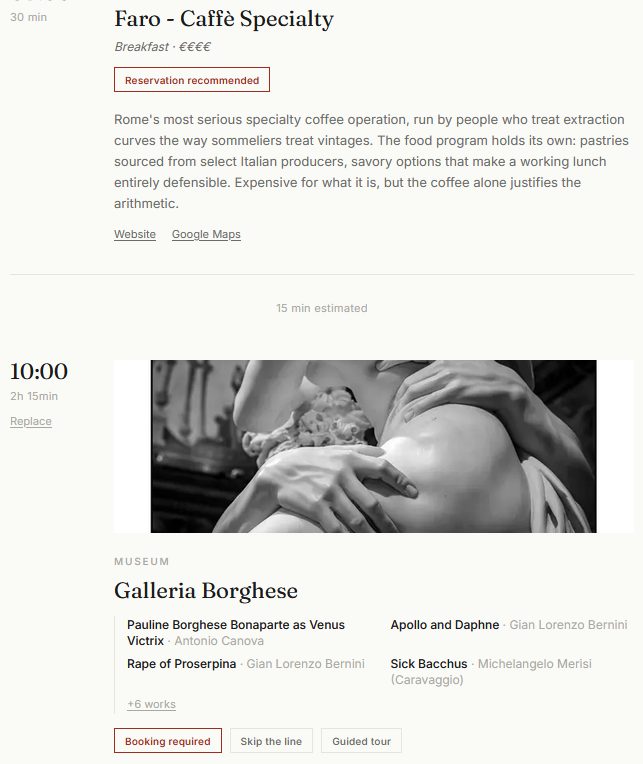
Galleria Borghese
The Galleria Borghese is indispensable for anyone who wants to understand Bernini as a sculptor before all the urban extensions of his genius. Here the encounter is close, concentrated and almost laboratory-like. The visitor can study movement, psychological tension and marble handling with a clarity that large city spaces do not allow.
Check availability and book tickets
Book a guided tour of the Galleria Borghese
Essential chapel
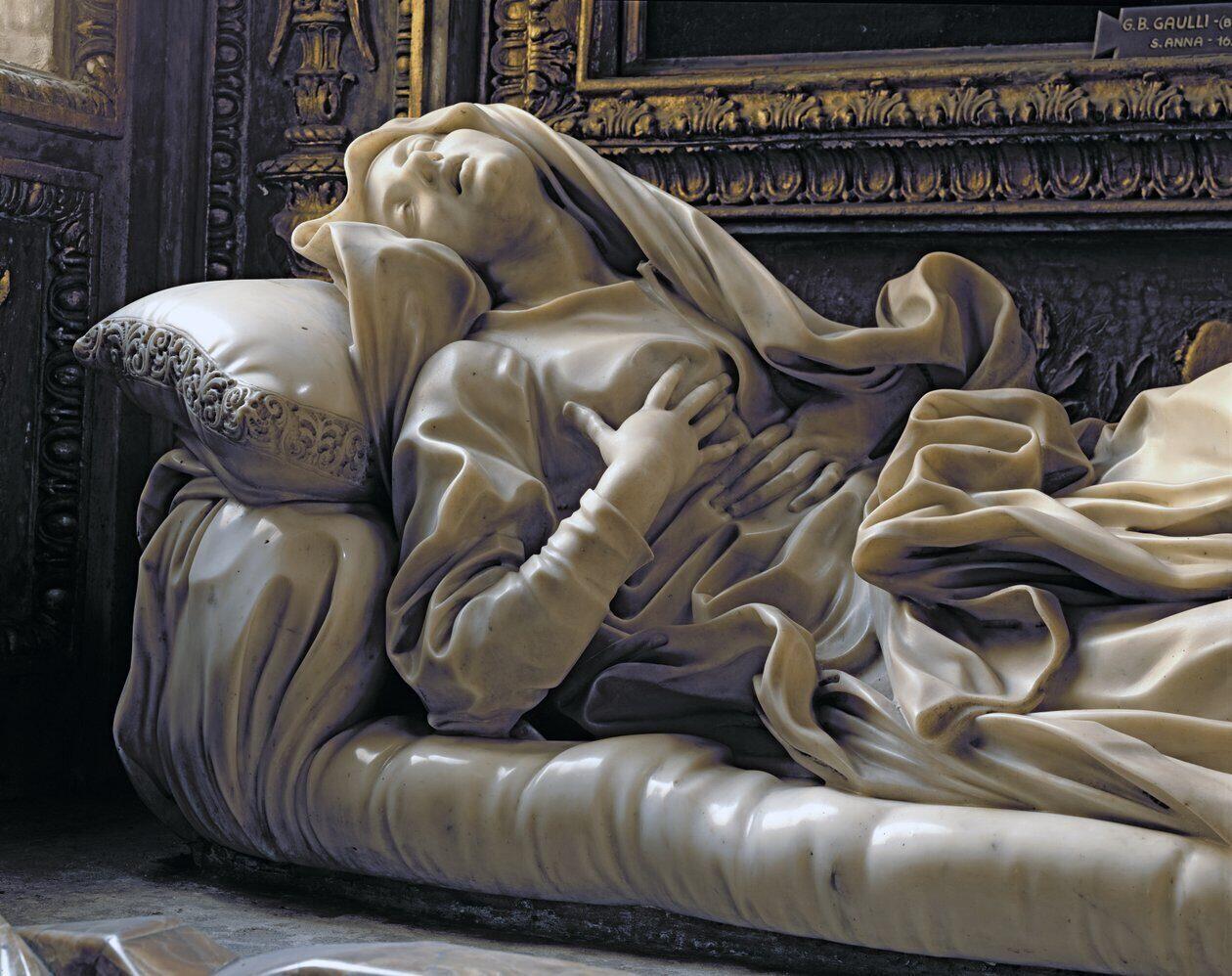
Santa Maria della Vittoria: Cornaro Chapel
The Ecstasy of Saint Teresa (1647–52) is set inside the Cornaro Chapel, which Bernini designed as a complete theatrical environment: hidden light from above, sculpted members of the Cornaro family watching from lateral boxes as if attending a performance, and Teresa and the angel suspended between earthly and divine. The church is small, free to enter, and located near Piazza della Repubblica. The chapel is on the left transept. Visit before 10am or after 4pm.
Essential Vatican site
St Peter’s Basilica and St Peter’s Square
No serious Bernini itinerary in Rome can avoid St Peter’s. The colonnade (1656–67) wraps Piazza San Pietro in a gesture Bernini described as the Church’s embrace of the faithful. Inside, the bronze Baldachin (1623–34) marks the tomb of St Peter directly beneath Michelangelo’s dome. The tomb of Urban VIII and the Chair of St Peter are in the apse. Entry to the Basilica is free; Vatican Museums require a ticket.
Book Vatican Museums skip-the-line tickets
Book a guided Vatican Museums tour
Essential piazza
Piazza Navona: Fontana dei Quattro Fiumi
The Fontana dei Quattro Fiumi (1648–51) was commissioned by Innocent X Pamphilj, who briefly displaced Bernini in papal favor before this commission reasserted his position. Four river gods (the Nile, Danube, Ganges and Río de la Plata) surround an Egyptian obelisk. The fountain is designed to be read from multiple angles as you walk around it. Entry to the piazza is free; it is at its best early morning before the café terraces fill.
Important church
Sant’Andrea al Quirinale
Built between 1658 and 1670 for the Jesuit novitiate, this is the church Bernini reportedly considered his finest architectural work. Its oval plan forces the visitor into an immediate spatial relationship with the altar. The dome, the lantern, the gilded stucco and the painted apse panels form a single coordinated environment rather than a sequence of independent decorations. Located on Via del Quirinale, a short walk from Palazzo Barberini. Free to enter; closed Tuesdays.
Interpretive note
Sculpture, architecture and city must be read together
Rome is the best city to understand why Bernini cannot be confined to one medium. A visitor who looks only for statues, or only for fountains, will miss the larger coherence of his Roman program. His real material is not marble alone, but directed experience.