Artist page

Gian Lorenzo Bernini Map

Bernini left more than forty major works across Rome: marble groups at the Galleria Borghese, fountains in Piazza Navona and Piazza Barberini, chapel ensembles in Santa Maria della Vittoria and Santa Maria del Popolo, the colonnade of St. Peter’s Square. Nearly all of them are still exactly where he placed them. This map is built for travelers who want to visit them in order, understand how they relate spatially, and avoid the mistake of treating them as isolated objects in a museum.

Use the interactive map below to orient yourself geographically, then follow the cluster guides and city pages to plan a coherent itinerary, whether you have a single afternoon or a full week in Rome.

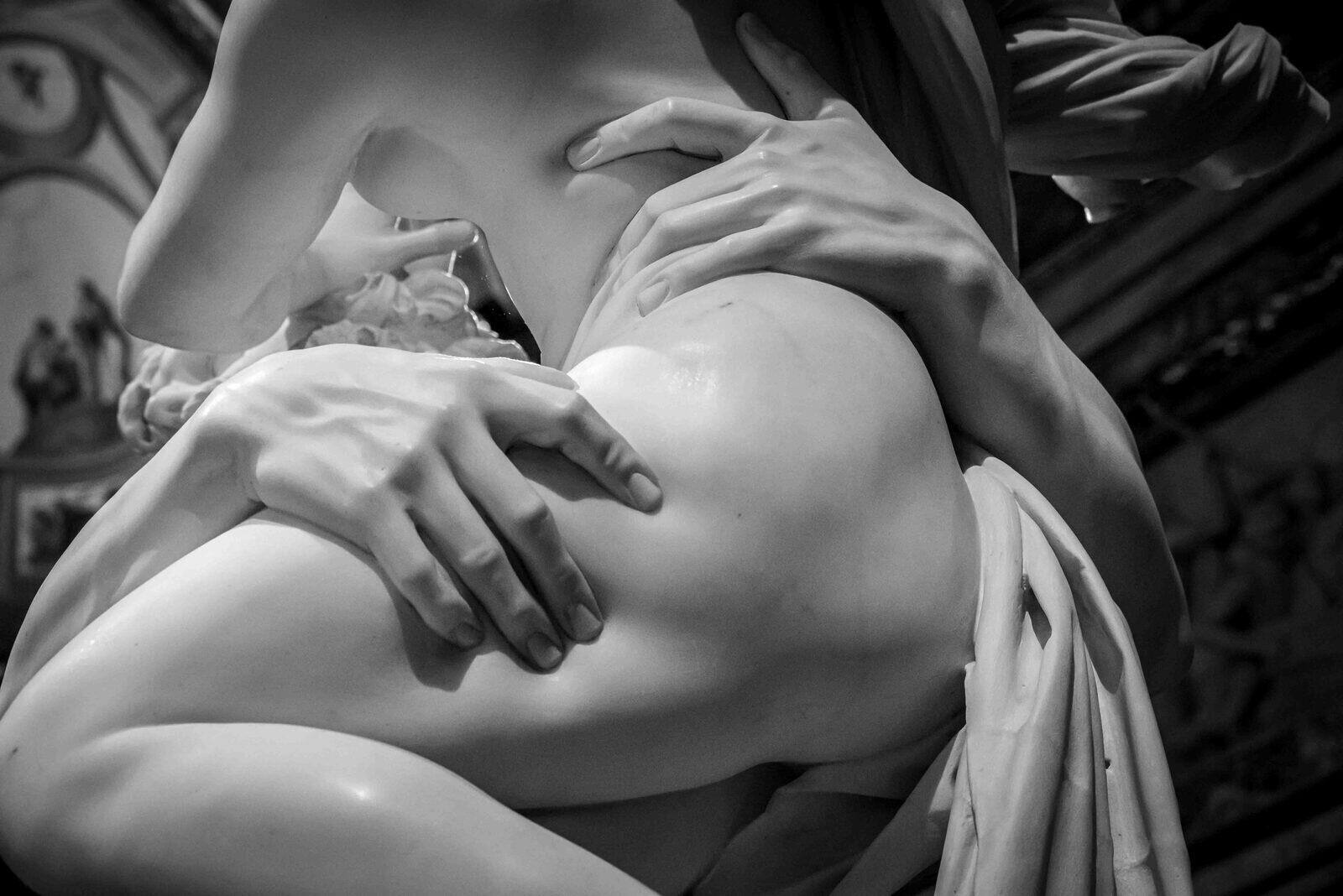
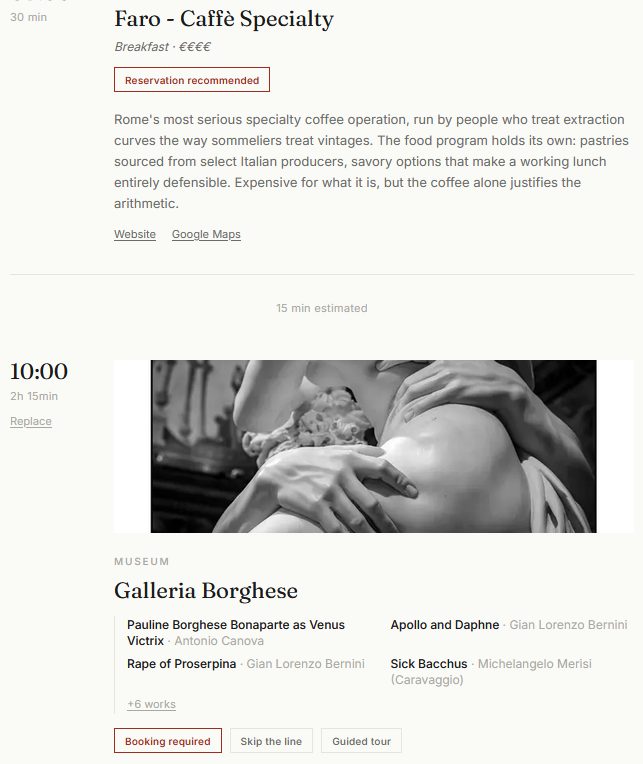
Gian Lorenzo Bernini, The Rape of Proserpina (1621–22), Galleria Borghese, Rome. Detail showing Pluto’s hand gripping Proserpina’s thigh in marble.

Explore Bernini on the map

Tap to activate map

How to approach Bernini

Bernini should not be approached as a sequence of isolated sculptures removed from their environments. His art depends on orchestration: chapel space, sightline, urban setting, moving water, liturgical staging, and the conversion of stone into event. Geography is not secondary to his work; it is part of the medium.

  • Book the Galleria Borghese before anything else. Entry is timed and capped at 360 visitors per session; slots fill weeks in advance. Without a reservation, you will not get in. Reserve your timed entry on Tiqets: slots go fast, especially on weekends.
  • Use the map to build a route that makes geographic sense. Rather than chasing a loose list of famous names across the city, use it to understand what kind of Bernini each stop represents: museum sculpture, chapel setting, fountain, architecture. The experience changes considerably depending on the type.
  • Visit chapels at low-traffic hours. Both the Cornaro Chapel and the Chigi Chapel are small spaces, and they get busy between late morning and early afternoon. An early visit (before 10am) or a late one (after 4pm) makes a real difference: these are rooms designed for concentrated attention, and they read differently when they're quiet.
Main Bernini clusters

Primary city

Rome: Galleria Borghese, Piazza Navona, St. Peter’s

Rome contains the overwhelming majority of Bernini’s surviving work. The Galleria Borghese holds the four early marble groups made for Cardinal Scipione Borghese. Piazza Navona was transformed by the Fontana dei Quattro Fiumi (1651), commissioned by Innocent X. The colonnade of St. Peter’s Square (1656–67) remains Bernini’s largest architectural statement. These three poles alone define the range of his ambition.

Chapel ensembles

Cornaro, Chigi, Raimondi: sculpture inside architecture

Bernini’s chapel commissions are among the most sophisticated spatial arguments in Western art. The Cornaro Chapel in Santa Maria della Vittoria stages the Ecstasy of Saint Teresa (1647–52) like an opera scene, with sculpted patron boxes on the lateral walls. The Chigi Chapel in Santa Maria del Popolo integrates Bernini’s Daniel and Habakkuk into a pre-existing Raphael design. In each case, the sculpture cannot be understood apart from the room.

Urban authorship

Fountains, piazzas, and the remaking of papal Rome

Between 1623 and 1680, Bernini worked for eight consecutive popes and redesigned more of Rome than any other single artist. The Fontana del Tritone in Piazza Barberini (1642–43), the Fontana della Barcaccia at Piazza di Spagna (designed with his father Pietro), the Ponte Sant’Angelo angels (1667–71), and the Elephant and Obelisk in Piazza della Minerva (1667) together make Rome itself legible as a Baroque argument.

Best city pages for Bernini

Rome

Roughly 90% of Bernini's surviving work is in Rome, distributed across the historic center in clusters reachable on foot or by metro. The Rome city page breaks the geography into navigable circuits: Borghese hill, the Baroque center, the Vatican axis.

Open the full ArtAtlas map

The full map filters by artist, medium, and neighborhood. Use it to build a custom itinerary, check what is nearby a specific church or museum, or cross-reference Bernini with Caravaggio or Borromini sites in the same area.

Continue with Caravaggio

Several Roman churches contain both: Santa Maria del Popolo has Caravaggio's Cerasi Chapel and Bernini's Chigi Chapel facing each other across the same nave. The Caravaggio page maps the full circuit of his Roman altarpieces and lets you plan a combined visit efficiently.

Read Bernini on TheIntroverTraveler

Venice canal

The Rape of Proserpina

Carved between 1621 and 1622 for Cardinal Scipione Borghese, this group is one of the defining demonstrations of Baroque marble technique. Pluto’s fingers visibly compress Proserpina’s thigh; her tears are rendered in stone. Bernini was twenty-three years old.

Bernini and Barberini

Pope Urban VIII (Maffeo Barberini) gave Bernini the commissions that defined the first half of his career: the Baldachin over St. Peter’s tomb, the tomb of Urban VIII himself, the Fontana del Tritone. This exhibition at Palazzo Barberini reconstructs that 21-year relationship between patron and artist.

All posts about Bernini

The full archive of Bernini writing on TheIntroverTraveler: masterpiece analyses, exhibition reviews, and site guides, continuously updated.

Planning your Bernini visit: common questions

Why use a map for Bernini?

The Ecstasy of Saint Teresa only makes sense inside the Cornaro Chapel; the Fontana dei Quattro Fiumi is designed to be walked around; the colonnade of St. Peter’s Square is an argument about procession, not a backdrop for photographs. A map restores the spatial logic that isolated images erase.

Where should I start in Rome?

Begin at the Galleria Borghese: four early masterpieces (Aeneas and Anchises, Pluto and Proserpina, Apollo and Daphne, David) displayed in the rooms for which they were made. Then Piazza Navona and the Fontana dei Quattro Fiumi. Then the Cornaro Chapel in Santa Maria della Vittoria. Finish with St. Peter’s Square to understand Bernini as the author of a city, not just an oeuvre.

Do I need to book the Galleria Borghese in advance?

Yes, and as early as possible. Entry is strictly timed: two-hour sessions, a maximum of 360 visitors, no walk-ins. Popular weekend morning slots sell out three to four weeks ahead. Book your skip-the-line Galleria Borghese ticket on Tiqets to secure the session that fits your itinerary.

How much time do I need to see Bernini's main works in Rome?

A focused three-day itinerary covers the essentials comfortably. Day one: Galleria Borghese (two-hour timed session) plus Piazza del Popolo and the Chigi Chapel. Day two: the Baroque center: Piazza Navona, Sant'Andrea della Valle, Sant'Ivo, Piazza Barberini and the Tritone. Day three: the Vatican axis: St. Peter's Square, the Baldachin and papal tombs inside the basilica, Castel Sant'Angelo, and the Ponte Sant'Angelo angels. The Cornaro Chapel fits naturally at the end of day two.

Are there important Bernini works outside Rome?

A few, but Rome is overwhelmingly the primary destination. Outside Italy, the most significant works are the bust of Louis XIV (1665) at the Palace of Versailles (commissioned during Bernini's only trip to France) and the bust of Thomas Baker at the Victoria and Albert Museum in London. In Italy, the Neptune and Triton (1620–22) is at the V&A on long-term loan from a Roman collection. Nothing outside Rome approaches the density or scale of what the city holds.

Bernini, where stone learned to move.

If other sculptors persuade through mass, Bernini overwhelms through event. Flesh seems to tense, drapery accelerates, marble liquefies into vision, and architecture becomes the accomplice of emotion. That logic only becomes fully intelligible once it is put back into the geography of Rome.