City page

Naples Art Guide

Naples holds one of Europe's densest concentrations of art, scattered across churches, chapels, and museums rather than consolidated in a few grand institutions. From Caravaggio's Seven Works of Mercy at Pio Monte della Misericordia to the Veiled Christ at Cappella Sansevero and Titian's Danae at Capodimonte, the city rewards planned, route-aware visits.

This page maps the major sites, provides booking links, and connects to deeper commentary on TheIntroverTraveler.

Naples art and architecture detail

Where to see art in Naples

Tap to activate map

Key museums and sites in Naples

ⓘ Opening hours and admission prices listed on this page are indicative and subject to change. Always verify current information on the official website of each venue before your visit.

Museo di Capodimonte

Caravaggio, Titian, Masaccio, Bellini, Parmigianino – book online, allow 2–3 hours

Set on the hilltop in the Bosco di Capodimonte, this former Bourbon royal palace holds one of Italy's strongest painting collections. Key works include Caravaggio's Flagellation of Christ (c. 1607–1608, Room 78), Titian's Danae (1544–1545, Farnese Gallery, Room 11), Masaccio's Crucifixion (1426, Room 3), Giovanni Bellini's Transfiguration (c. 1480, Room 5), and Parmigianino's Antea (c. 1535, Room 12). The second floor covers Neapolitan Baroque painting, including Luca Giordano, Jusepe de Ribera, and Artemisia Gentileschi. Take bus C63 from Piazza Dante or a taxi (the walk uphill is steep). Open daily except Wednesdays, 8:30–19:30 (last entry 18:30).

Book Museo di Capodimonte tickets

Cappella Sansevero

Giuseppe Sanmartino's Veiled Christ, Queirolo, Corradini – timed entry essential

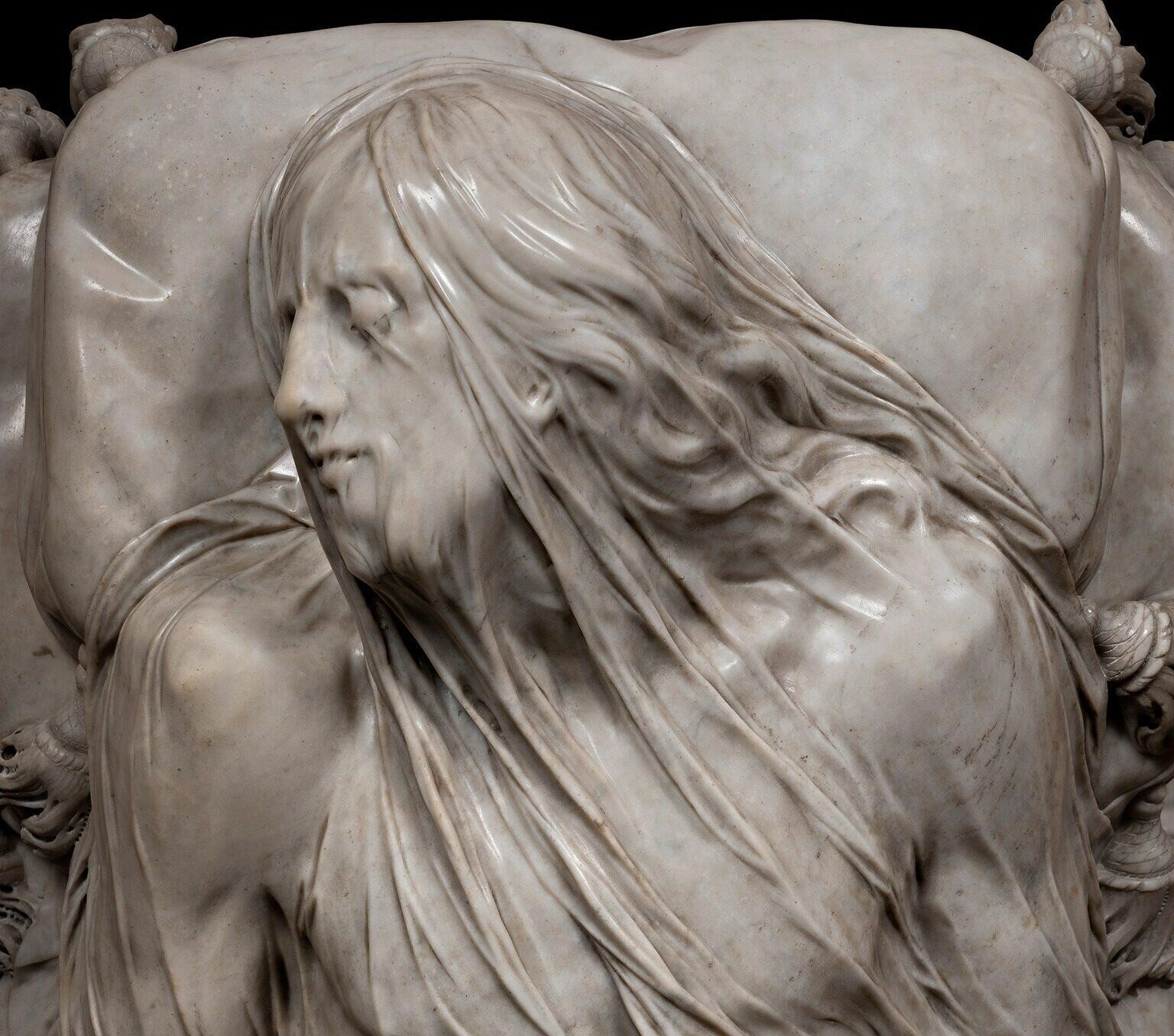
This small private chapel on Via Francesco de Sanctis 19 (near Piazza San Domenico Maggiore) contains some of the most technically astonishing sculptures in Italy. Giuseppe Sanmartino's Veiled Christ (1753) is the centrepiece: a life-size marble figure draped in a veil carved entirely from stone. Also here are Francesco Queirolo's Disinganno (Release from Deception, c. 1753–1754), with its impossible carved net, and Antonio Corradini's Pudicizia (Modesty, 1752). The Anatomical Machines (two flayed anatomical models with preserved circulatory systems) are in the crypt below. Open daily 9:00–19:00, closed Tuesdays. Book timed tickets online at least several days ahead (a week or more in high season).

Pio Monte della Misericordia

Caravaggio's Seven Works of Mercy (1607) – Via dei Tribunali

This 17th-century charitable institution at Via dei Tribunali 253 holds Caravaggio's Seven Works of Mercy (1607), displayed above the high altar of the octagonal church. The painting compresses seven acts of Christian charity into a single turbulent nocturnal scene. The upstairs gallery holds additional 17th-century Neapolitan works, including paintings by Luca Giordano, Battistello Caracciolo, and Fabrizio Santafede. Open Monday to Saturday, 9:00–18:00 (closed Wednesdays). Located about 5 minutes on foot from Cappella Sansevero.

Certosa di San Martino

Ribera, Luca Giordano, Baroque cloisters – Vomero hill

This Carthusian monastery perched on the Vomero hill (reachable via Montesanto funicular, then a short walk) has one of Naples's finest Baroque interiors. The church features ceiling frescoes by Luca Giordano and altarpieces by Jusepe de Ribera, including the Communion of the Apostles (1651). The Great Cloister, designed by Cosimo Fanzago, surrounds a monks' cemetery with marble balustrades. The museum inside covers Neapolitan history, with an exceptional collection of presepi (Nativity scenes) on the upper floor. Open daily except Wednesdays, 8:30–17:00. Combined visit with Castel Sant'Elmo next door provides panoramic views.

Palazzo Zevallos Stigliano (Gallerie d'Italia, Naples)

Caravaggio's last painting, 17th–19th-century Neapolitan art – Via Toledo

Housed in a 17th-century palazzo on Via Toledo 185, this Intesa Sanpaolo gallery is primarily visited for Caravaggio's Martyrdom of Saint Ursula (1610), his last known painting, completed just weeks before his death. The collection also includes works by Artemisia Gentileschi, Luca Giordano, and 19th-century Neapolitan landscape painters of the Scuola di Posillipo. Open Tuesday to Sunday, 10:00–19:00. Free admission. A 10-minute walk south from Piazza del Gesù Nuovo along Via Toledo.

Naples National Archaeological Museum (MANN)

Pompeii and Herculaneum mosaics and frescoes, Farnese sculpture collection

Though primarily an archaeological museum, the MANN is essential for understanding the artistic heritage of the region. The Farnese Collection on the ground floor includes the colossal Farnese Hercules and the Farnese Bull. The mezzanine houses the mosaic collection from Pompeii, including the Alexander Mosaic (Battle of Issus, from the House of the Faun). The upper floor has the Secret Cabinet (erotic art from Pompeii) and Roman frescoes from Herculaneum and Stabiae. Located on Piazza Museo, a short walk from Piazza Dante. Open daily except Tuesdays, 9:00–19:30.
Main Naples art clusters

Church core

Via dei Tribunali and Spaccanapoli

The two main axes of the historic center concentrate the majority of Naples's church art within walking distance. Start at Pio Monte della Misericordia (Caravaggio, Seven Works of Mercy), walk to Cappella Sansevero, then south to San Domenico Maggiore (which holds a chapel with 14th–15th-century frescoes and Titian's Annunciation in the sacristy). Continue to Gesù Nuovo (Francesco Solimena's vast nave frescoes) and Santa Chiara (14th-century Gothic interior with the majolica-tiled cloister). This route takes about 2–3 hours without rushing.

Sculpture and illusion

Cappella Sansevero and surroundings

The Sansevero Chapel is the single site most visitors prioritize. Combine it with Napoli Sotterranea (underground Greek-Roman aqueducts, entrance on Piazza San Gaetano, 3 minutes away) and the church of San Lorenzo Maggiore, which has a Gothic nave and excavated Greek-Roman forum beneath. Tip: book the Sansevero Chapel for the earliest morning slot (9:00), then visit San Lorenzo and Pio Monte before the afternoon crowds arrive.

Hilltop museums

Capodimonte, San Martino, and the Vomero

Dedicate a separate day to the two hilltop sites. Capodimonte (bus C63 from Piazza Dante, about 15 minutes) needs 2–3 hours for the Farnese and Royal collections. Later, take the Montesanto funicular up to the Vomero and visit the Certosa di San Martino (Baroque church, Ribera altarpieces, Nativity scenes) and Castel Sant'Elmo for the best view of the city. These two hills are not walkable from each other easily; plan them as a morning-afternoon split.

Artists who shaped Naples

Caravaggio Art Map

Caravaggio arrived in Naples in 1606 as a fugitive and painted some of his most desperate works here: the Seven Works of Mercy (Pio Monte), the Flagellation (Capodimonte), and the Martyrdom of Saint Ursula (Palazzo Zevallos). His impact on Neapolitan painting was immediate and lasted generations through followers like Battistello Caracciolo and Artemisia Gentileschi.

Bernini Art Map

Bernini's influence in Naples is visible in the design language of Baroque church interiors and in sculptural works linked to his circle. His connection to the broader Roman Baroque tradition helps contextualize the decorative programs at the Certosa di San Martino and other Neapolitan commissions.

Guercino Art Map

Guercino's emotionally charged compositions and warm palette had a strong affinity with Neapolitan Baroque taste. His works at Capodimonte and connections to painters like Mattia Preti show how Emilian painting traveled south and merged with the city's own tradition of dramatic color and gesture.

Read Naples on TheIntroverTraveler

Venice canal

Cappella Sansevero

A deep analysis of the Cappella Sansevero: the Veiled Christ, the Anatomical Machines, and Raimondo di Sangro's intellectual program behind the chapel's decorative scheme.

The Frescoes of the Villa dei Misteri in Pompeii

The Villa of the Mysteries preserves the most intact and unsettling fresco cycle to survive from antiquity: a continuous frieze of life-size figures engaged in a ritual whose meaning is still debated. A guide to Pompeii with a focus on what makes the Villa worth the detour beyond the main excavation site.

Frequently asked questions

Do I need to book the Cappella Sansevero in advance?

Yes. The chapel is small and limits daily visitors. Buy timed tickets online at least several days ahead, or a week or more in peak season (March through October). Entry is at Via Francesco de Sanctis 19, near Piazza San Domenico Maggiore. Aim for the first morning slot to avoid crowds.

Where are the Caravaggio paintings in Naples?

Three locations: the Seven Works of Mercy (1607) at Pio Monte della Misericordia on Via dei Tribunali; the Flagellation of Christ (c. 1607–1608) in Room 78 at Museo di Capodimonte; and the Martyrdom of Saint Ursula (1610) at Palazzo Zevallos Stigliano (Gallerie d'Italia) on Via Toledo.

How many days do I need for art in Naples?

At minimum two full days: one for the historic center churches (Pio Monte, Sansevero, San Domenico Maggiore, Gesù Nuovo, Santa Chiara) and one for Capodimonte and the Certosa di San Martino. A third day allows for the National Archaeological Museum, Palazzo Zevallos, and the Duomo baptistery mosaics.

Is Museo di Capodimonte worth the trip uphill?

Absolutely. Caravaggio's Flagellation, Titian's Danae, Masaccio's Crucifixion, Bellini's Transfiguration, and Parmigianino's Antea are all here. Take bus C63 from Piazza Dante (about 15 minutes). Allow 2–3 hours for the Farnese and Royal collections. Book Capodimonte tickets

What are the opening hours for churches in Naples's historic center?

Most churches open 8:30–9:00 to 12:30–13:00, then reopen 16:30–17:00 until 18:30–19:00. Pio Monte della Misericordia is open Monday to Saturday, 9:00–18:00 (closed Wednesdays). Plan mornings for churches and afternoons for museums.

Naples, where art hides in plain sight.

Art in Naples is not staged in grand gallery sequences but embedded in churches, cloisters, and charitable institutions. A Caravaggio hangs above a working altar. The most extraordinary marble sculpture in Italy sits inside a private chapel on a side street. A royal painting collection requires a bus ride uphill. The city demands navigation, not wandering, and repays anyone willing to plan a route.