Artist page

Where to See Gustav Klimt

Gustav Klimt is one of the few major artists whose work remains overwhelmingly concentrated in a single city. Vienna holds the largest share of his paintings, murals, and decorative projects: the Belvedere, the Leopold Museum, the Secession building, the Kunsthistorisches Museum, and the MAK all preserve essential works within walking distance of each other.

Outside Vienna, important Klimt paintings are in the Neue Galerie in New York, the Art Institute of Chicago, and the National Gallery in London. This page maps all major locations and provides practical information for planning a Klimt-focused visit.

Vienna skyline associated with Gustav Klimt and the Secession

Explore Klimt on the map

Tap to activate map

Where to see Klimt: key museums and sites

ⓘ Opening hours and admission prices listed on this page are indicative and subject to change. Always verify current information on the official website of each venue before your visit.

Belvedere, Vienna

The Kiss (1907–1908), Judith I (1901), landscapes – book online 1–2 weeks ahead in peak season

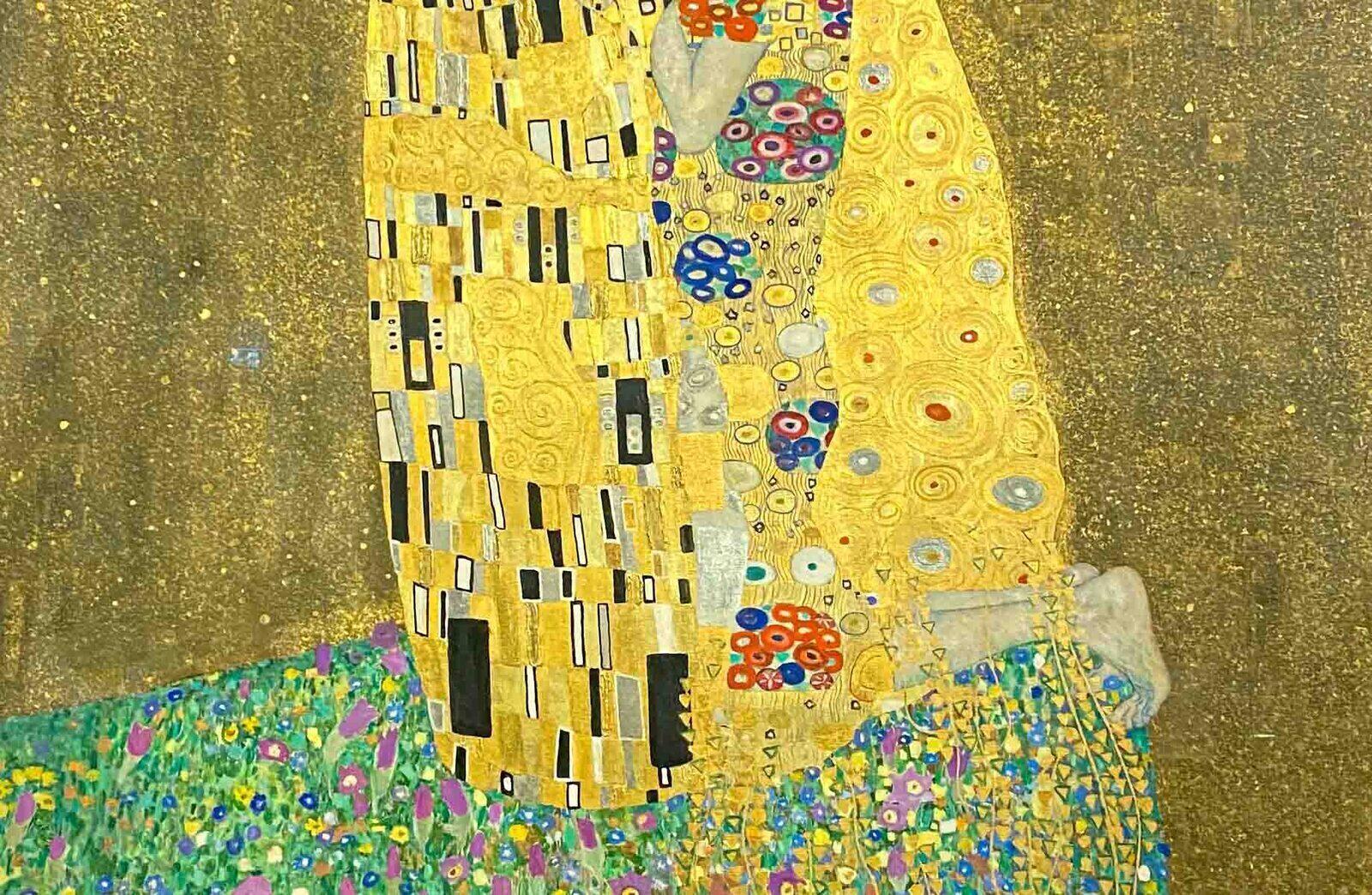
The Upper Belvedere is the single most important location for Klimt. The second floor holds The Kiss in a dedicated room alongside Judith I, several Attersee lake landscapes, and late allegorical works. The collection also includes Adam and Eve (1917–1918, unfinished) and Bride (unfinished). Plan at least 90 minutes. The Lower Belvedere and Belvedere 21 host temporary exhibitions. Open daily 10:00–18:00 (Fridays until 21:00 for the Upper Belvedere). The 3-museum pass is good value if you visit all sites.

Book Belvedere 3-museum pass

Leopold Museum, Vienna

Death and Life (1910–1915), Attersee landscapes – MuseumsQuartier, no advance booking needed for most visits

The Leopold Museum in the MuseumsQuartier holds one of the largest Klimt collections after the Belvedere. Key works include Death and Life (reworked 1910–1915), Still Pond in the Park of Schloss Kammer, and several Attersee landscapes. The museum is also the world's largest Egon Schiele collection, making it essential for understanding the Klimt-Schiele relationship. Open daily except Tuesday, 10:00–18:00 (Thursdays until 21:00).

Book Leopold Museum + Kunsthistorisches Museum combined ticket

Kunsthistorisches Museum, Vienna

Staircase spandrel paintings (1890–1891) – included with general admission

Klimt's early decorative work is embedded in the architecture of the Kunsthistorisches Museum itself. Between 1890 and 1891, he painted spandrel and intercolumnar panels for the grand staircase, depicting allegorical figures representing art history from ancient Egypt to the Renaissance. Look up as you climb the main stairs: the panels are above the arches on both sides. These works predate the Secession period and show Klimt working in a more academic, Historicist style. The rest of the museum's collection (Bruegel, Caravaggio, Vermeer, Titian) easily justifies a full-day visit.

Book Kunsthistorisches Museum tickets

Vienna Secession

Beethoven Frieze (1902) – basement level, no advance booking usually needed

The Secession building on Friedrichstrasse, designed by Joseph Maria Olbrich in 1897, is where the artistic break with academic tradition took physical form. The basement permanently houses Klimt's Beethoven Frieze (1902), a 34-meter painted cycle originally created for the XIV Secession exhibition dedicated to Beethoven. The frieze moves through three walls: the longing for happiness, hostile forces, and the final embrace in the "Ode to Joy." The ground floor hosts rotating contemporary exhibitions. Open Tuesday to Sunday, 10:00–18:00.

Visit Vienna Secession (official site)

MAK (Museum of Applied Arts), Vienna

Stoclet Frieze cartoons (1910–1911) – free admission on Tuesdays

The MAK holds Klimt's full-scale working cartoons for the Stoclet Frieze, the monumental mosaic commissioned for the dining room of the Palais Stoclet in Brussels (designed by Josef Hoffmann). These nine drawings (1910–1911), in tempera, watercolor, and gold on paper, show the Tree of Life, the Dancer, and the embracing couple. The finished mosaics in Brussels are rarely accessible, making the MAK cartoons the primary way to study this project. The MAK is a 10-minute walk from the Kunsthistorisches Museum. Open Tuesday 10:00–21:00, Wednesday to Sunday 10:00–18:00.

Visit MAK Vienna (official site)

Neue Galerie, New York

Portrait of Adele Bloch-Bauer I (1907), "Woman in Gold" – Fifth Avenue at 86th St

The Neue Galerie holds the most famous Klimt painting outside Austria: Portrait of Adele Bloch-Bauer I (1907), acquired in 2006 for $135 million after the high-profile restitution case. The museum also owns Portrait of Adele Bloch-Bauer II (1912) and several drawings. The Klimt room is on the second floor. The museum is small (plan 60–90 minutes) and located on Museum Mile, steps from the Met. Open Thursday to Monday, 11:00–18:00. Timed tickets recommended on weekends.

Visit Neue Galerie (official site)

Art Institute of Chicago

Stoclet Frieze study, landscape works – Michigan Avenue

The Art Institute holds a small but notable group of Klimt works in its European Painting galleries. Open daily; check the website for current hours and gallery locations, as works occasionally rotate.

Book Art Institute of Chicago tickets
How to approach Klimt in Vienna

A two-day Klimt itinerary in Vienna works best organized by neighborhood rather than by chronology.

  • Day 1, Belvedere area: Start at the Upper Belvedere for The Kiss and Judith I (arrive at opening, 10:00, to avoid crowds). Walk 20 minutes northwest to the Kunsthistorisches Museum for the staircase paintings, then cross the MuseumsQuartier plaza to the Leopold Museum for Death and Life and the Schiele collection.
  • Day 2, Secession and applied arts: Visit the Vienna Secession (Beethoven Frieze) first, then walk 10 minutes to the MAK for the Stoclet Frieze cartoons. In the afternoon, consider the Klimt Villa in Hietzing (Feldmühlgasse 11), his last studio, open April–October.
  • Practical note: The Leopold + Kunsthistorisches combined ticket saves money if you visit both. The Belvedere 3-museum pass covers Upper, Lower, and Belvedere 21.

Main Klimt clusters

Vienna: Belvedere district

Upper Belvedere, Lower Belvedere, Belvedere 21

The Upper Belvedere alone holds The Kiss, Judith I, Adam and Eve, and several late landscapes. The 3-museum pass covers all three venues. The Upper Belvedere is a 15-minute walk from Karlsplatz or a short ride on tram D.

Book Belvedere 3-museum pass

Vienna: MuseumsQuartier

Leopold Museum, Kunsthistorisches Museum, MAK

Three Klimt-relevant museums within a 15-minute walk of each other. Start at the Leopold (Death and Life, Attersee landscapes), cross to the Kunsthistorisches Museum (staircase paintings, plus Bruegel and Caravaggio), then continue to the MAK (Stoclet Frieze cartoons). Free MAK admission on Tuesdays.

Book Leopold + Kunsthistorisches combined ticket

Vienna: Secession and studios

Vienna Secession, Klimt Villa (Hietzing)

The Secession building houses the Beethoven Frieze in the basement. The Klimt Villa at Feldmühlgasse 11 (U4 Hietzing) was his last studio, open April to October, Thursday to Sunday. The two sites are about 25 minutes apart by U-Bahn. Tip: visit the Secession in the morning, then take the U4 to Hietzing for the villa after lunch.

Best city pages for Klimt

Vienna

Full art guide covering the Belvedere, Kunsthistorisches Museum, Leopold Museum, Albertina, and the Secession, with practical booking tips, walking routes, and opening hours.

Open the full ArtAtlas map

See all geolocated Klimt works at once. Filter by city to compare the Vienna concentration with holdings in New York, London, Chicago, and other cities.

Continue with Michelangelo

From Vienna to Rome and Florence: Michelangelo's works are spread across the Sistine Chapel, Galleria dell'Accademia, Medici Chapels, and St. Peter's Basilica.

FAQ

Where is The Kiss by Klimt?

The Kiss (1907–1908) is in the Upper Belvedere in Vienna, displayed in a dedicated room on the second floor. The Belvedere also holds Judith I (1901) and several Klimt landscapes. Book tickets online to avoid the queue, especially in summer.

How many days do I need to see all Klimt works in Vienna?

Two full days are ideal. Day one: Upper Belvedere (The Kiss, Judith I), Leopold Museum (Death and Life, Attersee landscapes), and the Vienna Secession (Beethoven Frieze). Day two: Kunsthistorisches Museum (staircase paintings), MAK (Stoclet Frieze cartoons), and the Klimt Villa in Hietzing.

Can I see the Beethoven Frieze at the Vienna Secession?

Yes. The Beethoven Frieze (1902) is permanently installed in the basement of the Secession building on Friedrichstrasse. The building also hosts rotating contemporary exhibitions. Open Tuesday to Sunday, 10:00–18:00. No advance booking usually needed.

Are there important Klimt paintings outside Vienna?

Yes. The Neue Galerie in New York holds Portrait of Adele Bloch-Bauer I (the "Woman in Gold"). The Art Institute of Chicago, the National Gallery in London, and the Galleria d'Arte Moderna in Rome also have Klimt works. However, Vienna holds the vast majority.

Do I need to book Belvedere tickets in advance?

Strongly recommended from April to October and on weekends year-round. Online timed-entry tickets let you skip the line. The 3-museum Belvedere pass also covers the Lower Belvedere and Belvedere 21.

Read Klimt on TheIntroverTraveler

Venice canal

The Belvedere Museum in Vienna

A guide to the Upper and Lower Belvedere: the Klimt rooms, The Kiss, Judith I, and the broader Austrian collection — with practical advice on timing, routes, and what to prioritise.

Neue Galerie New York

The Upper East Side museum dedicated to early 20th-century German and Austrian art, including Klimt's Portrait of Adele Bloch-Bauer I — one of the most important Klimt works outside Vienna.

MoMA in Manhattan

A structured approach to MoMA's collection, with context on how it places early Viennese modernism alongside the broader arc of 20th-century art — useful for understanding where Klimt fits in the international avant-garde.

Klimt, mapped from the Belvedere to the Secession.

Gold leaf, pattern, eroticism, and portraiture: Klimt's work gains clarity when placed back into Vienna's specific geography. The Belvedere, the Leopold Museum, the Secession, and the MAK are all within a few kilometers of each other, and they tell the story of his career more coherently than any single painting can.