Artist in city

Klimt in Vienna

Vienna is indispensable for understanding Klimt because it preserves not only a sequence of famous paintings, but the cultural atmosphere that made his art possible. Here one encounters him within the dense fabric of fin-de-siècle modernity: public commissions, decorative ambition, portraiture, Secessionist revolt, and the unstable balance between ornament, desire, elegance and intellectual self-consciousness.

This page is designed for readers who want something more useful than a checklist of golden surfaces. Use the map to locate Klimt’s main Viennese sites, distinguish between museums and Secession-related contexts, and build an itinerary that reflects the real urban and cultural geography of his work rather than the flattening effect of a few over-reproduced images.

Klimt related image

Explore Klimt in Vienna on the map

Tap to activate map

At a glance

This page focuses on Klimt’s Viennese presence and on the sites most useful for understanding his paintings, decorative projects and Secession-era context.

  • Essential city for understanding Klimt in historical and cultural context.
  • Best for travelers, students, and readers interested in Secession, portraiture and decorative modernism.
  • Includes museums, Secession-related sites and major Viennese landmarks.
  • Useful both for itinerary planning and for a more structural reading of Klimt’s career.

Why Klimt matters in Vienna

Vienna matters because it preserves Klimt in the very environment that gives meaning to his refinement and his excess. Elsewhere one may see individual works detached from their cultural soil. In Vienna one still reads Klimt against the world of the Secession, bourgeois patronage, decorative theory, public scandal and the peculiar Viennese capacity to turn elegance into a psychological instrument.

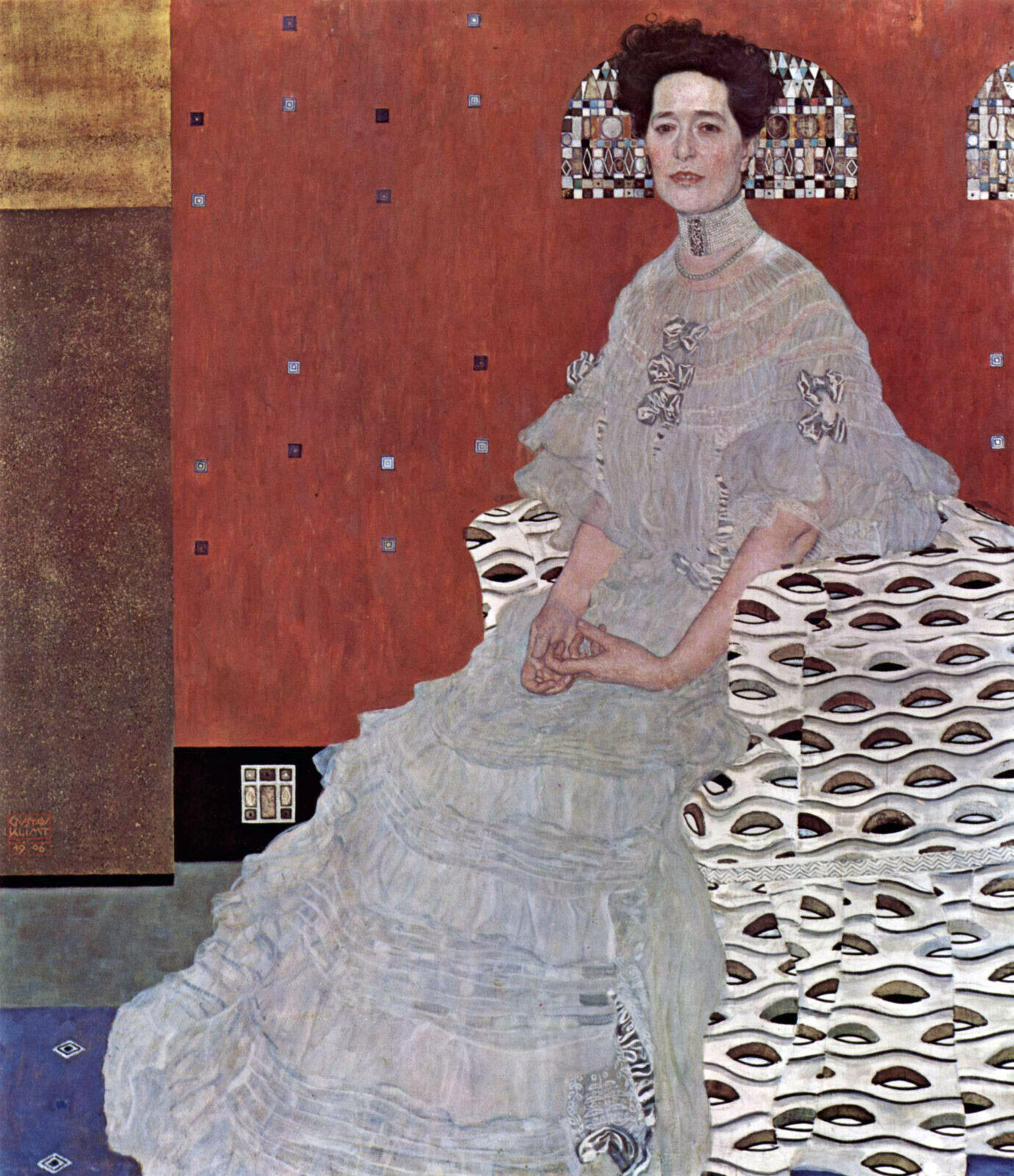
The Viennese works matter because they reveal Klimt under multiple and often competing conditions of viewing. At the Belvedere, one encounters the canonical paintings that have come to define his public image. In other institutions and site-specific contexts, however, Klimt appears differently: as decorator, collaborator, public artist, and as a figure whose sensual surfaces cannot be separated from the intellectual and social tensions of his time.

This is why a map is particularly useful in Klimt’s case. It helps separate the different Viennese Klimts: museum Klimt, Secession Klimt, decorative Klimt, portrait Klimt. Without this distinction, Vienna becomes a single golden blur. With it, the city becomes legible as the place in which Klimt’s art emerges from a specific network of institutions, commissions and cultural ambitions.

Where to see Klimt in Vienna

Belvedere

The Belvedere is indispensable for anyone approaching Klimt in Vienna, above all because it preserves the works that have become inseparable from his international reputation. Yet the point is not simply to see famous paintings, but to understand how Klimt’s public image has been constructed through museum display and selective canonization.

Secession Building

This is one of the decisive places for understanding Klimt beyond postcard familiarity. The Secession context restores the polemical and intellectual dimension of his art. Here Klimt must be read not only as painter of luxury, but as participant in a cultural break with institutional conservatism and as an artist deeply invested in modern decorative totality.

Leopold Museum

The Leopold is essential for readers who want to place Klimt within a wider Viennese modernist field rather than in isolated adoration. It helps clarify the network of affinities and tensions around him and keeps the visitor from mistaking Klimt for a solitary phenomenon detached from his milieu.

Wien Museum

This site matters because Klimt in Vienna cannot be reduced to autonomous masterpieces alone. The Wien Museum helps reintegrate the artist into the urban history and civic culture of the city, which is precisely where much of his significance becomes more exact and less decorative.

MAK and the applied arts dimension

Klimt becomes more intelligible when seen against the Viennese world in which painting, design, ornament and decoration were not neatly segregated. Institutions tied to the applied arts are therefore not secondary, but structurally useful for grasping the breadth of his artistic environment.

Painting, decoration and modernity must be read together

Vienna is the best city to understand why Klimt cannot be confined to a single register of visual pleasure. A visitor who looks only for famous paintings, or only for gold, misses the larger coherence of his Viennese program. His real material is not ornament alone, but modern cultural tension.
How to use this map efficiently

Before the trip

Use the map to separate the different Viennese Klimts

This page works best when used to distinguish museum Klimt, Secession Klimt, decorative Klimt and broader cultural context. Klimt in Vienna is not one stop, but a sequence of different institutional and artistic experiences.

On site

Group the sites with discipline

The map is useful because Vienna can turn a Klimt itinerary into a shallow hunt for famous images. Use it to group nearby sites rationally and to understand what kind of Klimt each stop is meant to reveal.

For serious viewing

Do not isolate the masterpieces from the cultural framework

The most rigorous way to use this page is contextual. Read the great paintings against decorative projects, Secession history and the wider Viennese modernist field. Klimt becomes clearer when setting and culture are treated as part of the work.

Plan your visit

This page is not only an art-historical resource but also a practical Vienna planning tool. Its most natural monetizable evolution would revolve around Belvedere tickets, Vienna itineraries, and guided routes tied to Secession, museums and major modernist sites.

  • Pair this page with the broader Vienna city page.
  • Use the full-screen map when you need easier navigation across the city.
  • Later, this block can host Belvedere tickets, Vienna itineraries, or guided cultural resources.

FAQ

Where can you see Klimt in Vienna?

The main Viennese sites include the Belvedere, the Secession Building, the Leopold Museum, the Wien Museum, the MAK and other places connected with Klimt’s paintings and decorative projects.

Why is Vienna important for Klimt?

Because Vienna preserves Klimt within the cultural world that made him possible: Secession, portraiture, decoration, public commissions and the psychological elegance of fin-de-siècle modernity.

Can I use this page to plan a Klimt itinerary in Vienna?

Yes. The map helps you organize the principal sites coherently, judge distances, and understand which places belong together within a more intelligent Viennese itinerary.

Does this page include both museums and Secession-related sites?

Yes. In Vienna, Klimt should be approached through museums, decorative contexts and Secession-related spaces, since each reveals a different aspect of his artistic program.

Klimt in Vienna, where modernity turns ornament into destiny.

Vienna does not merely preserve Klimt masterpieces. It reveals the cultural machinery that made them possible: Secession, decorative ambition, portraiture, scandal, elegance and psychic unease. That is why a Viennese Klimt map is not a convenience feature, but a serious instrument for reading modern art in context.