Artist page

Where to See Guido Reni's Paintings

Guido Reni (1575–1642) built his career between Bologna and Rome, producing altarpieces, ceiling frescoes and devotional canvases that became reference points for European painting well into the 18th century. His palette is unmistakable: pale silvery tones, upward-gazing figures, and compositions that favour symmetry and stillness over Baroque turbulence.

This page locates his surviving works across churches, museums and galleries. The Pinacoteca Nazionale in Bologna holds the largest single collection. Rome offers the Aurora ceiling, key canvases at the Galleria Borghese and Musei Capitolini, and altarpieces still in their original churches. Important paintings also hang in Naples, London, Paris, Madrid and Vienna.

Guido Reni, detail from the Aurora ceiling fresco, Casino Pallavicini-Rospigliosi, Rome

Explore Guido Reni on the map

Tap to activate map

Where to see Guido Reni: key museums and sites

ⓘ Opening hours and admission prices listed on this page are indicative and subject to change. Always verify current information on the official website of each venue before your visit.

Pinacoteca Nazionale di Bologna

Largest Reni collection worldwide. Rooms 23–24, second floor. No advance booking usually needed.

The Pinacoteca holds more than 15 paintings by Reni, anchored by the Massacre of the Innocents (c. 1611), the Pietà dei Mendicanti (1613–1616, over 3 metres tall), and the Pallione del Voto (1630), commissioned as an ex-voto during the plague. Other notable works include Samson Victorious and the Portrait of the Artist's Mother. The collection allows you to follow Reni's entire arc, from his early Carracci-influenced period to the looser, nearly monochrome "unfinished" style of his last years. Open Tue–Sun 10:00–19:00. The museum is a 10-minute walk from Piazza Maggiore.

Pinacoteca Nazionale Bologna (official site)

Galleria Borghese, Rome

Timed entry required, book at least 1 week ahead. Ground floor, Room VIII.

The Borghese holds Reni's David with the Head of Goliath (c. 1605), a Caravaggesque work from his early Roman years, and Moses with the Tablets of the Law. Room VIII also displays works by Bernini, creating an interesting contrast. Visits last two hours per time slot. Open Tue–Sun 9:00–19:00; last entry at 17:00.

Book Galleria Borghese reserved entry  |  Galleria Borghese guided tour

Musei Capitolini, Rome

Pinacoteca Capitolina, third floor. Online booking recommended on weekends.

The Pinacoteca Capitolina holds two major Reni works: the Crucifixion of St. Peter and St. Sebastian. Also present is the monumental Burial and Glory of St. Petronilla (1623), one of his largest canvases. The museum's Caravaggio room is one floor below, making it easy to compare Reni's Roman production against the artist he most actively responded to.

Book Musei Capitolini tickets  |  Musei Capitolini guided tour

Palazzo Barberini (Gallerie Nazionali), Rome

First floor, Rooms 16–17. Online ticket avoids the queue.

Palazzo Barberini holds the Portrait of Beatrice Cenci (traditionally attributed to Reni, now debated) and the Madonna in Glory. The surrounding rooms include Caravaggio's Judith Beheading Holofernes and works by the Carracci, establishing the full Roman context. Open Tue–Sun 10:00–18:00.

Book Palazzo Barberini tickets

Casino dell'Aurora, Palazzo Pallavicini-Rospigliosi, Rome

Open only the first day of each month, 10:00–12:00 and 15:00–17:00. Free entry, no booking.

The Aurora (1614) is Reni's most celebrated fresco: Apollo drives his chariot across the sky, preceded by Aurora scattering flowers. The composition directly contrasts with Caravaggio's darkness and became a model for ceiling painting throughout Europe. Located on Via XXIV Maggio, near Piazza del Quirinale. Because access is limited to one day per month, plan your Rome visit around this date if possible.

Museo di Capodimonte, Naples

Second floor, Neapolitan and Emilian galleries. Booking recommended for weekends.

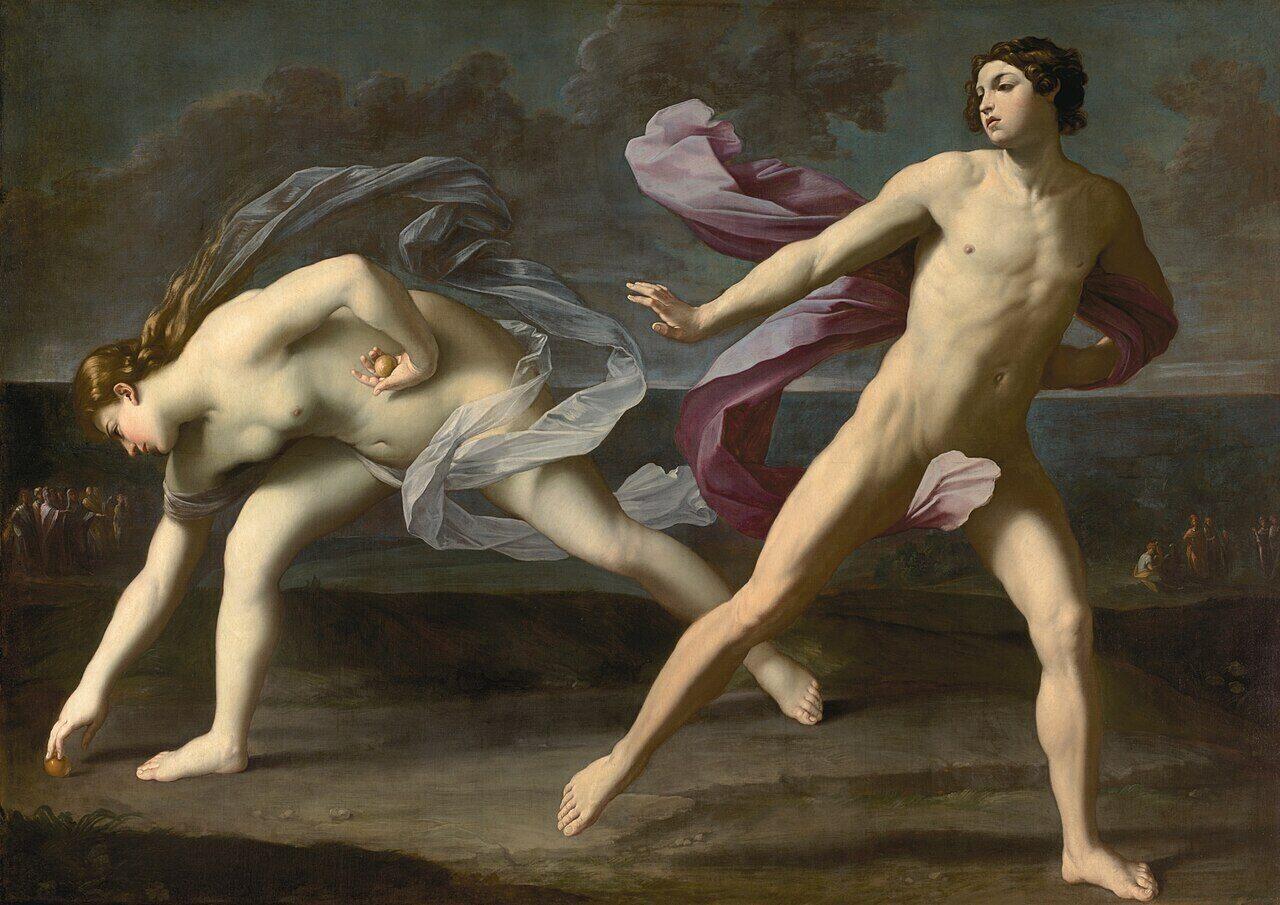
Capodimonte holds the Naples version of Atalanta and Hippomenes (c. 1620–1625), one of Reni's most dynamic compositions, showing two running figures against a dark ground. The Prado in Madrid holds a second autograph version. Also here: St. Jerome and the Adoration of the Shepherds.

Book Museo di Capodimonte tickets

Museo del Prado, Madrid

Italian galleries, first floor, Rooms 29–32. Book online to skip the line.

The Prado holds the Madrid version of Hippomenes and Atalanta (c. 1618–1619), hung alongside Bolognese and Neapolitan Baroque paintings. Comparing this version with the Naples canvas (slightly different in colouring and proportions) is one of the key exercises for Reni scholars. Also here: Cleopatra and The Virgin of the Chair.

Book Museo del Prado tickets

Kunsthistorisches Museum, Vienna

Picture Gallery, first floor. Online ticket recommended.

Vienna holds Reni's Baptism of Christ and several devotional works. The Habsburg collections assembled strong Italian Baroque holdings, and the Reni canvases sit alongside works by the Carracci and Domenichino, offering a complete survey of the Bolognese school in one visit.

Book Kunsthistorisches Museum tickets

Churches in Bologna

Free entry. Dress code applies. Best visited mornings for natural light.

Several major Reni altarpieces remain in situ. At San Domenico, the chapel to the right of the apse holds a Sacra Conversazione. The Cathedral of San Pietro (Metropolitana) contains a Christ in Glory in the apse area. San Filippo Neri holds the Annunciation. Santa Maria della Vita, a short walk from Piazza Maggiore, has the Assumption of the Virgin. The church itinerary pairs well with a morning at the Pinacoteca (about 15 minutes on foot between them).

National Gallery, London

Free entry. Italian Baroque galleries, rooms 29–32.

The National Gallery holds Lot and His Daughters Leaving Sodom (c. 1615–1616) and The Coronation of the Virgin (c. 1607), showing both Reni's early Caravaggesque phase and his mature classicist style. Open daily 10:00–18:00, Fridays until 21:00.

National Gallery London guided tour
Guido Reni clusters: practical visit planning

Bologna: 1–2 days

Pinacoteca Nazionale, churches, Palazzo Pepoli

Start at the Pinacoteca Nazionale for the full range of Reni's career. Then walk to San Domenico (10 min south), the Cathedral of San Pietro (5 min east), and Santa Maria della Vita near Piazza Maggiore. Palazzo Pepoli Campogrande, which occasionally displays Bolognese Baroque works, is a 5-minute walk from the Pinacoteca. Tip: churches close 12:00–15:00, so plan museum visits for early afternoon.

Rome: 2–3 days

Borghese, Capitolini, Barberini, Casino dell'Aurora

Day 1: Galleria Borghese (morning slot, book ahead) then Musei Capitolini (afternoon). Day 2: Palazzo Barberini, then walk to the Casino dell'Aurora on Via XXIV Maggio (only open first of the month). The Galleria Doria Pamphilj and Galleria Colonna also hold minor Reni works and are both near Piazza Venezia. Check the Rome city page for a broader itinerary.

Practical note

Comparing the two Atalanta canvases

Reni painted Hippomenes and Atalanta twice: one is at the Museo di Capodimonte in Naples, the other at the Prado in Madrid. The Madrid version (c. 1618–1619) is slightly warmer in tone; the Naples version (c. 1620–1625) is cooler and more geometrically composed. Seeing both in person is the only way to understand Reni's working process for repeated compositions.

Best city pages for Guido Reni

Bologna

The Pinacoteca Nazionale holds the largest Reni collection worldwide, with the Massacre of the Innocents, the Pallione del Voto, and over a dozen other canvases. Several altarpieces remain in Bologna's churches, including San Domenico and the Cathedral.

Rome

Rome is where Reni received his most prestigious commissions: the Aurora ceiling fresco (Casino Pallavicini-Rospigliosi), altarpieces for St. Peter's (now in the Pinacoteca Vaticana), and canvases now at the Musei Capitolini, Borghese, and Palazzo Barberini.

Continue with Guercino

Guercino (1591–1666) offers the strongest contrast within the Bolognese school. Where Reni favoured pale luminosity and symmetry, Guercino used warm chiaroscuro and diagonal compositions. Start at the Pinacoteca Civica in Cento, his birthplace, then compare both artists at the Pinacoteca Nazionale in Bologna.

FAQ: visiting Guido Reni's paintings

Where are the most important Guido Reni paintings in Bologna?

The Pinacoteca Nazionale di Bologna (Rooms 23–24, second floor) holds the largest collection, including the Massacre of the Innocents, Pietà dei Mendicanti, and Pallione del Voto. Major altarpieces also remain in churches: San Domenico, the Cathedral, San Filippo Neri, and Santa Maria della Vita.

Which Guido Reni paintings can I see in Rome?

The Aurora ceiling fresco at Casino dell'Aurora (open first day of each month only), David with the Head of Goliath at the Galleria Borghese, the Crucifixion of St. Peter and Burial of St. Petronilla at the Musei Capitolini, and the attributed Beatrice Cenci at Palazzo Barberini.

Do I need to book in advance for Guido Reni sites?

In Bologna, the Pinacoteca Nazionale rarely requires advance booking. In Rome, the Galleria Borghese requires timed-entry reservation at least a week ahead. Palazzo Barberini is easier, but online tickets save queuing time. The Casino dell'Aurora (open one day per month) does not take reservations; arrive early.

How does Guido Reni differ from Guercino?

Both were Bolognese contemporaries who trained in the Carracci tradition, but Reni pursued pale, luminous palettes, idealized figures and symmetrical compositions. Guercino favoured warmer tones, dramatic diagonals and more physical, emotionally direct painting. The best place to compare them side by side is the Pinacoteca Nazionale in Bologna. For Guercino specifically, visit the Pinacoteca Civica in Cento (35 km north of Bologna).

Are there Guido Reni paintings outside Italy?

Yes. The National Gallery in London holds Lot and His Daughters Leaving Sodom and The Coronation of the Virgin. The Louvre has The Abduction of Helen and David with the Head of Goliath. The Museo del Prado in Madrid holds a version of Hippomenes and Atalanta. The Kunsthistorisches Museum in Vienna holds the Baptism of Christ.

Read Guido Reni on TheIntroverTraveler

Venice canal

Bologna art guide

If Caravaggio intensifies and Bernini theatricalizes, Guido Reni refines. Light becomes measured, gesture becomes controlled, and emotion is filtered through clarity. It is a vision of the Baroque that prefers balance over excess, and intelligence over spectacle.