Artist in city

Caravaggio in Rome

Caravaggio arrived in Rome around 1592 and left under a death sentence in 1606. In those fourteen years he repainted the relationship between sacred narrative and bodily presence: and many of the works from this period are still in Rome, in the places, or at least the buildings, they were made for. The Contarelli Chapel in San Luigi dei Francesi still holds the three Matthew canvases. The Cerasi Chapel in Santa Maria del Popolo still puts the Crucifixion of Peter and the Conversion of Paul facing each other across a narrow liturgical space. This is not typical: most Renaissance and Baroque masterpieces left their original settings long ago.

This page gives you the location of every major Caravaggio site in Rome, the practical information needed to visit each one, and booking links for the venues that require advance reservations.

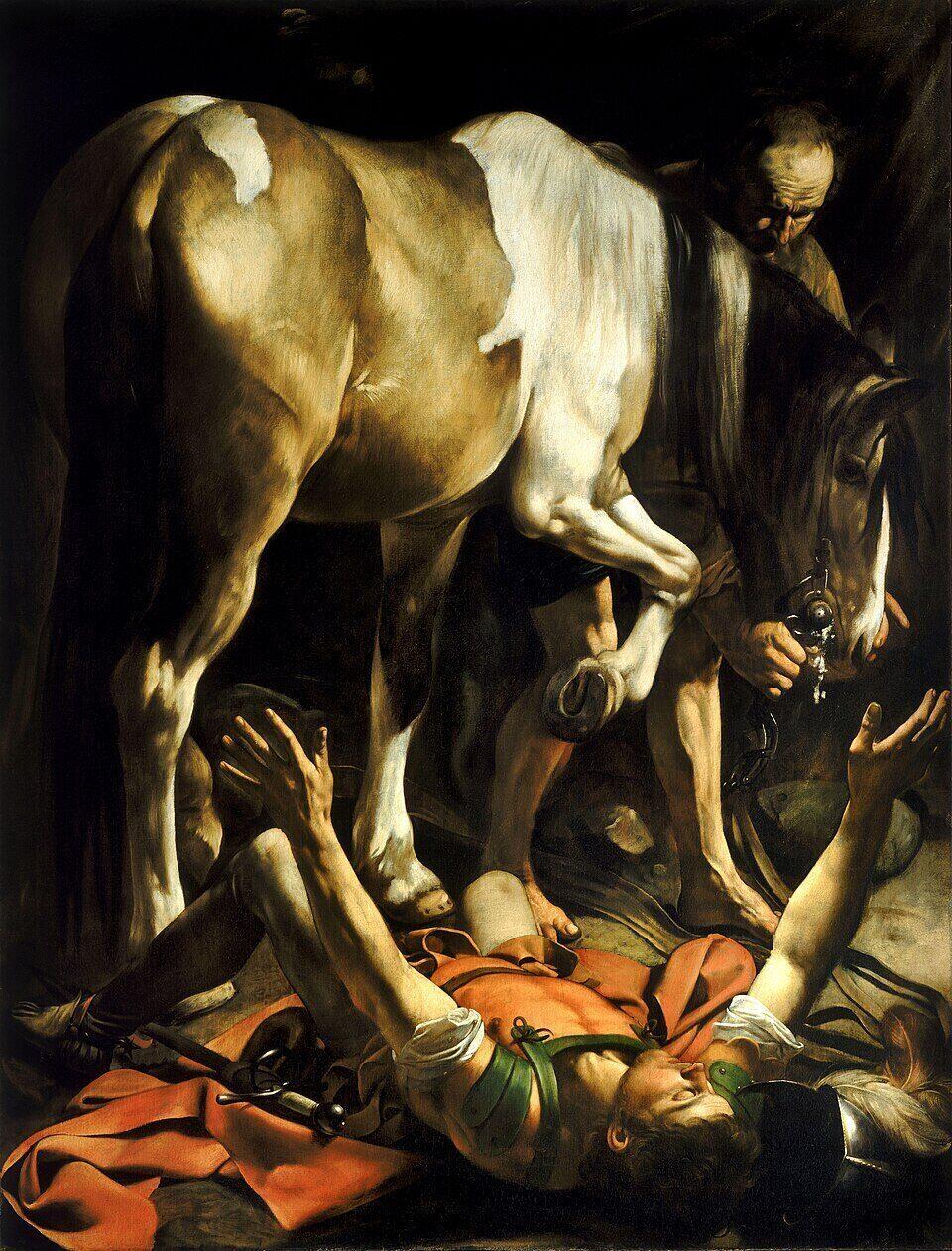
Caravaggio, Conversion of Saint Paul on the Road to Damascus (1601), Cerasi Chapel, Santa Maria del Popolo, Rome

Caravaggio in Rome: interactive map

Tap to activate map

Why Rome is different: works still in situ

The Contarelli Chapel in San Luigi dei Francesi holds three large canvases on the life of Saint Matthew: The Calling of Saint Matthew, The Inspiration of Saint Matthew, and The Martyrdom of Saint Matthew. They were painted between 1599 and 1602, commissioned by the French cardinal Matthieu Cointerel, and have remained in the chapel ever since. The scale was designed for the space, the direction of painted light calculated against the actual window: the chapel's upper left opening still illuminates the paintings from the same angle Caravaggio exploited in the composition.

The Cerasi Chapel in Santa Maria del Popolo holds the Crucifixion of Saint Peter (1601) and the Conversion of Saint Paul on the Road to Damascus (1601), placed on the side walls facing each other. Both are large canvases: around 230 × 175 cm: and the narrow chapel forces a close, physical encounter that flat reproductions never convey. The altarpiece between them is by Annibale Carracci, a pairing that was deliberate and remains legible.

In both cases, the works are free to see. No ticket, no booking, no timed entry. That is unusual for Caravaggio of this quality.

Where to see Caravaggio in Rome

San Luigi dei Francesi: Contarelli Chapel

The essential Caravaggio visit in Rome and one of the few places where his large public commissions remain exactly where they were installed. The three Matthew canvases are in the fifth chapel on the left. The church is open daily except Wednesday afternoons (approximately 12:30–15:00). The Contarelli Chapel has coin-operated lighting: bring €0.50. The church is a 5-minute walk from the Pantheon.

Santa Maria del Popolo: Cerasi Chapel

The Cerasi Chapel is the first chapel on the left of the high altar. Crucifixion of Saint Peter and Conversion of Saint Paul face each other across a space barely three metres wide: the confrontation is physical, not just visual. The church is at Piazza del Popolo (Line A metro, Flaminio stop), open daily. The Chigi Chapel in the same church, redesigned by Bernini, is a short detour worth taking.

Galleria Borghese

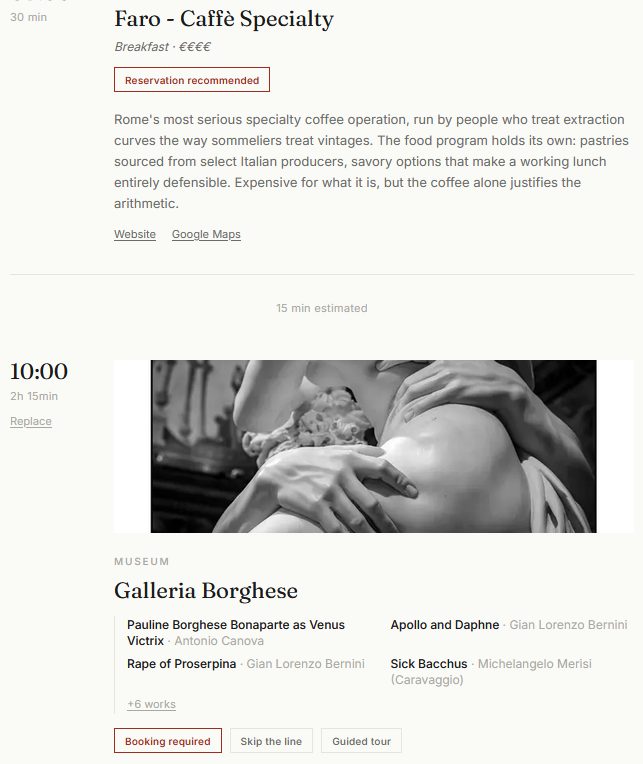
Six Caravaggio paintings, including David with the Head of Goliath: where the severed head carrying Goliath's features is widely read as a self-portrait: Saint Jerome Writing, and the early Boy with a Basket of Fruit. Entry is strictly timed (2-hour sessions, max 360 visitors), and slots sell out weeks ahead. Book as early as possible. The collection also holds major Bernini sculptures, making this the highest-priority museum visit in Rome for any serious traveler.

Reserve timed entry: Galleria Borghese

Book a guided tour: Galleria Borghese

Palazzo Barberini

Judith Beheading Holofernes (c. 1598–99) is here: one of the most unsparing images of violence in Baroque painting. The museum also holds Narcissus, whose attribution to Caravaggio is accepted by most scholars. Palazzo Barberini is less crowded than the Borghese and can often be visited without advance booking, though pre-booking avoids queues in high season.

Book Palazzo Barberini tickets

Book a guided tour: Palazzo Barberini

Palazzo Doria Pamphilj

Two of the quietest and least-visited Caravaggio paintings in Rome: Rest on the Flight into Egypt (c. 1597) and Penitent Mary Magdalene (c. 1594–95), both from his early Roman period before the Contarelli commission. The palace is a private collection, still owned by the Doria Pamphilj family, on Via del Corso near the Pantheon. Smaller crowds than the main state museums.

Book Palazzo Doria Pamphilj tickets

Musei Capitolini and Palazzo Altemps

The Musei Capitolini hold a Saint John the Baptist (c. 1602), one of two versions Caravaggio painted of this subject during the same period (the other is at the Borghese). Palazzo Altemps, part of the national museum system and a short walk from San Luigi dei Francesi, is worth visiting if you are in the area. Both can be combined in a single day with the nearby churches.

Book Musei Capitolini tickets

Book a guided tour: Musei Capitolini
A two-day Caravaggio itinerary in Rome

Day 1: The churches and one museum

  • Morning: San Luigi dei Francesi (Contarelli Chapel) → 10-minute walk → Santa Maria della Pace (Raphael's Sibyls, while in the area) → 5 minutes → Piazza Navona (Bernini's Fountain of the Four Rivers, for context on the neighbourhood Caravaggio knew).
  • Afternoon: Palazzo Barberini (Judith Beheading Holofernes, Narcissus): 20 minutes by foot or 10 by taxi from Piazza Navona.

Day 2: Borghese and the early works

  • Morning (timed slot): Galleria Borghese: book the earliest available session.
  • Afternoon: Palazzo Doria Pamphilj (early Caravaggio, quiet rooms) → Musei Capitolini (Saint John the Baptist) if energy allows.

Santa Maria del Popolo can fit into either day: it is on the way to the Borghese from the historic centre (Piazza del Popolo, Line A).

FAQ

Where can you see Caravaggio's paintings in Rome?

The main locations: San Luigi dei Francesi (Contarelli Chapel: three Matthew canvases, free), Santa Maria del Popolo (Cerasi Chapel: Peter and Paul, free), Galleria Borghese (six paintings including David with the Head of Goliath: advance booking required), Palazzo Barberini (Judith Beheading Holofernes, Narcissus), and Palazzo Doria Pamphilj (early works, small crowds).

Is Galleria Borghese worth it for Caravaggio?

Yes. Six paintings, including David with the Head of Goliath and the Boy with a Basket of Fruit. Entry is timed, capped at 360 visitors per 2-hour session, and frequently sold out two to three weeks ahead. Book as early as possible. The same visit also covers Bernini's early sculpture (Apollo and Daphne, The Rape of Proserpina), making it the single most concentrated hour and a half of Baroque art anywhere in Rome.

Which Caravaggio churches in Rome are free?

San Luigi dei Francesi (Contarelli Chapel) and Santa Maria del Popolo (Cerasi Chapel) are both free. San Luigi is closed Wednesday afternoons; bring €0.50 for the chapel lighting. Santa Maria del Popolo is at Piazza del Popolo, Flaminio metro stop (Line A). Both are among the most important Caravaggio sites in the world and neither requires a ticket.

How many days do I need to see Caravaggio in Rome?

One focused day covers the priority sites: both churches in the morning (15 minutes apart on foot), Galleria Borghese or Palazzo Barberini in the afternoon. A second half-day adds Palazzo Doria Pamphilj and the Musei Capitolini. If you are visiting Rome for the first time, the churches alone are free and require no planning, and already justify a morning.

Two free churches. One mandatory booking. The rest is planning.

The Contarelli Chapel and the Cerasi Chapel ask nothing of you except to show up. Between them they hold five of Caravaggio's most important Roman works, still in the rooms they were made for. Galleria Borghese requires the opposite: book weeks ahead, arrive on time, spend two hours. Both experiences are available in the same city, on the same day, to anyone willing to plan. Use the map to put them in the right order.

.js">