Artist page

Caravaggio: where to see his paintings

Caravaggio's paintings were made for specific places: chapels, altars, private rooms. The encounter still depends on where you find them. The Contarelli Chapel in San Luigi dei Francesi stages the three Matthew canvases as a single dramatic sequence. The Cerasi Chapel in Santa Maria del Popolo places Peter's crucifixion and Paul's conversion facing each other across a narrow space. Galleria Borghese holds six paintings, including the late David with the Head of Goliath (c. 1609–10). The context is not optional: it is part of the work.

Use this page to locate the main works in Rome, distinguish what is still in situ from what has been moved to museums, and plan the visit before you arrive.

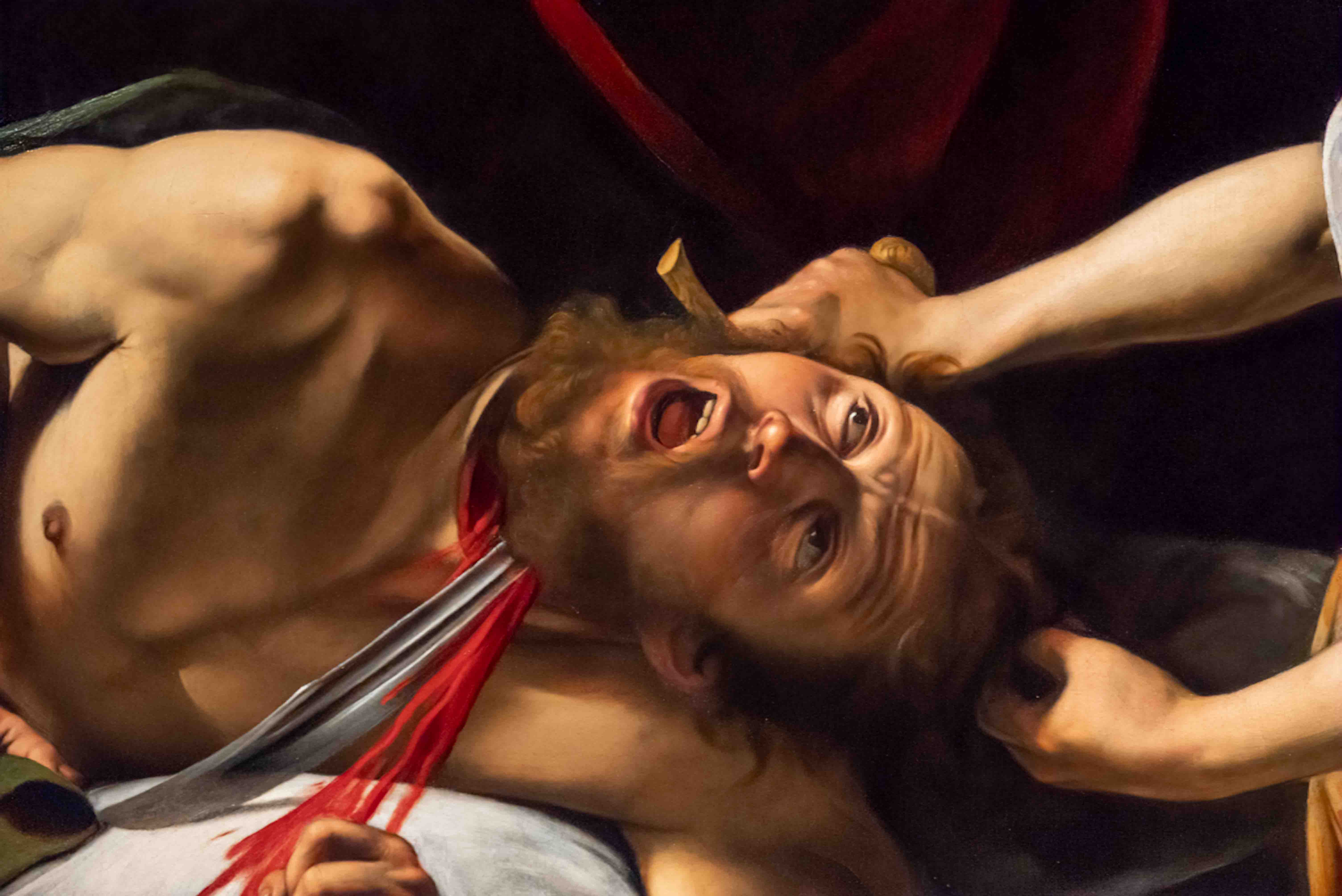
Caravaggio, Judith Beheading Holofernes (1598-99), Palazzo Barberini, Rome

Explore Caravaggio on the map

Tap to activate map

Where to see Caravaggio in Rome

Most of the essential works are concentrated in five locations that can be covered in two days. The priority order below reflects both artistic importance and visiting logistics:

  • San Luigi dei Francesi (Contarelli Chapel): Calling of Saint Matthew (1599–1600), Martyrdom of Saint Matthew (1599–1600), Saint Matthew and the Angel (1602). Free entry, open daily except Wednesday afternoon. Arrive before 10:00 to avoid crowds; the chapel has limited standing space. Bring coins for the light box (€1).
  • Santa Maria del Popolo (Cerasi Chapel): Crucifixion of Saint Peter and Conversion of Saint Paul (both 1600–01), facing each other across the chapel. Free entry. Nearest metro: Flaminio (Line A), a 2-minute walk.
  • Galleria Borghese (Room VIII, ground floor): David with the Head of Goliath (c. 1609–10), Saint Jerome Writing (1605–06), Boy with a Basket of Fruit (c. 1593), Madonna and Child with St. Anne (1605–06), Saint John the Baptist (1610), Self-Portrait as Sick Bacchus (c. 1593). Entry strictly timed in 2-hour slots; book 2–3 weeks in advance.
  • Palazzo Barberini (Room 20, first floor): Judith Beheading Holofernes (c. 1598–99), Narcissus (c. 1597–99), Saint Francis in Meditation (c. 1603). Walk-in usually possible; booking recommended May through October.
  • Palazzo Doria Pamphilj (Aldobrandini Gallery, first floor): Rest on the Flight into Egypt (c. 1597), Penitent Mary Magdalene (c. 1594–95). Consistently smaller crowds than other museums.

Caravaggio locations in Rome: details

ⓘ Opening hours and admission prices listed on this page are indicative and subject to change. Always verify current information on the official website of each venue before your visit.

San Luigi dei Francesi (Contarelli Chapel)

Free entry – Open daily 9:30–12:30, 14:30–18:30 (closed Wed afternoon) – Piazza di San Luigi dei Francesi, near Piazza Navona

The Contarelli Chapel, in the left aisle, holds three large canvases on the life of Saint Matthew, completed between 1599 and 1602. The Calling of Saint Matthew is on the left wall; the light in the painting follows the actual window light from the right, creating a unified spatial effect. The Martyrdom of Saint Matthew faces it on the right wall. Saint Matthew and the Angel (the second version; the first was rejected) is above the altar. The chapel is small, so mornings before 10:00 are best for unobstructed viewing. Bring €1 coins for the light box. About a 5-minute walk from the Pantheon.

Santa Maria del Popolo (Cerasi Chapel)

Free entry – Open Mon–Sat 7:15–12:30, 16:00–19:00; Sun 7:30–19:00 – Piazza del Popolo (Metro Flaminio, Line A)

The Cerasi Chapel is the first chapel to the left of the main altar. Crucifixion of Saint Peter (1600–01) hangs on the left, Conversion of Saint Paul (1600–01) on the right. The altarpiece between them is Annibale Carracci's Assumption of the Virgin, making this chapel an extraordinary side-by-side comparison of the two leading painters of the period. The chapel is narrow; visit during weekday mornings for the best light and fewer people. A 15-minute walk from San Luigi dei Francesi, or one metro stop from Spagna.

Galleria Borghese

Six Caravaggio paintings in Room VIII (ground floor) – Timed 2-hour slots – Book 2–3 weeks ahead

The Borghese holds the largest single-museum concentration of Caravaggio paintings in Rome. All six hang in Room VIII on the ground floor. David with the Head of Goliath (c. 1609–10) is the most arresting: the severed head is widely read as a self-portrait. Boy with a Basket of Fruit (c. 1593) and Self-Portrait as Sick Bacchus (c. 1593) represent his earliest Roman period. Madonna and Child with St. Anne (Dei Palafrenieri) (1605–06) was rejected by St. Peter's and acquired by Cardinal Borghese. Saint Jerome Writing (1605–06) and Saint John the Baptist (1610, possibly his last work) complete the group. The museum also holds Bernini's early sculpture (Apollo and Daphne, David, Rape of Proserpina) on the same floor, so the visit covers both artists efficiently. Piazzale del Museo Borghese; take bus 910 from Termini or walk 20 minutes from Spagna metro.

Book Galleria Borghese ticketsBook a guided tour

Palazzo Barberini (Gallerie Nazionali di Arte Antica)

Room 20, first floor – Open Tue–Sun 10:00–18:00 – Via delle Quattro Fontane 13 (Metro Barberini, Line A)

Judith Beheading Holofernes (c. 1598–99) is the centerpiece, one of the most viscerally direct paintings in European art. Narcissus (c. 1597–99) hangs nearby; the attribution was debated for decades but is now generally accepted. Saint Francis in Meditation (c. 1603) is also here. The same ticket includes Palazzo Corsini across the Tiber (which holds works by Guido Reni and Rubens). Walk-in is usually possible, but in summer, pre-booking avoids a 20–30-minute wait.

Book Palazzo Barberini ticketsBook a guided tour

Palazzo Doria Pamphilj

Aldobrandini Gallery, first floor – Open daily 9:00–19:00 – Via del Corso 305 (5 min from Piazza Venezia)

A private collection still owned by the Doria Pamphilj family. Rest on the Flight into Egypt (c. 1597) is one of Caravaggio's most tender early works; Penitent Mary Magdalene (c. 1594–95) hangs in the same gallery. The palace also displays Velázquez's Portrait of Innocent X, among the most celebrated portraits ever painted, making the visit worthwhile well beyond Caravaggio alone. The audio guide (included with the ticket) is narrated by a member of the family. Consistently the least crowded of the major Caravaggio venues in Rome.

Book Palazzo Doria Pamphilj tickets

Caravaggio beyond Rome

Naples

Pio Monte della Misericordia and Capodimonte

After fleeing Rome in 1606, Caravaggio arrived in Naples. The Seven Works of Mercy (1607) remains in its original setting above the altar of Pio Monte della Misericordia on Via dei Tribunali. It compresses all seven acts of mercy into a single turbulent scene. At Museo di Capodimonte (on the hilltop above the city center), Flagellation of Christ (1607–08) hangs in Gallery 78, second floor. Both can be visited in one day. Book Capodimonte tickets.

Malta and Sicily

Valletta, Siracusa, Messina

The Beheading of Saint John the Baptist (1608) at St. John's Co-Cathedral in Valletta is the only work Caravaggio signed (his name appears in the blood flowing from the saint's neck). In Sicily, the Burial of Saint Lucy (1608) is displayed in the Chiesa di Santa Lucia alla Badia in Siracusa. The Raising of Lazarus (1609) is at the Museo Regionale in Messina. These late works, painted while Caravaggio was a fugitive, show an increasingly spare and darkened palette.

Museums outside Rome and Naples

Florence, Vienna, London, Paris

Key works outside Rome and Naples include: Bacchus (c. 1596) and Medusa (c. 1597) at the Uffizi in Florence (book Uffizi tickets); David with the Head of Goliath (c. 1607, a different version from the Borghese painting) and Madonna of the Rosary (1606–07) at the Kunsthistorisches Museum in Vienna (book KHM tickets); Supper at Emmaus (1601) and Salome with the Head of John the Baptist (c. 1609–10) at the National Gallery in London (free entry). Use the map to locate all attributed works across Europe.

Practical notes for visiting

Galleria Borghese

Entry is timed (2-hour slots), capped at around 360 visitors per session, and frequently sold out two to three weeks in advance during peak season (April through October). Book as early as possible. First slot (9:00) is the quietest. The collection also includes Bernini's early sculpture and works by Titian and Raphael, so the visit works well as a combined 2-hour session. No re-entry once you leave.

San Luigi dei Francesi and Santa Maria del Popolo

Both are functioning churches, free to enter, with standard visiting hours. San Luigi dei Francesi is closed on Wednesday afternoons and during services. The Contarelli Chapel has coin-operated lighting: bring €1 coins. Santa Maria del Popolo is a 2-minute walk from Piazza del Popolo metro station (Flaminio, Line A). The two churches are about 15 minutes apart on foot; combine them in a single morning.

Walking route for all five Caravaggio locations

Day 1 (Centro Storico): Start at Santa Maria del Popolo (opens 7:15), walk south to San Luigi dei Francesi (10 min), then continue to Palazzo Doria Pamphilj on Via del Corso (5 min). Day 2: Morning slot at Galleria Borghese (book the 9:00 entry), then take bus or walk to Palazzo Barberini (20 min walk or 2 stops on Line A from Flaminio to Barberini). Total walking for both days: under 8 km.

FAQ

Why use a map for Caravaggio?

Because Caravaggio's works are deeply affected by site. Churches, chapels, and museum relocations change how the paintings are perceived.

Why do Caravaggio's paintings look so different in churches compared to museums?

Because Caravaggio painted for specific spatial and lighting conditions. Many of his works were conceived to be seen in dim chapels, with controlled light entering from a single direction, often aligned with the painted illumination itself. When these works are moved to museums, that relationship is altered: the paintings become more legible, but they lose part of their original tension. The map helps distinguish between works still in situ and those that have been relocated, which is essential for understanding how Caravaggio actually intended them to function.

Where should I start?

Start with Rome. It is the primary city for seeing how Caravaggio's painting behaves in relation to sacred setting, patronage, and urban intensity.

Caravaggio, where light became judgment.

If other painters distribute meaning across composition, Caravaggio often detonates it in a single threshold of illumination. That is why place matters so much: his paintings are not neutral images, but events staged in rooms, chapels, and cities that still retain part of their original violence.