City guide

Urbino Art Guide

Urbino's compact hilltop centre holds one of the densest concentrations of Renaissance art in Italy. The Galleria Nazionale delle Marche, housed inside the Palazzo Ducale built for Federico da Montefeltro, displays Piero della Francesca's Flagellation of Christ and Madonna di Senigallia, Raphael's La Muta, and Paolo Uccello's Profanation of the Host. Within walking distance you can visit Casa Natale di Raffaello, two fresco-filled oratories, and the Duomo.

This page maps the key art sites in Urbino, provides practical booking information, and connects to artist-specific pages on ArtAtlas for deeper research.

View of Urbino's Palazzo Ducale and twin towers from the surrounding hills

Where to see art in Urbino

Tap to activate map

Museums and art sites in Urbino

ⓘ Opening hours and admission prices listed on this page are indicative and subject to change. Always verify current information on the official website of each venue before your visit.

Galleria Nazionale delle Marche (Palazzo Ducale)

Piazza Rinascimento 13 – open Tue–Sun 8:30–19:15, Mon 8:30–14:00 – book 1–2 weeks ahead in high season

The principal art museum of Urbino occupies the entire piano nobile of Federico da Montefeltro's Palazzo Ducale. Key works include Piero della Francesca's Flagellation of Christ (c. 1455) and Madonna di Senigallia (c. 1474), both in the rooms to the right of the main staircase. Raphael's La Muta (c. 1507) is displayed nearby. Other highlights: Paolo Uccello's Profanation of the Host predella (1467–1468), Pedro Berruguete's Federico da Montefeltro and his son Guidobaldo, and Luciano Laurana's architectural design of the palace itself, including the celebrated Studiolo with its trompe-l'oeil intarsia panels. Allow at least 2 hours.

Book Galleria Nazionale delle Marche guided tourOfficial site

Casa Natale di Raffaello

Via Raffaello 57 – open Mon–Sat 9:00–13:00 / 15:00–19:00, Sun 10:00–13:00 (seasonal) – no advance booking required

Raphael's birthplace is a 15th-century townhouse where the artist spent his early years under the guidance of his father Giovanni Santi, also a painter. The ground floor displays a fresco attributed to the young Raphael (a small Madonna col Bambino), period furnishings, and reproductions of Giovanni Santi's work. The courtyard contains the stone on which pigments were ground. A visit takes about 30 minutes. From here, Palazzo Ducale is a 5-minute walk downhill along Via Raffaello.

Oratorio di San Giovanni Battista

Via Barocci 31 – open daily 10:00–12:30 / 15:00–17:30 (hours vary seasonally)

This small 14th-century oratory contains a complete fresco cycle by the Salimbeni brothers (Lorenzo and Jacopo, 1416), covering all four walls and the apse with scenes from the life of John the Baptist. The style blends International Gothic with early naturalistic detail, particularly in the Crucifixion on the back wall and the vivid Feast of Herod. Combined ticket available with the Oratorio di San Giuseppe, located a few steps away.

Oratorio di San Giuseppe

Via Barocci – same combined ticket as Oratorio di San Giovanni

Houses a remarkable life-size stucco and stone Nativity (Presepio) by Federico Brandani (c. 1545–1550), an illusionistic sculptural group set into the wall behind the altar. The ceiling frescoes are also by Brandani. The visit takes about 15 minutes and pairs naturally with the Oratorio di San Giovanni next door.

Duomo (Cattedrale di Santa Maria Assunta)

Piazza Duca Federico – free entry – open daily 7:30–13:00 / 14:30–19:00

Rebuilt in Neoclassical style after the 1789 earthquake, the Duomo sits directly adjacent to Palazzo Ducale. The interior contains Federico Barocci's Last Supper (1590–1599), one of his largest and most dramatic canvases, in the Cappella del Santissimo Sacramento. The Museo Albani in the crypt preserves earlier artworks including liturgical objects from the original medieval cathedral.

Fortezza Albornoz

Viale Bruno Buozzi – free entry to park, fortress exterior accessible year-round

The 14th-century hilltop fortress offers the best panoramic view of Urbino, including the twin towers (torricini) of Palazzo Ducale and the surrounding Marche hills. Not an art museum, but essential for understanding the town's spatial logic and the visual relationship between the Ducal Palace and the landscape. A 10-minute uphill walk from Piazza della Repubblica.

Main Urbino art clusters

Palazzo Ducale area

Galleria Nazionale, Duomo, Piazza Rinascimento

The centre of gravity for any art visit. The Galleria Nazionale delle Marche occupies the Palazzo Ducale, with Piero della Francesca, Raphael, and Paolo Uccello on the piano nobile. The Duomo (Barocci's Last Supper) is directly adjacent. Start here in the morning when the gallery opens at 8:30 to avoid midday crowds.

Book Galleria Nazionale guided tour

Via Raffaello – Via Barocci

Casa di Raffaello and the two Oratories

From Piazza della Repubblica, walk uphill along Via Raffaello to Raphael's birthplace, then continue to Via Barocci for the Oratorio di San Giovanni (Salimbeni brothers frescoes) and Oratorio di San Giuseppe (Brandani's stucco Nativity). This cluster takes about 90 minutes and covers Urbino's most intimate art sites.

Practical note

Getting around and ticket planning

Urbino's entire historic centre is walkable in under 20 minutes. Parking is available at Borgo Mercatale (below the centre), connected by elevator and escalator to Piazza della Repubblica. A combined ticket for the two Oratories saves a few euros. The Galleria Nazionale requires a separate ticket; book online via the official site or through a guided tour.

Galleria Nazionale official site

Artists connected to Urbino

Piero della Francesca Art Map

Urbino holds two of Piero's most studied paintings: the Flagellation of Christ and the Madonna di Senigallia, both in the Galleria Nazionale. Use the Piero della Francesca page to trace his works in Arezzo (Basilica di San Francesco), Sansepolcro, Monterchi, and Florence.

Raphael Art Map

Born in Urbino in 1483, Raphael trained in his father Giovanni Santi's workshop before moving to Perugia and eventually Rome. La Muta in the Galleria Nazionale and the early fresco in Casa Natale di Raffaello connect to a much wider geography, including the Vatican Rooms and the Uffizi.

Masaccio Art Map

Though Masaccio never worked in Urbino, his innovations in perspective and spatial logic (Brancacci Chapel, Florence; Trinity at Santa Maria Novella) directly influenced the intellectual environment that shaped Piero della Francesca and the Urbino court painters.

Read Urbino on TheIntroverTraveler

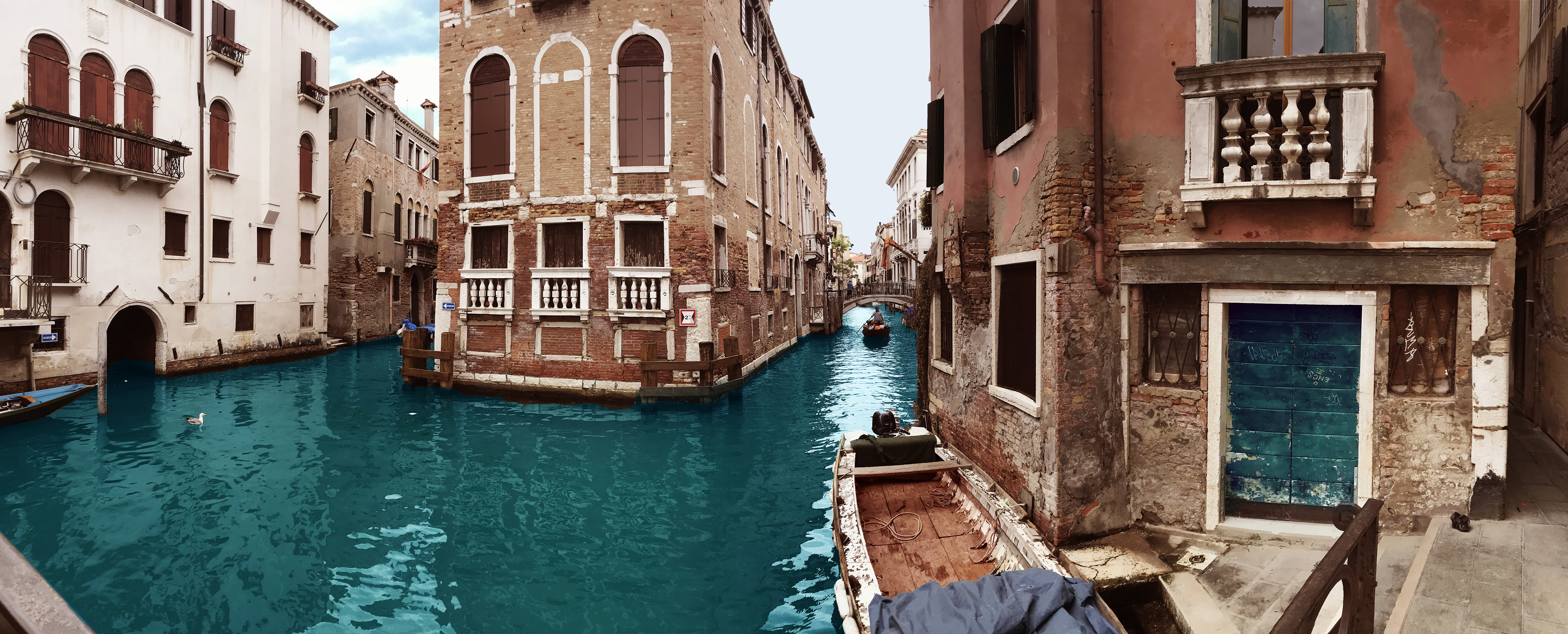
Venice canal

Piero della Francesca Itinerary

A two-day itinerary through Rimini, Urbino, Arezzo and other locations, following the major works of Piero della Francesca.

Modern Bodies at the Accademia Gallery in Venice

A visit to the Gallerie dell'Accademia in Venice: Leonardo's Vitruvian Man and an exhibition of Piero della Francesca's De prospectiva pingendi — two monuments of Renaissance thinking about the body, proportion, and space, encountered in the same building.

FAQ

Do I need to book the Galleria Nazionale delle Marche in advance?

Advance booking is recommended from April through October and on holiday weekends. In winter months you can often walk in, but reserving online guarantees a timed slot and avoids the queue at the ticket office inside Palazzo Ducale.

How many days do I need for art in Urbino?

One full day covers the Galleria Nazionale, Casa Natale di Raffaello, both Oratories, and the Duomo. If you want to add the Fortezza Albornoz for panoramic views and spend more time in the Palazzo Ducale's Studiolo, allow a day and a half. The centre is compact: all sites are within a 15-minute walk of each other.

Where are Piero della Francesca's paintings in Urbino?

Both the Flagellation of Christ and the Madonna di Senigallia are in the Galleria Nazionale delle Marche, on the piano nobile of Palazzo Ducale. They are displayed in dedicated rooms in the 15th-century painting section to the right of the main staircase.

How do I get to Urbino by public transport?

Urbino has no train station. The nearest one is Pesaro (35 km), from where Adriabus line 46 runs to Urbino's Borgo Mercatale terminal in about 50 minutes. From Borgo Mercatale, take the elevator or escalator up to Piazza della Repubblica in the historic centre.

What other art cities pair well with Urbino?

Urbino connects naturally to Piero della Francesca's geography: Sansepolcro (Museo Civico, Resurrection), Monterchi (Museo Madonna del Parto), and Arezzo (Basilica di San Francesco, Legend of the True Cross). All are reachable within 1–2 hours by car through the Apennine hills.

Urbino: where the Renaissance became a system of thought.

If Florence experiments and Rome monumentalizes, Urbino refines. Art here is inseparable from intellect, proportion, and discipline. Inside Federico da Montefeltro's Palazzo Ducale, painting, architecture, and philosophy converge into a unified programme, visible in Piero della Francesca's geometric clarity, in Laurana's spatial logic, and in the intarsia panels of the Studiolo.

.js">