City page

Munich Art Guide

Munich holds one of Europe's densest concentrations of art museums within a single walkable district. The Kunstareal alone groups the Alte Pinakothek (Dürer, Rubens, Altdorfer), the Pinakothek der Moderne, the Lenbachhaus (Kandinsky, Franz Marc, the entire Blaue Reiter core), and the Brandhorst Museum, all within ten minutes on foot. Beyond the museum quarter, the Residenz, the Asamkirche, and the Theatinerkirche add centuries of courtly and sacred art.

This page maps every major site, links to booking where available, and connects Munich to the ArtAtlas artist pages for Kandinsky, Franz Marc, and Paul Klee.

Munich Kunstareal museum district

Where to see art in Munich

Tap to activate map

Munich museums and key works

ⓘ Opening hours and admission prices listed on this page are indicative and subject to change. Always verify current information on the official website of each venue before your visit.

Alte Pinakothek

Barer Str. 27 – Tue–Sun 10:00–18:00 (Tue until 20:30) – €1 on Sundays

One of the oldest and most important old-master collections in the world. Ground floor, Room 2: Albrecht Dürer's Self-Portrait in a Fur-Collared Robe (1500) and The Four Apostles (1526). Upper floor: Albrecht Altdorfer's The Battle of Alexander at Issus (1529, Room 2), a huge panel that doubles as landscape and historical drama. The Rubens galleries (Rooms VII–IX) hold 73 works including The Great Last Judgment and Rubens and Isabella Brant in the Honeysuckle Bower. Also here: Raphael's Canigiani Holy Family (c.1507, Room V), Leonardo's Madonna with the Carnation (c.1478, Room IV), and El Greco's Disrobing of Christ. Advance booking recommended for weekends.

Lenbachhaus

Luisenstr. 33 – Tue–Sun 10:00–18:00 (Tue until 20:00) – Adjacent to Königsplatz U-Bahn

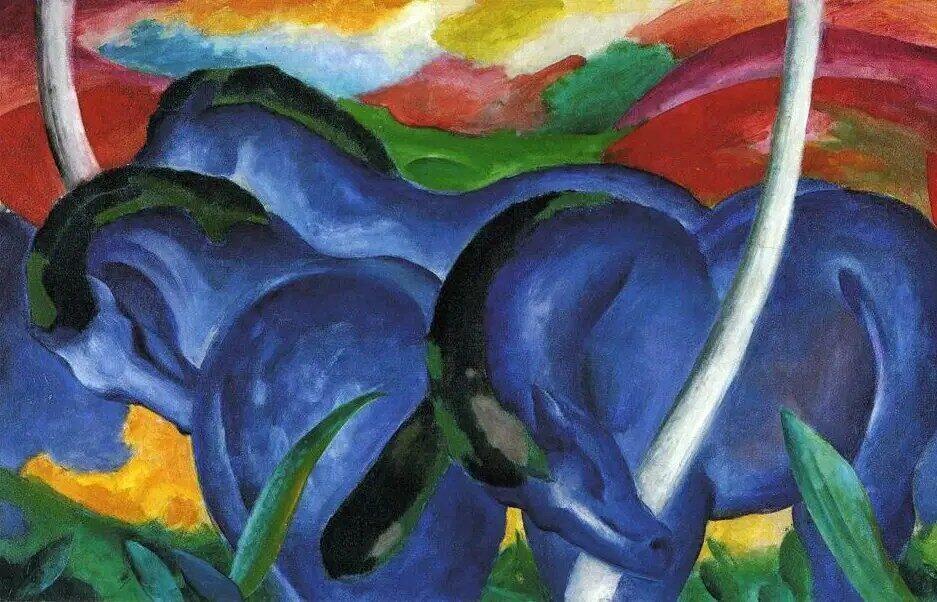
The essential museum for the Blaue Reiter movement. The ground-floor galleries display the Gabriele Münter donation: Kandinsky's Impression III (Concert) (1911), Murnau – Landscape with Church II (1910), and Composition IV sketch studies. Franz Marc's Blue Horse I (1911) and The Tiger (1912) hang nearby. Gabriele Münter's own Murnau landscapes and August Macke's Lady in a Green Jacket (1913) complete the core group. The upper floors feature Joseph Beuys installations and contemporary works. No advance booking required for individuals.

Lenbachhaus official site

Pinakothek der Moderne

Barer Str. 40 – Tue–Sun 10:00–18:00 (Thu until 20:00) – 5 min walk from Alte Pinakothek

Four collections under one roof: Sammlung Moderne Kunst (paintings and sculpture from Expressionism to the present), Die Neue Sammlung (design), the Architekturmuseum, and the Graphische Sammlung. Highlights: Ernst Ludwig Kirchner's Self-Portrait as a Soldier (1915), Max Beckmann's Temptation of Saint Anthony triptych (1936–1937), works by Giorgio de Chirico, Francis Bacon, and Andy Warhol. The basement-level design collection includes furniture by Charles Eames and Bauhaus prototypes.

Pinakothek der Moderne official site

Museum Brandhorst

Theresienstr. 35a – Tue–Sun 10:00–18:00 (Thu until 20:00) – Same combined ticket as Pinakotheken

Focused on late 20th and 21st-century art. The top floor is dedicated to Cy Twombly: the Lepanto cycle (2001), twelve large canvases in a purpose-built room, is the museum's signature installation. Other holdings include major works by Damien Hirst, Sigmar Polke, and a substantial Andy Warhol section. The building's exterior, clad in 36,000 ceramic rods, is itself a landmark.

Residenz München

Residenzstr. 1 – Daily 10:00–17:00 (summer until 18:00) – Allow 2–3 hours

The former seat of the Wittelsbach dynasty, with over 130 rooms open to visitors. The Antiquarium (Room 1, ground floor) is a 66-meter Renaissance hall covered in grotesque frescoes (1568–1600). The Ancestral Gallery displays 121 family portraits. The Schatzkammer (Treasury, separate ticket) contains the Crown of Henry II (c.1270), the statuette of St. George (c.1590), and medieval reliquaries. The Cuvilliés Theatre (separate entrance from Residenzstrasse) is a pristine Rococo gem from 1753, where Mozart's Idomeneo premiered.

Glyptothek and Staatliche Antikensammlungen

Königsplatz – Tue–Sun 10:00–17:00 (Thu until 20:00 for Glyptothek)

Facing each other across Königsplatz, these two museums cover Greek and Roman antiquity. The Glyptothek holds the Aegina pediment sculptures (c.490 BC, Room 2), the Barberini Faun (c.220 BC, Room 1), and Roman portrait busts. The Antikensammlungen across the square specializes in Greek vases and Etruscan goldwork. Combined ticket available.

Bayerisches Nationalmuseum

Prinzregentenstr. 3 – Tue–Sun 10:00–17:00 (Thu until 20:00) – 15 min walk east from Kunstareal

A deep collection of Bavarian applied arts and sculpture. The ground floor holds Tilman Riemenschneider carved wood figures (late 15th century), one of the best groupings of his work outside Würzburg. The basement Christmas crib collection (Krippensammlung) is one of the largest in Europe, with 60 Neapolitan and Bavarian Nativity scenes.
Main Munich art clusters

Museum district

Kunstareal: Alte Pinakothek to Lenbachhaus

All within a 10-minute walk along Barer Strasse: Alte Pinakothek, Neue Pinakothek (partially reopened), Pinakothek der Moderne, Brandhorst Museum, Lenbachhaus, Glyptothek, and Antikensammlungen. Start at Königsplatz (U2) and work east. A combined day ticket covers the three Pinakotheken and the Brandhorst. On Sundays, admission drops to €1 per museum, but expect queues from 10:00.

Modern and avant-garde

Blaue Reiter: Lenbachhaus, Marc, Kandinsky, Klee

The Lenbachhaus holds the world's largest Blaue Reiter collection. After visiting, walk five minutes south to the Pinakothek der Moderne for Expressionist and post-war German painting. For Paul Klee's largest single collection, plan a day trip or future visit to the Zentrum Paul Klee in Bern. In Munich, Klee's works appear in rotating displays at the Lenbachhaus and the Pinakothek der Moderne.

Courtly and sacred sites

Residenz, Theatinerkirche, Asamkirche

From the Residenz, walk south along Theatinerstrasse to the Theatinerkirche (1663, Italian Baroque facade and stucco interior). Continue 15 minutes on foot to the Asamkirche on Sendlinger Strasse, a narrow late-Baroque church built privately by the Asam brothers (1733–1746), with an intensely decorated interior. The Alte Peter church tower (St. Peter), nearby in Marienplatz, offers the best aerial view of the old city.

Artists connected to Munich

Kandinsky Art Map

Kandinsky lived and worked in Munich from 1896 to 1914. The Lenbachhaus holds over 300 of his works, including Impression III (Concert) and key studies for the Compositions series. Explore his full geographic spread on the Kandinsky page.

Franz Marc Art Map

Franz Marc's Blue Horse I (1911) and The Tiger (1912) are at the Lenbachhaus. His later abstract works, painted in Sindelsdorf and Ried before his death at Verdun in 1916, also appear in the Pinakothek der Moderne.

Paul Klee Art Map

Klee was born in Bern, studied in Munich, and returned to teach at the Bauhaus. Munich's Lenbachhaus and Pinakothek der Moderne show his work in rotation. The largest permanent Klee collection is at the Zentrum Paul Klee in Bern.

Frequently asked questions

How many days do I need for art in Munich?

Two full days for the core. Day one: Alte Pinakothek, Neue Pinakothek, and Pinakothek der Moderne (all in the Kunstareal). Day two: Lenbachhaus in the morning, then the Residenz and churches (Theatinerkirche, Asamkirche). A third day allows you to add the Brandhorst Museum, the Bayerisches Nationalmuseum, and the Glyptothek at Königsplatz.

Where are the Kandinsky paintings in Munich?

The Lenbachhaus holds the core collection: over 300 works from the Gabriele Münter donation, including Impression III (Concert) (1911) and Murnau – Landscape with Church II (1910). The Pinakothek der Moderne also shows selected Kandinsky works in its Expressionism galleries.

Do I need to book the Alte Pinakothek in advance?

Walk-in is usually fine on weekdays. On Sundays, when admission drops to €1, queues form from opening time. Buy online through the Bayerische Staatsgemäldesammlungen website to save time. The combined day ticket also covers the Neue Pinakothek, Pinakothek der Moderne, and Brandhorst.

What is the Kunstareal and how do I navigate it?

The Kunstareal is Munich's museum district north of the Hauptbahnhof, centered on Barer Strasse and Königsplatz. Seven major museums sit within a 10-minute walk. Take the U2 to Königsplatz and work east. Start with the Glyptothek (opens 10:00), then cross to the Alte Pinakothek and continue toward the Lenbachhaus.

Is the Residenz Munich worth visiting for art?

Yes. It contains the Antiquarium (66-meter Renaissance hall with grotesque frescoes), the Ancestral Gallery, and the Schatzkammer treasury with medieval goldwork. The Cuvilliés Theatre (separate entrance) is one of Europe's finest Rococo interiors. Allow 2–3 hours for the full museum circuit.

Munich: royal collections, Blaue Reiter, and seven museums on one street.

The Kunstareal puts Dürer's 1500 self-portrait, Kandinsky's first abstractions, and Cy Twombly's Lepanto cycle within a single morning's walk. Add the Residenz's 130 rooms and the Asam brothers' private chapel, and Munich becomes one of the most concentrated art cities in Europe, compact enough to cover thoroughly in two to three days.

Open Munich on the map