ⓘ Opening hours and admission prices listed on this page are indicative and subject to change. Always verify current information on the official website of each venue before your visit.
Museo del Prado
Velázquez, Goya, Bosch, Titian, El Greco – book 1–2 weeks ahead in peak season
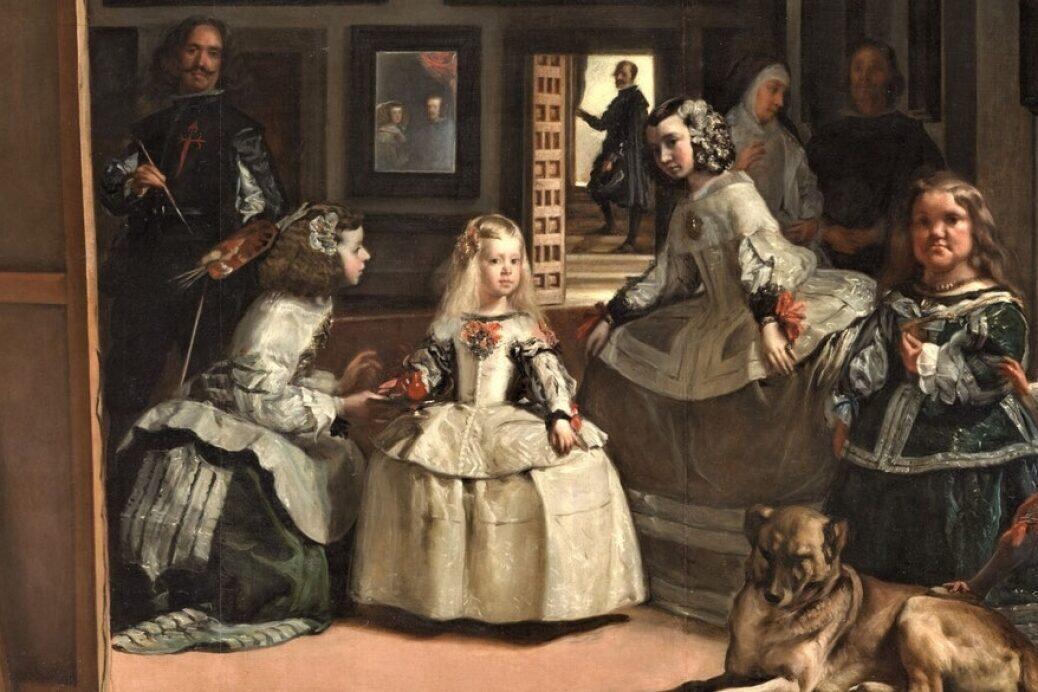
The Prado is the anchor of any Madrid art trip. On the first floor, Rooms 9A–15A hold the core Velázquez collection: Las Meninas (1656) in Room 12, The Surrender of Breda (1635) in Room 9A, The Spinners (c. 1655–60) in Room 15. Goya occupies Rooms 64–67 on the ground floor (the "Black Paintings" are in Room 67) and Rooms 34–39 on the first floor (including The Third of May 1808 in Room 39 and La Maja Desnuda / La Maja Vestida in Room 36). Hieronymus Bosch's The Garden of Earthly Delights (c. 1490–1500) is in Room 56A on the ground floor. Titian's major works, including Emperor Charles V at Mühlberg (1548), fill Rooms 24–29. El Greco's The Nobleman with His Hand on His Chest (c. 1580) is in Room 8B. Allow at least 3–4 hours for a focused visit. Open Monday–Saturday 10:00–20:00, Sunday and holidays 10:00–19:00.
Book Museo del Prado tickets –
Book a guided tour
Museo Reina Sofía
Picasso's Guernica, Dalí, Miró – free entry Mon, Wed–Sat after 19:00
Located 10 minutes on foot south of the Prado (Calle de Santa Isabel 52), the Reina Sofía is essential for 20th-century Spanish art. Picasso's Guernica (1937) is in Room 206 on the second floor of the Sabatini Building, alongside preparatory sketches and related works. The same floor holds Dalí's The Great Masturbator (1929) and The Enigma of Desire (1929) in Room 205, and works by Joan Miró in Rooms 206–210. The Nouvel extension (Building 3) hosts temporary exhibitions and post-1960s art. Open Mon, Wed–Sat 10:00–21:00, Sun 10:00–14:30; closed Tuesdays. No advance booking usually needed, but online tickets avoid the free-entry queues.
Museo Thyssen-Bornemisza
Caravaggio, Van Eyck, Hopper, Kirchner – combined ticket available with Prado and Reina Sofía
Directly across from the Prado on Paseo del Prado, the Thyssen fills the gaps the other two museums leave. The permanent collection spans from 13th-century Italian painting (second floor, Room 1: Duccio) through Northern Renaissance (Van Eyck, Dürer on Floor 2), Caravaggio's Saint Catherine of Alexandria (c. 1598, Room 12), Dutch Golden Age (Room 21), and on through Impressionism (Renoir, Degas on Floor 1) to American painting (Hopper's Hotel Room, 1931, on Floor 1, Room 30) and German Expressionism (Kirchner, Nolde, ground floor). The building is the Palacio de Villahermosa. Open Tue–Sun 10:00–19:00, Monday 12:00–16:00.
Prado + Reina Sofía + Thyssen (combined ticket)
All three Golden Triangle museums on one pass
The combined ticket covers skip-the-line entry to all three museums. All are within a 10-minute walk of each other along Paseo del Prado. Start at the Prado early (opening time), walk south to Reina Sofía after lunch, and finish at the Thyssen in the late afternoon.
Book Prado + Reina Sofía + Thyssen combined ticket
Real Academia de Bellas Artes de San Fernando
Goya, Zurbarán, Arcimboldo – rarely crowded, on Calle de Alcalá
Often overlooked by visitors focused on the Golden Triangle, the Real Academia (Calle de Alcalá 13) holds 13 paintings by Goya, including his Self-Portrait (c. 1815) and The Burial of the Sardine (c. 1812–19). There are also works by Zurbarán (Fray Pedro Machado), Ribera, Murillo, and Giuseppe Arcimboldo's Spring (c. 1563). The building itself is a fine 18th-century palace. It is a 15-minute walk north of the Prado, near Puerta del Sol. Open Tue–Sun 10:00–15:00; closed Mondays. No advance booking needed.
Visit Real Academia de San Fernando (official site)
Palacio Real (Royal Palace)
Tiepolo ceiling frescoes, royal armoury, Stradivarius collection
The Royal Palace is Madrid's largest Baroque complex. The Throne Room ceiling was frescoed by Giovanni Battista Tiepolo (The Apotheosis of the Spanish Monarchy, 1764). The Gasparini Room features Rococo stucco decoration, and the Royal Armoury (ground floor) displays Habsburg and Bourbon ceremonial armour dating from the 15th–17th centuries. The palace also holds a Stradivarius string quartet and paintings by Caravaggio, Velázquez, and Goya scattered through the state rooms. Located at the western end of Calle Mayor, about 20 minutes on foot from the Prado. Open daily 10:00–18:00 (October–March) or 10:00–20:00 (April–September). Book online to skip the queue.
Museo Sorolla
Joaquín Sorolla's studio-house – garden, portraits, Mediterranean light
The former home and studio of Joaquín Sorolla (Paseo del General Martínez Campos 37) preserves his Andalusian-style garden and hundreds of paintings, including Strolling along the Seashore (1909) and large-format Vision of Spain panels. The house itself, with original tiles and furnishings, is part of the experience. Located in the Chamártín district, about 25 minutes by metro from the Prado (Iglesia or Rubén Darío stations). Open Tue–Sat 9:30–20:00, Sun 10:00–15:00; closed Mondays. Rarely crowded; no advance booking needed.
Museo Lázaro Galdiano
Bosch, Cranach, El Greco, ivory and enamel collections
A private collection housed in a 20th-century palace on Calle de Serrano 122. Highlights include Hieronymus Bosch's Saint John the Baptist in the Wilderness, El Greco's Saint Francis in Ecstasy, Lucas Cranach's The Three Graces, and a significant collection of medieval ivories, enamels, and jewellery. Four floors, easily visited in 1.5–2 hours. About a 15-minute walk north of the Sorolla Museum. Open Wed–Mon 10:00–16:30; closed Tuesdays.
Ermita de San Antonio de la Florida
Goya's dome frescoes (1798) – also Goya's burial site
This small neoclassical chapel near the Manzanares river contains Goya's fresco cycle painted directly onto the dome and pendentives in 1798, depicting the Miracle of Saint Anthony of Padua. Goya is buried here (his body was transferred from Bordeaux in 1919; the skull is missing). The frescoes are remarkable for their loose, proto-Impressionist brushwork. Located near Príncipe Pío station, about 10 minutes on foot from the Royal Palace. Open Tue–Sun 9:30–20:00; closed Mondays. Free entry.