City page

Berlin Art Guide

Berlin holds one of Europe's deepest museum concentrations, split between two major poles: Museum Island on the Spree and the Kulturforum near Potsdamer Platz. The Gemäldegalerie houses Caravaggio, Vermeer, Rembrandt and Cranach. The Alte Nationalgalerie covers Caspar David Friedrich, French Impressionists and German Expressionists. The Neue Nationalgalerie (Mies van der Rohe's glass pavilion) focuses on early 20th-century modernism, while the Hamburger Bahnhof holds one of Europe's strongest contemporary collections.

This page maps every major art venue in Berlin, with practical booking links, specific works to look for, and walking distances between clusters.

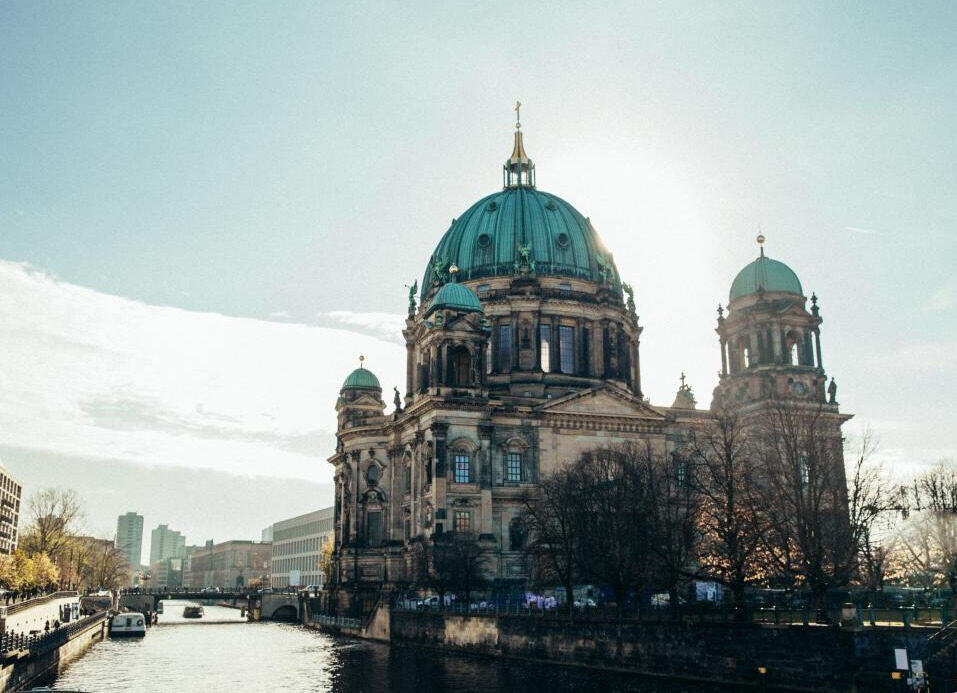
Berlin Museum Island and Spree river view

Where to see art in Berlin

Tap to activate map

Key museums in Berlin

ⓘ Opening hours and admission prices listed on this page are indicative and subject to change. Always verify current information on the official website of each venue before your visit.

Gemäldegalerie

Kulturforum, Matthäikirchplatz – Tue–Sun 10:00–18:00 (Thu until 20:00) – Book 2–3 days ahead online

One of Europe's finest Old Master collections, spread across 72 rooms on a single floor. Key works include Caravaggio's Amor Vincit Omnia (Room 30), Vermeer's The Glass of Wine and Woman with a Pearl Necklace (Room 18), Rembrandt's Moses Smashing the Tablets of the Law and Susanna and the Elders (Rooms 16–17), a large Lucas Cranach the Elder group (Rooms 3–4), and Botticelli's Venus (Room 29). Raphael, Titian, Dürer, Holbein the Younger, and van Eyck are also well represented. Allow at least 3 hours. The building is a 10-minute walk from Potsdamer Platz station.

Book Gemäldegalerie tickets

Alte Nationalgalerie

Museum Island, Bodestraße 1–3 – Tue–Sun 10:00–18:00 (Thu until 20:00) – Book 1 week ahead in summer

Housed in a neoclassical temple on Museum Island, the collection spans three floors. The top floor holds the crown jewels: Caspar David Friedrich's Monk by the Sea (1808–1810) and Abbey in the Oakwood, plus Karl Friedrich Schinkel's architectural fantasies. The second floor covers French Impressionism, including Monet's Summer (1874), Renoir's In the Garden, and Cézanne's Mill on the Couleuvre at Pontoise. The ground floor features Adolph Menzel's large-scale The Iron Rolling Mill (1875) and works by Max Liebermann. A 5-minute walk from the Pergamonmuseum.

Book Alte Nationalgalerie tickets

Neue Nationalgalerie

Kulturforum, Potsdamer Str. 50 – Tue–Sun 10:00–18:00 (Thu until 20:00) – Timed entry recommended

Mies van der Rohe's steel-and-glass pavilion (1968, renovated 2021 by David Chipperfield) hosts rotating exhibitions drawn from the permanent collection of early 20th-century European art. The holdings include Ernst Ludwig Kirchner's Berlin street scenes (Potsdamer Platz, 1914), Otto Dix's The Skat Players, works by Kandinsky, Klee, and Max Beckmann, plus a strong Bauhaus section. The lower gallery holds the permanent display, while the glass hall hosts temporary shows. Located directly across from the Gemäldegalerie (3-minute walk).

Pergamonmuseum

Museum Island, Am Kupfergraben 5 – currently under partial renovation – check availability before visiting

Home to the Ishtar Gate of Babylon (6th century BCE), the Market Gate of Miletus, and the Museum of Islamic Art's Aleppo Room. The Pergamon Altar hall is closed for renovation (expected reopening 2027), but the south wing with the Ishtar Gate and Processional Way remains accessible. Book timed-entry tickets at least 1–2 weeks ahead in peak season. Located at the northern end of Museum Island, a 3-minute walk from the Neues Museum.

Hamburger Bahnhof (Museum für Gegenwart)

Invalidenstraße 50–51 – Tue–Fri 10:00–18:00, Sat–Sun 11:00–18:00

Berlin's main contemporary art museum, set in a converted 19th-century railway station. The permanent collection includes major works by Joseph Beuys (the entire The End of the 20th Century installation), Andy Warhol's Mao series, Robert Rauschenberg, Cy Twombly, and Anselm Kiefer's monumental canvases. Temporary exhibitions rotate frequently and are often ambitious in scale. A 15-minute walk north of Museum Island or a short ride on the S-Bahn to Hauptbahnhof.

Bode-Museum

Museum Island, Am Kupfergraben 1 – Tue–Sun 10:00–18:00 (Thu until 20:00)

Specializes in sculpture and Byzantine art. Key works: Donatello's Pazzi Madonna (c. 1420), Tilman Riemenschneider's carved altarpieces, a strong collection of Italian Renaissance sculpture (Giovanni Pisano, Antonio Rossellino), and the Numismatic Collection (one of the world's largest). The building itself, at the tip of Museum Island, is architecturally dramatic. Often less crowded than other Museum Island venues.

Brücke-Museum

Bussardsteig 9, Dahlem – Wed–Mon 11:00–17:00 – No advance booking needed

The only museum worldwide dedicated to the Brücke movement (1905–1913). The collection spans Ernst Ludwig Kirchner's woodcuts and painted street scenes, Erich Heckel's angular landscapes, Karl Schmidt-Rottluff's bold-colour still lifes, and Max Pechstein's figure paintings. Small but focused (allow 1–1.5 hours). Located in the leafy Dahlem district, reachable by U3 to Oskar-Helene-Heim then a 10-minute walk through the forest.
Main Berlin art clusters

Museum Island (Museumsinsel)

Five museums on the Spree

The UNESCO-listed complex holds the Alte Nationalgalerie (Friedrich, Monet, Menzel), Pergamonmuseum (Ishtar Gate, Islamic Art), Neues Museum (Egyptian collection with the Nefertiti bust), Bode-Museum (Renaissance sculpture), and Altes Museum (Greek and Roman antiquities). All five are walkable within 10 minutes of each other. Start from the Altes Museum at the south end and work north to the Bode. A combined Museum Island ticket covers all five venues.

Kulturforum, Potsdamer Platz

Old Masters and modernism side by side

The Gemäldegalerie (Caravaggio, Vermeer, Rembrandt, Cranach) and Neue Nationalgalerie (Kirchner, Kandinsky, Klee, Beckmann) sit 3 minutes apart. The Kunstgewerbemuseum (decorative arts) and Kupferstichkabinett (prints and drawings by Dürer, Rembrandt, Botticelli) are in the same complex. Practical tip: visit the Gemäldegalerie in the morning (less crowded), then cross to the Neue Nationalgalerie after lunch.

Charlottenburg

Berggruen Museum and Scharf-Gerstenberg

The Museum Berggruen, directly opposite Charlottenburg Palace, holds a concentrated Picasso collection (over 120 works spanning 1897–1972) plus Klee, Matisse, and Giacometti. Across the street, the Scharf-Gerstenberg Collection covers Surrealism: Dalí, Magritte, Max Ernst, and Goya's print series. Allow 2 hours for both. Reachable by U7 to Richard-Wagner-Platz, then a 7-minute walk.

Artists connected to Berlin

Kandinsky Art Map

The Neue Nationalgalerie holds several key Kandinsky canvases from his Bauhaus period, and the Berggruen Museum in Charlottenburg has additional works. Kandinsky lived in Berlin from 1921 to 1933 while teaching at the Bauhaus. Trace his full European presence on the dedicated artist page.

Munch Art Map

Munch lived in Berlin intermittently from 1892 to 1908, and his controversial 1892 exhibition at the Verein Berliner Künstler helped spark the Berlin Secession. The Alte Nationalgalerie and Berlinische Galerie both hold Munch works. His broader Scandinavian and European presence is mapped on the artist page.

Paul Klee Art Map

The Berggruen Museum holds a substantial Klee collection (over 60 works), and the Neue Nationalgalerie displays additional paintings. Klee taught at the Bauhaus in Weimar and Dessau before the school's brief Berlin period (1932–1933). For the complete global map of Klee's works, see the artist page.

FAQ

Do I need to book Berlin museums in advance?

For the Gemäldegalerie and Alte Nationalgalerie, booking online 2–3 days ahead is enough on weekdays. Museum Island venues (Pergamonmuseum, Neues Museum) require timed-entry tickets: book 1–2 weeks ahead in summer. Book Gemäldegalerie tickets | Book Alte Nationalgalerie tickets.

How many days do I need for art in Berlin?

Three full days work well: one day for Museum Island (Alte Nationalgalerie, Pergamonmuseum, Neues Museum, Bode Museum), one day for the Kulturforum (Gemäldegalerie, Neue Nationalgalerie), and one day for the Hamburger Bahnhof, Berggruen Museum, and Brücke-Museum. Add a fourth day if you want to include the Berlinische Galerie and East Side Gallery.

Where can I see Caravaggio and Vermeer in Berlin?

Both are at the Gemäldegalerie in the Kulturforum. Caravaggio's Amor Vincit Omnia hangs in Room 30, and Vermeer's The Glass of Wine and Woman with a Pearl Necklace are in Room 18. The museum is open Tuesday to Sunday, with late hours on Thursdays until 20:00.

What is the best museum pass for Berlin?

The Museumspass Berlin covers 30+ museums for three consecutive days (around €32), including all Museum Island venues, the Gemäldegalerie, Neue Nationalgalerie, and Hamburger Bahnhof. It pays for itself after two major museum visits and is available at any participating museum desk or online.

Where are the best Expressionist paintings in Berlin?

Three key venues: the Alte Nationalgalerie (top floor, German section), the Neue Nationalgalerie (Kirchner's Potsdamer Platz, Beckmann, Dix), and the Brücke-Museum in Dahlem (entirely dedicated to Kirchner, Heckel, Schmidt-Rottluff, Pechstein). The Berlinische Galerie also has a strong Expressionist section.

Berlin, where history fractured and art responded.

Berlin's art landscape was shaped by rupture: wars, division, reunification, and successive waves of institutional rebuilding. The result is a city where a Caravaggio in the Kulturforum sits a bus ride from Kirchner's angular street scenes, where Egyptian antiquities face Bauhaus design across the Spree, and where the Cold War gap between East and West created two parallel museum systems now merged into one of Europe's richest cultural networks.