Artist page

Where to See William Turner

J.M.W. Turner (1775 – 1851) left behind one of the largest bodies of work in British art: over 550 oil paintings and 30,000 works on paper. The bulk of this output stayed in Britain through the Turner Bequest, now split between Tate Britain and the National Gallery in London. But significant paintings also hang at the Getty Museum in Los Angeles, the Metropolitan Museum and Frick Collection in New York, the National Gallery of Scotland in Edinburgh, and the Kunsthistorisches Museum in Vienna.

This page maps Turner's key works by location, with practical booking information, specific room numbers, and walking distances between London's Turner sites.

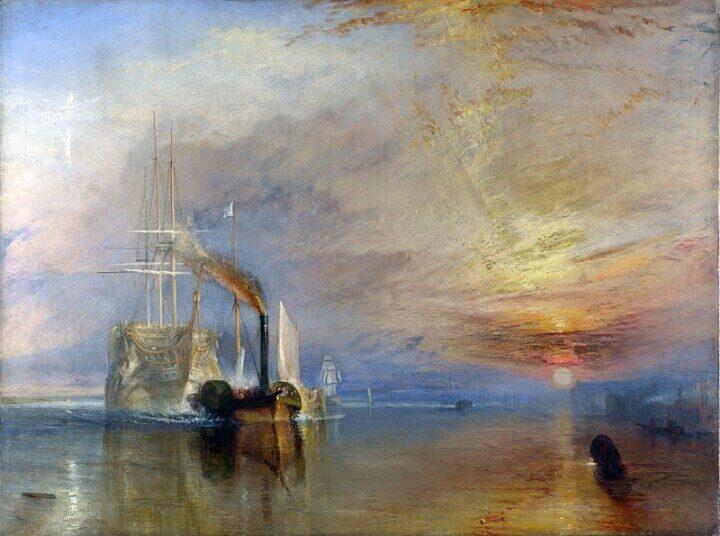
The Fighting Temeraire by J.M.W. Turner, National Gallery London

Explore Turner on the map

Tap to activate map

Key museums for Turner

ⓘ Opening hours and admission prices listed on this page are indicative and subject to change. Always verify current information on the official website of each venue before your visit.

Tate Britain, London

Clore Gallery wing – Turner Bequest (300+ oils, 30,000 works on paper) – Free admission, no booking needed

The Clore Gallery (opened 1987, designed by James Stirling) holds the core of the Turner Bequest across Rooms 1 – 10. Key works on regular display include Norham Castle, Sunrise (c.1845), Snow Storm: Hannibal and His Army Crossing the Alps (1812), The Shipwreck (1805), and several of the late unfinished canvases that influenced abstract painting. The rotating display means not all works are visible at once; check the Tate website before visiting. Allow 2 – 3 hours for the Turner rooms alone. The museum is a 10-minute walk from the National Gallery via Whitehall.

Book a Tate Britain guided tour

National Gallery, London

Rooms 34 – 35 – Free admission, no booking needed for permanent collection

Turner's most celebrated paintings occupy Rooms 34 and 35 in the Sainsbury Wing extension. The Fighting Temeraire (1839), voted Britain's favourite painting in a 2005 poll, hangs alongside Rain, Steam and Speed: The Great Western Railway (1844), Dido Building Carthage (1815), and Sun Rising through Vapour (c.1807). Turner himself stipulated in his will that Dido Building Carthage and Sun Rising through Vapour should hang next to Claude Lorrain's paintings; the gallery honours this arrangement. Room 15 holds the Claude works for direct comparison.

Book a National Gallery guided tour

Getty Museum, Los Angeles

Getty Center, West Pavilion – Free admission, parking reservation required ($20)

The Getty holds Van Tromp, Going About to Please His Masters (1844), Modern Rome – Campo Vaccino (1839), and several watercolours. The paintings hang in the West Pavilion upper level alongside other 19th-century European works. Book parking online at least one week ahead, especially on weekends. The Getty Center itself, with Richard Meier's architecture and hilltop views over Los Angeles, merits a full half-day visit.

Visit the Getty Museum website

Metropolitan Museum of Art, New York

European Paintings galleries, 2nd floor – Suggested admission $30

The Met displays The Grand Canal, Venice (1835), Whalers (c.1845), Venice, from the Porch of Madonna della Salute (c.1835), and Saltash with the Water Ferry (1812). These hang in the 19th-century European painting galleries on the second floor. Book timed entry online, especially for weekends. Allow 30 – 45 minutes to locate and study the Turner works within the broader European collection.

Book a Met Museum guided tour

Frick Collection, New York

Frick Madison (temporary location) or 1 East 70th St – Timed tickets required

The Frick holds four Turner paintings: Harbour of Dieppe: Changement de Domicile (1825), Cologne: The Arrival of a Packet-Boat, Evening (1826), Fishing Boats Entering Calais Harbor (c.1803), and Mortlake Terrace: Early Summer Morning (1826). These works represent Turner's engagement with Continental subjects and atmospheric harbour scenes. Book timed tickets at least a few days in advance. The Frick is a 15-minute walk from the Met along Fifth Avenue.

Book Frick Collection tickets

National Gallery of Scotland, Edinburgh

The Mound, central Edinburgh – Free admission

The Scottish National Gallery holds Somer Hill, Tonbridge (c.1811), one of Turner's most accomplished early country-house commissions, along with watercolours and the Henry Vaughan Bequest of 38 Turner watercolours (shown every January to protect them from light). The gallery sits on The Mound between Old Town and New Town, a short walk from Edinburgh Waverley station.

Visit the National Gallery of Scotland website

Kunsthistorisches Museum, Vienna

Picture Gallery, 1st floor

The KHM holds a small but notable group of British paintings including Turner works. Combined with the exceptional Old Masters collection (Vermeer, Velázquez, Caravaggio), this makes the museum a rewarding stop for art travellers tracking Turner's European influence. Book tickets online to skip the queue.

Book Kunsthistorisches Museum tickets

Yale Center for British Art, New Haven

1080 Chapel Street – Free admission, no booking needed

Paul Mellon's collection includes Turner oils and watercolours displayed in Louis Kahn's celebrated building. Key holdings include Dort or Dordrecht: The Dort Packet-Boat from Rotterdam Becalmed (1818) and several Italian subject watercolours. The Center is a short walk from Yale's campus and the university art gallery.

Visit the Yale Center for British Art website
How to plan a Turner trip

Turner's works cluster heavily in London, so any serious visit starts there. The two essential stops are Tate Britain (Clore Gallery) and the National Gallery (Rooms 34 – 35), which are a 10-minute walk apart along the Thames Embankment and Whitehall.

  • Day 1 in London: National Gallery in the morning (Rooms 34 – 35 for Turner, Room 15 for the Claude comparison), then walk to Tate Britain for the Clore Gallery in the afternoon.
  • Day 2 in London: Courtauld Gallery for Turner watercolours, then Hampton Court Palace (Turner sketched it repeatedly; accessible by train from Waterloo, 35 minutes).
  • Outside London: The Frick and Met in New York can fill a full day. In Edinburgh, combine the National Gallery of Scotland with the Scottish National Gallery of Modern Art.

Main Turner clusters

London

Tate Britain, National Gallery, Courtauld Gallery

Over 90% of Turner's surviving work is in London. Tate Britain's Clore Gallery holds the Turner Bequest; the National Gallery shows the six most famous canvases (including The Fighting Temeraire); the Courtauld has watercolours. All three are within a 20-minute walk of each other. Practical tip: start at the National Gallery (opens 10:00), walk to Tate Britain after lunch (the Clore Gallery is quieter in the afternoon).

New York

Metropolitan Museum, Frick Collection

The Met and Frick together hold around ten Turner oils, spanning harbour scenes, Venetian views, and late atmospheric works. Both are on the Upper East Side, 15 minutes apart on foot along Fifth Avenue. Practical tip: visit the Frick in the morning (smaller, quieter), then walk to the Met for the afternoon.

Secondary sites

Getty Museum, Edinburgh, Yale, Vienna

Individual Turner paintings at the Getty (Los Angeles), National Gallery of Scotland (Edinburgh), Yale Center for British Art (New Haven), and Kunsthistorisches Museum (Vienna). These are not Turner-specific trips, but each museum rewards a visit on its own terms. Practical tip: in Edinburgh, the January display of the Vaughan Bequest watercolours is a rare opportunity to see works normally kept in storage.

Best city pages for Turner

London

Tate Britain (Clore Gallery), National Gallery (Rooms 34 – 35), Courtauld Gallery, and Hampton Court Palace. London holds the Turner Bequest and all six works Turner specified for permanent display alongside Claude Lorrain.

Open the full ArtAtlas map

View every geolocated Turner work across museums worldwide. Filter by city, zoom into London's cluster, or trace Turner's Continental travels through Venice, Rome, and the Alps.

Continue with Monet

Monet visited London in 1870 – 1871 and studied Turner at the National Gallery. Compare Turner's Rain, Steam and Speed with Monet's Impression, Sunrise (1872, Musée Marmottan). The ArtAtlas Monet page maps the connection across Paris, London, and Giverny.

FAQ

Where is the largest collection of Turner paintings?

Tate Britain in London holds the Turner Bequest: over 300 oil paintings and around 30,000 sketches and watercolours, displayed in the dedicated Clore Gallery wing. Admission is free and no booking is needed. The display rotates, so check the Tate website for current works on view.

Do I need to book tickets to see Turner at the National Gallery London?

No. The permanent collection is free and does not require advance booking. Turner's paintings are in Rooms 34 and 35, including The Fighting Temeraire and Rain, Steam and Speed. Only temporary exhibitions may require timed tickets.

Which Turner paintings can I see outside London?

The Getty Museum (Los Angeles) holds Modern Rome – Campo Vaccino (1839). The Met (New York) has The Grand Canal, Venice (1835) and Whalers (c.1845). The Frick Collection (New York) owns Harbour of Dieppe (1825) and Cologne (1826). The National Gallery of Scotland (Edinburgh) has Somer Hill, Tonbridge plus the Vaughan Bequest watercolours (shown every January).

Can I visit Turner's house or studio in London?

Turner's gallery at 23 Queen Anne Street no longer exists. However, Sandycombe Lodge in Twickenham (the villa he designed himself, completed 1813) is open to visitors on select days. Turner is buried at St Paul's Cathedral; a memorial plaque is visible in the crypt.

How many days do I need to see all Turner works in London?

Two full days cover the essentials: Day 1 for the National Gallery (Rooms 34 – 35) and Tate Britain (Clore Gallery); Day 2 for the Courtauld Gallery and, optionally, Hampton Court Palace in Twickenham (35 minutes by train from Waterloo). Add a half-day for Sandycombe Lodge if it is open.

Turner, where light became the subject.

From early topographical commissions to the dissolved colour fields of his final decade, Turner's evolution tracks across specific rooms in specific museums. The Clore Gallery at Tate Britain, Rooms 34 – 35 at the National Gallery, the Frick's harbour scenes: each location reveals a different phase of the work. Use the map to plan your route.