Artist page

Where to See Claude Monet

This page maps the key museums, collections, and sites where you can see Claude Monet's paintings, from the Impressionist galleries at the Musée d'Orsay to the immersive Nymphéas rooms at the Orangerie, the world's largest Monet collection at the Musée Marmottan, and Monet's own house and gardens at Giverny. It also covers major holdings in London, New York, Chicago, and beyond.

Use the interactive map to plan a Monet-focused itinerary, locate specific works, and link to city pages with detailed practical information.

Claude Monet, Impression, Sunrise, 1872, Musée Marmottan Monet, Paris

Explore Monet on the map

Tap to activate map

How to approach Monet

Understanding Monet means following how his painting evolved from plein-air landscapes in Normandy through the radical serial works of the 1890s (Haystacks, Rouen Cathedral) to the large-format Water Lilies that anticipate abstract painting. Geography is central: the light of the Normandy coast, the smoky bustle of Gare Saint-Lazare, and the constructed garden at Giverny all shaped what and how he painted.

  • Start in Paris, where three major museums (Orsay, Orangerie, Marmottan) cover the full arc of his career within a single city.
  • Visit Giverny (open late March through early November) to see the water lily pond, Japanese bridge, and flower garden he designed as living subjects for his final three decades of work.
  • Track the serial paintings across museums: the Rouen Cathedral series is split between Orsay and the Musée des Beaux-Arts de Rouen; Haystacks canvases are at the Art Institute of Chicago, the Met, and Orsay.

Key museums for Monet

ⓘ Opening hours and admission prices listed on this page are indicative and subject to change. Always verify current information on the official website of each venue before your visit.

Musée d'Orsay, Paris

Fifth floor, Impressionist galleries – book timed entry 1–2 weeks ahead in peak season

The Orsay holds core Monet works from the 1860s through the 1900s. Look for The Magpie (1868–1869), a winter landscape with extraordinary light on snow; Coquelicots (Poppies, 1873); several Rouen Cathedral canvases (1892–1894) showing the façade at different times of day; and Gare Saint-Lazare (1877), his study of steam, iron, and urban modernity. The Impressionist rooms are on the fifth floor, accessed via the main escalators. Arrive before 10:00 to see them without heavy crowds.

Book Musée d'Orsay ticketsBook a guided tour

Musée de l'Orangerie, Paris

Ground floor, two oval rooms – 10-minute walk from Orsay along the Tuileries

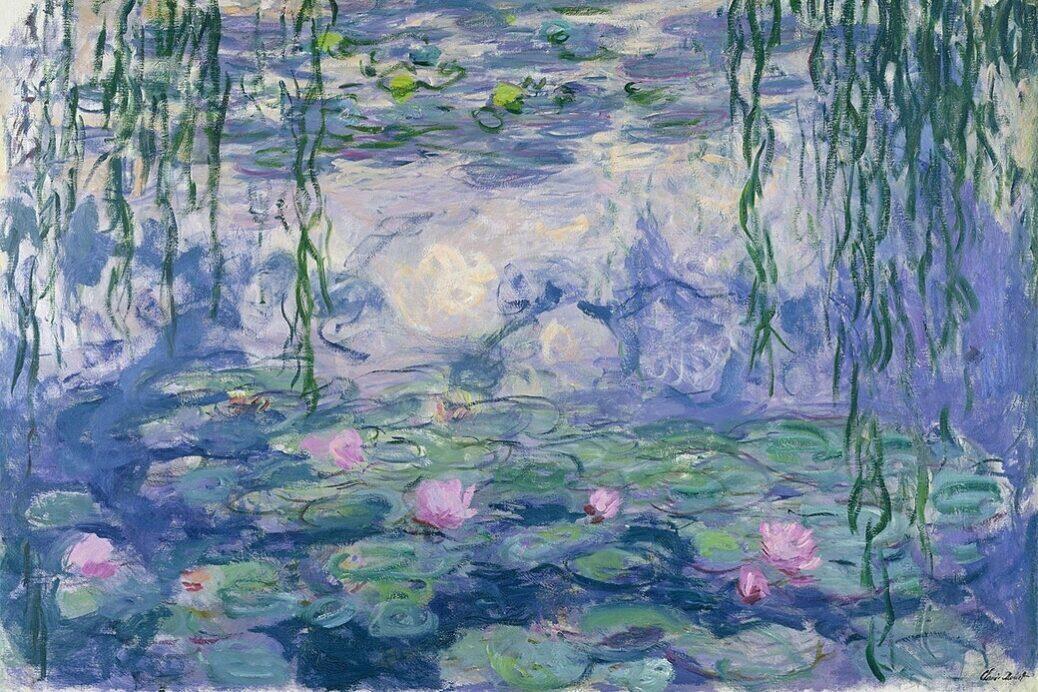
The Orangerie exists primarily for Monet's Nymphéas (Water Lilies): eight monumental panels installed in two purpose-built oval rooms flooded with natural light. Monet donated them to the French state in 1922, and they were installed after his death in 1926. The effect is immersive and cannot be reproduced in books. The lower level holds the Walter-Guillaume collection (Cézanne, Renoir, Matisse), worth seeing on the same visit. Tickets are timed; book 3–5 days ahead in low season, 1–2 weeks in summer.

Book Musée de l'Orangerie ticketsBook a guided tour

Musée Marmottan Monet, Paris

16th arrondissement, near Bois de Boulogne – world's largest Monet collection (100+ works)

This museum holds the single most important concentration of Monet paintings anywhere, including Impression, Sunrise (1872), the work that gave Impressionism its name. The lower-level gallery displays late Water Lilies, Japanese bridge studies, and iris paintings from Giverny. Upper floors show earlier work and paintings by Berthe Morisot. The museum is smaller and calmer than Orsay: allow 90 minutes. Metro: La Muette (line 9), then a 5-minute walk.

Book Musée Marmottan Monet tickets

Fondation Claude Monet, Giverny

Open late March – 1 November – 75 min from Paris by train to Vernon + shuttle

Monet lived and worked at Giverny from 1883 until his death in 1926. The property includes his pink house, his studio (with full-scale Water Lilies reproductions), the Clos Normand flower garden, and the famous water garden with its Japanese bridge and water lily pond. The gardens are at their peak from late April through June. From Paris, take a train from Gare Saint-Lazare to Vernon (about 50 minutes), then a shuttle bus (15 minutes). Arrive for the 9:30 opening to experience the garden before tour groups.

Visit Fondation Claude Monet (official site)

National Gallery, London

Room 43 (Impressionist galleries) – free admission, no booking needed

The National Gallery holds important Monet works including The Water-Lily Pond (1899), The Thames below Westminster (c. 1871), and Lavacourt under Snow (1878–1881). These are displayed in the Impressionist rooms on the East Wing's first floor. Admission is free; no ticket required for the permanent collection. Combine with the Courtauld Gallery (10-minute walk), which holds Monet's Antibes (1888) and Autumn Effect at Argenteuil (1873).

Book National Gallery guided tour

Metropolitan Museum of Art, New York

European Paintings galleries, second floor – book online for timed entry

The Met holds one of the finest Monet collections in the United States. Key works include Garden at Sainte-Adresse (1867), Rouen Cathedral: The Portal (Sunlight) (1894), Bridge over a Pond of Water Lilies (1899), and Water Lilies (1919). The Annenberg Collection rooms on the second floor group Impressionist paintings together. Allow at least 2 hours for the European painting galleries alone.

Book Met Museum guided tour

Art Institute of Chicago

Gallery 243 and surrounding rooms – book online to skip the line

Chicago holds a remarkable Monet group, including six Haystacks (Grainstack) canvases (1890–1891), the most concentrated group of this serial work anywhere. Other key works: Water Lilies (1906), Arrival of the Normandy Train, Gare Saint-Lazare (1877), and On the Bank of the Seine, Bennecourt (1868). The Impressionist galleries are in the second-floor European wing.

Book Art Institute of Chicago tickets

Musée du Louvre, Paris

Limited Monet holdings – visit for historical context rather than Monet specifically

The Louvre is not a primary Monet destination, but it holds several works in its post-1848 French painting galleries, and it provides essential context for understanding the Salon system against which the Impressionists rebelled. Pair a Louvre visit with the Orangerie (both in the Tuileries area) for a productive half-day.

Book Musée du Louvre guided tour
Monet clusters: plan by theme

Paris core

Three museums in Paris: Orsay, Orangerie, Marmottan

These three museums cover the full arc of Monet's career. Orsay and Orangerie are a 10-minute walk apart along the Seine; Marmottan is across the city near Bois de Boulogne. Two days in Paris covers all three comfortably. Buy individual timed tickets for each.

Day trip

Giverny: Monet's garden and studio

Take the 8:20 train from Gare Saint-Lazare to Vernon, then the shuttle to Giverny. Visit the water garden and house in the morning, then the Musée des Impressionnismes Giverny (5-minute walk). Return trains run until early evening. Open late March through 1 November only.

Serial works

Tracking the Haystacks and Cathedrals

The Haystacks (Grainstack) series is best seen at the Art Institute of Chicago (six canvases), with additional examples at the Met, Orsay, and private collections. The Rouen Cathedral series is split between Orsay (four) and the Musée des Beaux-Arts de Rouen (one). Seeing multiples from the same series reveals Monet's method of painting light's variation.

Practical note

Booking strategy for Paris

Orsay, Orangerie, and Marmottan all sell timed-entry tickets online. In summer (June through September), book Orsay 2 weeks ahead. Orangerie is easier but still benefits from advance booking. Marmottan rarely sells out. All three are closed on Mondays (Orsay closes Mondays, Orangerie and Marmottan close Tuesdays). Plan your days accordingly.

Best city pages for Monet

Paris

Three major Monet museums (Orsay, Orangerie, Marmottan), plus the Louvre for historical context. The Paris city page includes full booking links, opening hours, and walking routes between sites.

Open the full ArtAtlas map

See every Monet location worldwide: London (National Gallery), New York (Met, MoMA), Chicago (Art Institute), Amsterdam (Van Gogh Museum holds some), and smaller collections in Rouen, Le Havre, and beyond.

Continue with Renoir

Monet and Renoir painted side by side at La Grenouillère in 1869, producing works now in separate museums. Comparing their paths shows how shared Impressionist beginnings led to very different solutions in color, figure, and surface.

Frequently asked questions

Where is the largest collection of Monet paintings?

The Musée d'Orsay in Paris holds the largest single concentration, with around 90 works including major series paintings. The Musée de l'Orangerie, a 10-minute walk away, houses the Nymphéas cycle in two oval rooms designed by Monet himself. Together, these two Paris museums constitute the essential Monet itinerary.

Is Giverny worth visiting?

Yes, particularly if you have already seen the paintings. The garden at Giverny is the physical source of the water lily series — standing at the Japanese bridge gives you a direct sense of the spatial and chromatic logic behind the late work. Giverny is about 80km west of Paris; the easiest approach is by train to Vernon and then taxi or shuttle. Avoid weekends in summer.

Where is Monet's Impression, Sunrise?

At the Musée Marmottan Monet in the 16th arrondissement of Paris, which holds the largest Monet collection in the world by number of works — over 100 paintings, including the canvas that gave Impressionism its name. Less visited than the Orsay, it rewards the extra journey west.

Are there important Monet works outside France?

Yes. The Art Institute of Chicago holds a major group including one version of The Bedroom series and several haystacks. The National Gallery in London has Thames paintings and early Impressionist works. The Metropolitan Museum in New York holds the water lily paintings alongside other series. The map locates all major holdings worldwide.

Monet, where painting dissolved into light.

No other painter pursued a single perceptual problem — how light transforms the same surface across time — with such systematic consistency across decades. The series paintings are inseparable from the museums that hold them: Paris, Chicago, London, Tokyo. Use the map to plan visits around the collections that matter most to you.