Artist page

Where to See Franz Marc

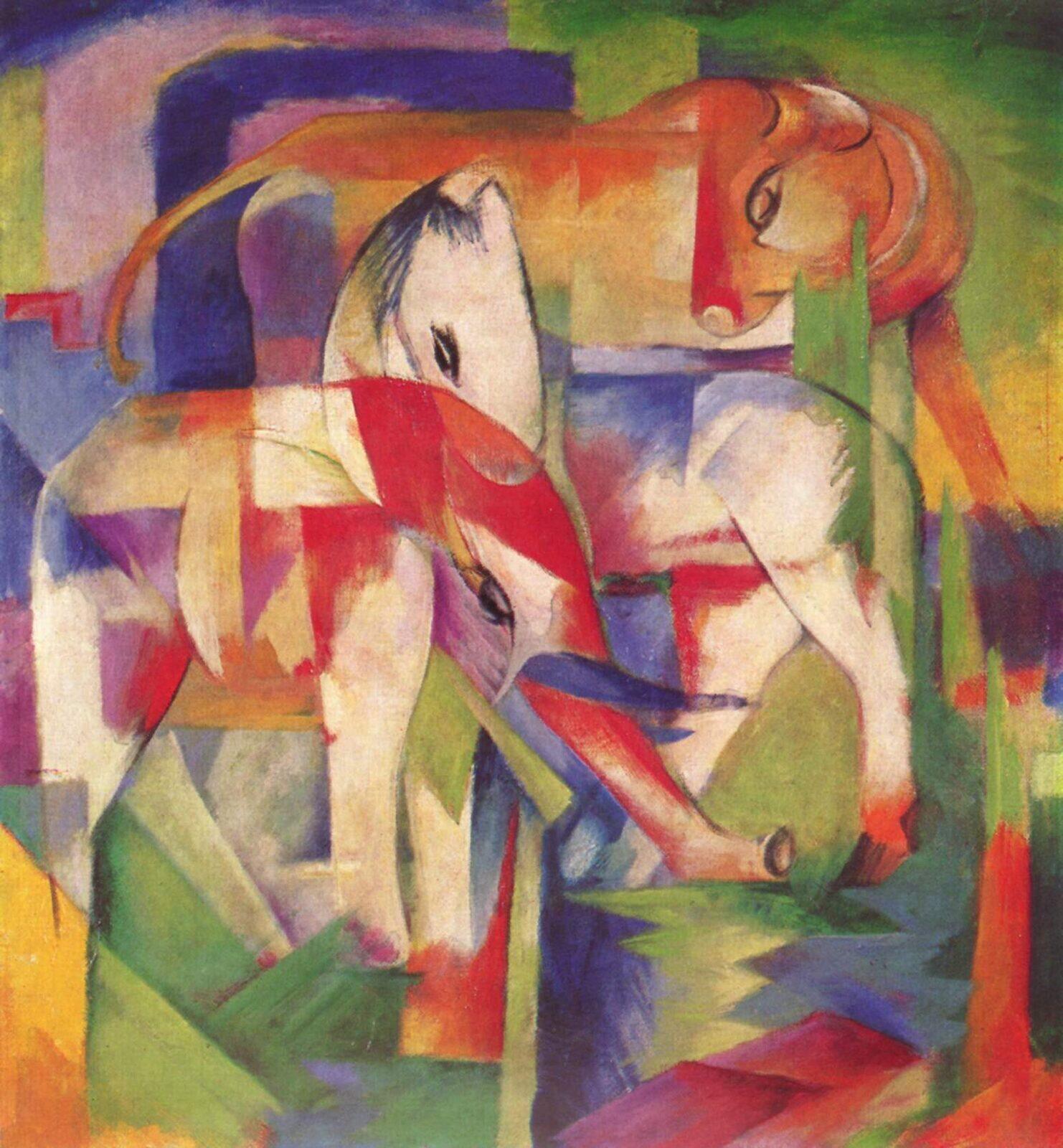
Franz Marc (1880–1916) was a co-founder of Der Blaue Reiter and one of the most recognizable figures of German Expressionism. His paintings of animals in saturated, symbolic color (blue for spirituality, yellow for joy, red for violence) are concentrated in a handful of key museums. The Lenbachhaus in Munich holds the core collection, with major works also at the Kunstmuseum Basel, the Guggenheim in New York, and the Franz Marc Museum in Kochel am See.

Use this page to locate his main works, plan visits to the museums that hold them, and connect to detailed city guides for each destination.

Franz Marc, Blue Horse I (1911), Lenbachhaus Munich

Explore Franz Marc on the map

Tap to activate map

Where to see Franz Marc: key museums

ⓘ Opening hours and admission prices listed on this page are indicative and subject to change. Always verify current information on the official website of each venue before your visit.

Lenbachhaus, Munich

Core Blaue Reiter collection, upper floor – no advance booking usually needed

The single most important museum for Franz Marc. The Blaue Reiter rooms hold Blue Horse I (1911), The Tiger (1912), Deer in the Forest I (1913), Cows, Yellow-Red-Green (1912), and Fighting Forms (1914), his most abstract surviving work. The collection is displayed alongside paintings by Kandinsky, Macke, and Gabriele Münter, making the artistic dialogue of the group visible. Open Tuesday to Sunday, 10:00–18:00 (Tuesdays until 20:00). Admission around €12.

Visit Lenbachhaus official site

Pinakothek der Moderne, Munich

Expressionism galleries – a 10-minute walk from the Lenbachhaus

The Bayerische Staatsgemäldesammlungen holds additional Marc works and related Expressionist paintings. The collection includes pieces by Kirchner, Nolde, and Beckmann, providing a broader context for Marc's position within German modernism. Open Tuesday to Sunday, 10:00–18:00 (Thursdays until 20:00).

Visit Pinakothek der Moderne official site

Franz Marc Museum, Kochel am See

Dedicated museum near Marc's home – about 70 km south of Munich

Located on the shores of the Kochelsee, this museum is devoted to Marc and the wider Blaue Reiter circle. It holds paintings, works on paper, and sketchbooks, and stages rotating exhibitions drawn from the collection. Marc lived in nearby Ried bei Kochel from 1914 until his death in 1916. Reachable by regional train from Munich Hauptbahnhof to Kochel (about 1 hour), then a 15-minute walk. Open Tuesday to Sunday, 10:00–17:00 (April–October: 10:00–18:00).

Visit Franz Marc Museum official site

Kunstmuseum Basel

Hauptbau, first floor – no advance booking required

The Kunstmuseum Basel owns Deer in the Snow (1911) and Three Cats (1913), displayed in the early modernism rooms alongside works by Kandinsky, Klee, and Delaunay. The building also holds one of the strongest early 20th-century European collections in any museum. Open Tuesday to Sunday, 10:00–18:00 (Wednesdays until 20:00).

Visit Kunstmuseum Basel official site

Solomon R. Guggenheim Museum, New York

The Yellow Cow (1911) – book online to skip the line

The Guggenheim owns The Yellow Cow (1911), one of Marc's most joyful paintings, along with Stables (1913). Both are typically on view in the rotunda's upper levels within the Thannhauser Collection. The museum's strong holdings in Kandinsky make it a valuable stop for following the Blaue Reiter connection outside Europe.

Book Guggenheim New York tickets

Hamburger Kunsthalle

Classical Modernism galleries – book online recommended for weekends

The Kunsthalle holds Grazing Horses IV (The Red Horses) (1911) in its Expressionism rooms. The painting is a key example of Marc's use of color symbolism in animal subjects. The museum's broader collection extends from medieval altarpieces to contemporary art across three connected buildings.

Book Hamburger Kunsthalle tickets

Kunstmuseum Bern

Early 20th-century galleries – no advance booking required

The Kunstmuseum Bern holds several Marc works on paper and smaller paintings. The museum's strength in Klee, Kandinsky, and the Gurlitt trove (partially on display) adds context for the Blaue Reiter movement. Open Tuesday to Sunday, 10:00–17:00 (Wednesdays until 20:00).

Visit Kunstmuseum Bern official site

Art Institute of Chicago

The Bewitched Mill (1913) – book online

The Art Institute owns The Bewitched Mill (1913), a transitional work showing Marc moving toward near-abstraction through fragmented, prismatic forms influenced by Delaunay and Futurism. Displayed in the modern European galleries.

Book Art Institute of Chicago tickets

Centre Pompidou, Paris

Modern collection, Level 5 – free first Sunday of each month

The Pompidou holds works on paper and smaller paintings by Marc within its extensive early 20th-century European collection. The Kandinsky holdings here are also significant for understanding the Blaue Reiter partnership. Note: the Centre Pompidou is undergoing renovation and may have limited access. Check current opening status before visiting.

Visit Centre Pompidou official site
Main Franz Marc clusters

Primary city

Munich: Lenbachhaus, Pinakothek der Moderne, and Kochel am See

The Lenbachhaus holds the core Blaue Reiter collection, including Blue Horse I and The Tiger. The Pinakothek der Moderne (10-minute walk) adds Expressionist context. For a day trip, take the regional train to Kochel am See (1 hour) to visit the Franz Marc Museum near his former home. Practical tip: start at Lenbachhaus when it opens at 10:00, walk to the Pinakothek after lunch.

Key works abroad

New York, Chicago, and Basel: major Marc paintings outside Germany

The Yellow Cow at the Guggenheim, The Bewitched Mill at the Art Institute of Chicago, and Deer in the Snow at Kunstmuseum Basel are among the most important Marc works outside Munich. In New York, pair the Guggenheim visit with the Neue Galerie (15-minute walk), which holds related Austrian and German Expressionist art.

Practical note

Booking and access

Most Franz Marc museums do not require advance booking. The Lenbachhaus, Kunstmuseum Basel, and Kunstmuseum Bern accept walk-ins. For the Guggenheim New York and Hamburger Kunsthalle, buying tickets online saves queuing time. The Franz Marc Museum in Kochel am See is a small museum; no reservation is needed, but check seasonal hours (shorter in winter).

Best city pages for Franz Marc

Munich

The essential destination for Franz Marc. The city page covers the Lenbachhaus, Pinakothek der Moderne, and the wider art district (Kunstareal), with practical details on transport, opening hours, and nearby sites.

Open the full ArtAtlas map

Use the interactive map to see all geolocated Franz Marc works at once, filter by museum, and plan multi-city itineraries connecting Munich, Basel, Hamburg, and beyond.

Continue with Kandinsky

Marc and Kandinsky co-founded Der Blaue Reiter in 1911 and exhibited together until Marc's death in 1916. Their works hang side by side at the Lenbachhaus. Following Kandinsky extends the journey to the Guggenheim, Centre Pompidou, and beyond.

Frequently asked questions

Where is the largest collection of Franz Marc's paintings?

The Lenbachhaus in Munich holds the largest public collection, including Blue Horse I (1911), The Tiger (1912), and Fighting Forms (1914). The works are displayed in the Blaue Reiter rooms on the upper floor, alongside paintings by Kandinsky and Macke.

Do I need to book the Lenbachhaus in advance?

No, the Lenbachhaus rarely has long queues and walk-ins are welcome. It is open Tuesday to Sunday, 10:00–18:00 (Tuesdays until 20:00). Admission costs around €12.

Which Franz Marc paintings can I see outside Germany?

The Yellow Cow (1911) is at the Guggenheim in New York. Deer in the Snow (1911) is at the Kunstmuseum Basel. The Bewitched Mill (1913) is at the Art Institute of Chicago. The Centre Pompidou in Paris and the Kunstmuseum Bern also hold works on paper.

Can I visit where Franz Marc lived?

Marc lived in Sindelsdorf and then in Ried bei Kochel, south of Munich. The Franz Marc Museum in Kochel am See (about 70 km south of Munich) is accessible by regional train (1 hour from Munich Hauptbahnhof). The landscape around Kochelsee directly inspired several of his later works.

How many days do I need for Franz Marc's art in Munich?

One full day covers the Lenbachhaus and the Pinakothek der Moderne, which are a 10-minute walk apart in the Kunstareal. If you add the Franz Marc Museum in Kochel am See, plan a second day for the train journey and visit.

Franz Marc: where color speaks for the animal world.

Marc's blue horses, red deer, and yellow cows are not decorative. Each color carries a specific symbolic weight, and each painting condenses his conviction that animals inhabit a purer relationship with nature than humans do. That logic becomes concrete when you stand in front of Blue Horse I at the Lenbachhaus, or The Yellow Cow at the Guggenheim, and see how the scale, surface, and setting of each museum shapes the encounter.