Artist page

Where to See Giulio Romano

Giulio Romano (c. 1499 – 1546) was Raphael's most gifted pupil and one of the key figures of early Mannerism. After completing the Vatican Stanze in Rome following Raphael's death in 1520, he moved to Mantua in 1524, where he spent the rest of his career working for Federico II Gonzaga. His surviving works are concentrated in a handful of sites: Palazzo Te and Palazzo Ducale in Mantua, the Vatican Rooms in Rome, and selected panel paintings in the Uffizi, the Louvre, and the Museo di Capodimonte.

This page maps every major Giulio Romano location, with practical information for planning visits to Mantua and the other cities where his paintings and frescoes can still be seen.

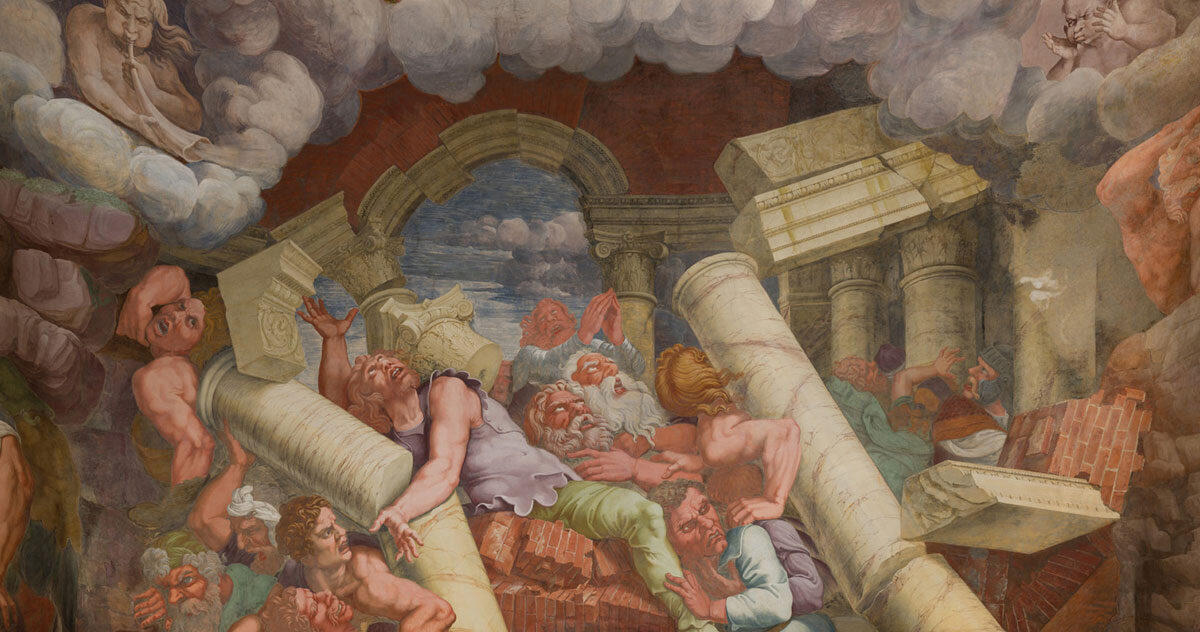
Fresco detail from Palazzo Te by Giulio Romano, Mantua

Explore Giulio Romano on the map

Tap to activate map

Key sites for Giulio Romano

ⓘ Opening hours and admission prices listed on this page are indicative and subject to change. Always verify current information on the official website of each venue before your visit.

Palazzo Te, Mantua

Sala dei Giganti, Sala di Amore e Psiche, Sala dei Cavalli – allow 90+ minutes

The essential Giulio Romano destination. Built and decorated between 1525 and 1535 as a suburban villa for Federico II Gonzaga, Palazzo Te contains Giulio's most famous frescoes. The Sala dei Giganti (Room of the Giants) is an immersive 360-degree painting where crumbling architecture appears to collapse onto the viewer. The Sala di Amore e Psiche features a ceiling of mythological banqueting scenes, and the Sala dei Cavalli displays life-size portraits of the Gonzaga horses against painted architectural backdrops. Open Tuesday to Sunday, 9:00 – 18:30. About 20 minutes on foot south of Palazzo Ducale.

Visit Palazzo Te official site

Palazzo Ducale, Mantua

Appartamento di Troia, Sala dei Capitani – book online in high season

Giulio Romano also worked extensively inside the Gonzaga main residence. The Appartamento di Troia (Troy Apartment) features ceiling frescoes depicting scenes from the fall of Troy, painted around 1536 – 1539. These are on the upper floors of the Corte Nuova wing. While the palace is best known for Mantegna's Camera degli Sposi, Giulio's contributions are substantial and often less crowded. Opens at 8:15; last entry 18:20. Pre-booking recommended April through October.

Visit Palazzo Ducale official site

Vatican Museums (Stanze di Raffaello), Rome

Sala di Costantino: Battle of the Milvian Bridge (1520 – 1524) – book at least 2 weeks ahead

After Raphael died in April 1520, Giulio Romano led the completion of the Sala di Costantino, the last of the four Vatican Rooms. The massive Battle of the Milvian Bridge on the east wall is largely Giulio's design and execution, showing his talent for dynamic, crowded compositions. The room also includes the Apparition of the Cross and the Donation of Constantine. The Stanze are part of the Vatican Museums general ticket route. In high season, book online at least two weeks ahead; early-morning or late-Friday slots are quietest.

Book Vatican Museums ticketsGuided tour with Sistine Chapel

Villa Farnesina, Rome

Loggia di Psiche (workshop contributions) – small venue, no advance booking usually needed

The Villa Farnesina in Trastevere preserves the Loggia di Psiche, designed by Raphael but executed largely by his workshop, including Giulio Romano. Giulio's hand is visible in several of the ceiling panels depicting the Marriage of Cupid and Psyche. The villa is open Monday to Saturday, 9:00 – 14:00 (last entry 13:30), and is a five-minute walk from Palazzo Corsini.

Book Villa Farnesina guided tour

Galleria degli Uffizi, Florence

Madonna della Gatta (c. 1522), 16th-century Mannerist rooms, second floor

The Uffizi holds several panel paintings by or attributed to Giulio Romano, including the Madonna della Gatta (Madonna of the Cat), notable for its domestic informality and the small cat at the Virgin's feet. These works are displayed in the Mannerist rooms on the second floor, near the Pontormo and Rosso Fiorentino galleries. Pre-book Uffizi tickets at least one week ahead; during peak season (March – October) two weeks is safer.

Book Uffizi ticketsUffizi guided tour

Museo di Capodimonte, Naples

Madonna with Child and St. John, Raphael workshop attributions

Capodimonte's Farnese collection includes works from Raphael's circle with Giulio Romano attributions. The museum is located on the Capodimonte hill, about 4 km north of the historic center (reachable by bus C63 from Piazza Dante). The Renaissance galleries are on the second floor.

Book Capodimonte tickets
Giulio Romano clusters by theme

Mantua: the Gonzaga court

Palazzo Te + Palazzo Ducale + the Duomo facade

Mantua concentrates almost all of Giulio Romano's architectural and fresco work: Palazzo Te (Sala dei Giganti, Sala di Amore e Psiche), Palazzo Ducale (Appartamento di Troia), and the Duomo exterior he helped redesign. The three sites are walkable in a single day. Start at Palazzo Ducale at opening time (8:15), then head south to Palazzo Te after lunch.

Rome: Raphael's heir

Vatican Rooms + Villa Farnesina + Palazzo Venezia

In Rome, Giulio Romano's presence is tied to Raphael's workshop. The Sala di Costantino in the Vatican (completed 1520 – 1524) is his most significant Roman work. Villa Farnesina in Trastevere preserves workshop contributions, and Palazzo Venezia holds a panel attributed to him. The Vatican requires advance booking; Villa Farnesina closes at 14:00.

Practical note

Combining Mantua with nearby cities

Mantua is well-positioned for combining with Verona (40 min by train), Parma (1 hr 20 min), or Bologna (under 2 hrs). Travelers interested in Giulio Romano's Mannerist context can pair a Mantua visit with Correggio's frescoes in Parma (at the Complesso della Pilotta) or the Uffizi in Florence, reachable in about 3 hours by regional train via Bologna.

Best city pages for Giulio Romano

Mantua

Palazzo Te and Palazzo Ducale hold the largest concentration of Giulio Romano frescoes anywhere. The Mantua city page covers both sites with practical tips, opening hours, and walking routes between them.

Raphael

Giulio Romano trained in Raphael's workshop and completed the Vatican Stanze after his death. The Raphael page maps all four Vatican Rooms, Villa Farnesina, and panel paintings across Europe.

Open the ArtAtlas map

See every georeferenced Giulio Romano location at once, zoom into individual cities, and check which museums sit near each other for efficient route planning.

Frequently asked questions

Can I visit Palazzo Te and Palazzo Ducale in the same day?

Yes. Both are in Mantua, roughly 20 minutes apart on foot. Start with Palazzo Ducale at opening (8:15), then walk south to Palazzo Te for the afternoon. Allow at least 90 minutes for each. Book Palazzo Ducale online in advance during high season.

Which Giulio Romano works can I see in Rome?

The Sala di Costantino in the Vatican Rooms is the main work: Giulio completed the Battle of the Milvian Bridge after Raphael's death. Villa Farnesina preserves workshop contributions in the Loggia di Psiche. Book Vatican Museums tickets at least two weeks ahead in high season.

Do I need to book Palazzo Te in advance?

Booking online is recommended for weekends and high season (April – September), but weekdays rarely sell out. Tickets are available on the Centro Palazzo Te website. Open Tuesday to Sunday, 9:00 – 18:30.

Are there Giulio Romano paintings in the Uffizi?

Yes. The Uffizi holds the Madonna della Gatta (c. 1522) and other attributed panels in the Mannerist rooms on the second floor. Book Uffizi tickets at least one week ahead, two weeks in peak season.

How many days do I need in Mantua for Giulio Romano?

One full day covers Palazzo Te and Palazzo Ducale comfortably. If you also want to see his Duomo facade renovations, his house on Via Poma, and the abbey of San Benedetto Po (20 km south), plan two days.

Giulio Romano: where classical order becomes spectacle.

From the collapsing architecture of the Sala dei Giganti to the controlled excess of the Sala di Amore e Psiche, Giulio Romano's art demands to be experienced inside the rooms he designed. These frescoes were never meant for museum walls. They only make full sense when you stand inside Palazzo Te, look up, and feel the painted ceiling bearing down. This map takes you to every surviving site.