Artist page

Where to See Giotto

Giotto di Bondone (c. 1267 – 1337) broke with Byzantine convention and gave painting a new sense of depth, weight, and emotion. His frescoes survive in specific churches and chapels across central Italy: the Scrovegni Chapel in Padua, the Bardi and Peruzzi Chapels in Santa Croce (Florence), the Upper and Lower Basilica di San Francesco in Assisi, and the Vatican Pinacoteca in Rome.

This page maps every major Giotto site, from the panel paintings in the Uffizi (the Ognissanti Madonna, c. 1310) to the fresco cycles that can only be understood in person. Use it to plan a focused Giotto itinerary, check which sites need advance booking, and connect each location to a detailed city guide.

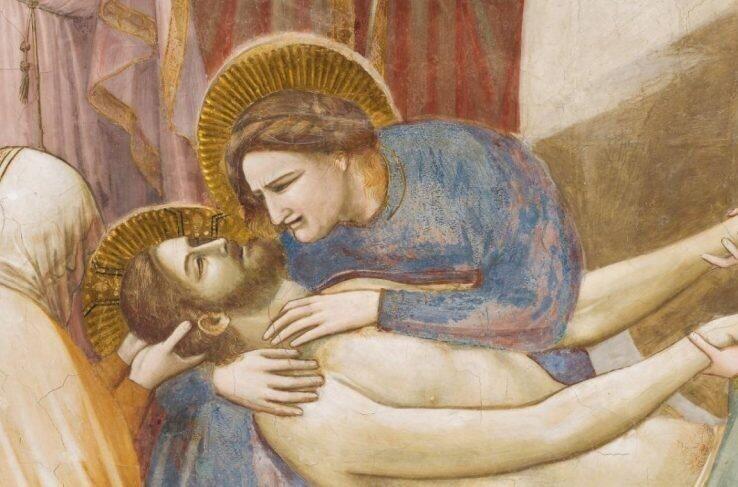
Giotto, Scenes from the Life of Christ, fresco detail from the Scrovegni Chapel, Padua

Explore Giotto on the map

Tap to activate map

Where to see Giotto: key sites

ⓘ Opening hours and admission prices listed on this page are indicative and subject to change. Always verify current information on the official website of each venue before your visit.

Scrovegni Chapel, Padua

Fresco cycle (c. 1303 – 1305), 38 scenes from the Lives of the Virgin and Christ. Book 2 – 4 weeks ahead in peak season.

The Scrovegni Chapel (Cappella degli Scrovegni) contains Giotto's most complete surviving cycle: 38 narrative scenes arranged in three registers across the walls, plus the large Last Judgment on the entrance wall. Entry is limited to groups of 25 for 15-minute slots, preceded by a 15-minute acclimatization in a holding chamber. The cycle includes the Lamentation over the Dead Christ, the Kiss of Judas, and the Flight into Egypt. The chapel is inside the Musei Civici agli Eremitani complex, a 10-minute walk from Padua's train station.

Book Scrovegni Chapel tickets

Galleria degli Uffizi, Florence

Ognissanti Madonna (c. 1310), Room 2. Book at least 3 days ahead in spring/summer.

Giotto's Ognissanti Madonna (Maestà di Ognissanti) hangs in Room 2 of the Uffizi, displayed alongside the Maestà panels by Cimabue and Duccio. The comparison between these three works, all in the same room, is one of the most instructive moments in any Italian museum: you can see exactly how Giotto introduced a new sense of volume and spatial depth to the enthroned Madonna. The Uffizi is open Tuesday to Sunday, 8:15 – 18:30.

Book Uffizi ticketsUffizi guided tour

Santa Croce, Florence (Bardi and Peruzzi Chapels)

Frescoes: Life of St. Francis (Bardi Chapel) and Lives of St. John the Baptist and St. John the Evangelist (Peruzzi Chapel), c. 1320 – 1325.

The Bardi and Peruzzi Chapels are at the right end of the transept inside Santa Croce. The Bardi Chapel frescoes show scenes from the Life of St. Francis, including the Stigmatization and the Death of St. Francis. The Peruzzi Chapel frescoes (partially damaged, painted on dry plaster) depict stories from the lives of St. John the Baptist and St. John the Evangelist. Both chapels were whitewashed in the 18th century and rediscovered in the 1850s. Santa Croce is open Monday to Saturday, 9:30 – 17:30, and Sunday from 12:30.

Book Santa Croce guided tour

Basilica di San Francesco, Assisi

Upper Basilica: Life of St. Francis cycle (c. 1296 – 1304, attribution debated), 28 scenes. Free entry, no reservation needed.

The Upper Basilica of San Francesco contains the famous 28-scene cycle of the Life of St. Francis on the lower walls of the nave (the attribution to Giotto himself, versus his workshop, remains a scholarly debate). Scenes include the Sermon to the Birds, the Gift of the Cloak, and the Renunciation of Worldly Goods. The Lower Basilica holds additional Giotto-attributed frescoes in the Magdalen Chapel and vault decorations. No photography is allowed inside. The basilica is open daily, 8:30 – 18:00 (shorter hours in winter). Assisi is reachable by train (station: Assisi-Santa Maria degli Angeli, then a 20-minute bus ride up to the old town).

Book Basilica di San Francesco guided tour

Vatican Pinacoteca, Rome

Stefaneschi Triptych (c. 1320), Room IV. Included with Vatican Museums general ticket.

The Stefaneschi Triptych, originally made for the high altar of Old St. Peter's Basilica, is displayed in Room IV of the Vatican Pinacoteca. It is a double-sided altarpiece: the front shows Christ Enthroned with angels and saints; the back shows St. Peter Enthroned. It is one of the few large-scale panel paintings securely attributed to Giotto. The Vatican Pinacoteca is part of the Vatican Museums circuit (often overlooked by visitors focused on the Sistine Chapel). Allow at least 30 minutes beyond the Sistine Chapel visit.

Book Vatican Museums ticketsVatican Museums guided tour

Museo dell'Opera del Duomo, Florence

Original relief panels from Giotto's Campanile, plus design attribution. Open daily 9:00 – 19:00.

Giotto was appointed chief architect of the Florence Cathedral in 1334 and designed the Campanile (bell tower), though only the lower section was completed before his death in 1337. The original hexagonal relief panels from the base of the Campanile (depicting the Creation of Adam, various crafts, and the Liberal Arts) are now inside the Museo dell'Opera del Duomo, replaced by copies on the tower itself. The museum is directly behind the Duomo, a 5-minute walk from the Uffizi.

Book Museo dell'Opera del Duomo tickets
Main Giotto clusters

Padua

Scrovegni Chapel and Basilica del Santo

Padua holds Giotto's most complete fresco cycle in the Scrovegni Chapel (38 scenes, 1303 – 1305). Within a 15-minute walk, the Basilica di Sant'Antonio also contains attributed Giotto frescoes in the Chapter House. Tip: book Scrovegni slots for early morning to avoid crowds in the acclimatization chamber.

Florence

Uffizi, Santa Croce, and the Duomo complex

Florence offers three distinct Giotto experiences within walking distance: the Ognissanti Madonna in the Uffizi (Room 2), the Bardi and Peruzzi Chapel frescoes in Santa Croce, and the Campanile reliefs in the Museo dell'Opera del Duomo. All three sites are within a 10-minute walk of each other. Start at the Uffizi in the morning, then walk to Santa Croce (5 minutes east), and end at the Duomo complex.

Assisi – Rome

The Life of St. Francis and the Stefaneschi Triptych

Assisi's Upper Basilica holds the 28-scene Life of St. Francis (attribution partly debated), while Rome's Vatican Pinacoteca displays the Stefaneschi Triptych. A practical route: visit Assisi as a day trip from Perugia or Florence (direct trains), then continue to Rome. The Vatican Pinacoteca is usually less crowded in the late afternoon.

Best city pages for Giotto

Florence

The Uffizi (Ognissanti Madonna, Room 2), Santa Croce (Bardi and Peruzzi Chapels), and Museo dell'Opera del Duomo (Campanile reliefs). Florence also connects Giotto to his predecessors (Cimabue, in the same Uffizi room) and successors (Masaccio in the Brancacci Chapel).

Padua

The Scrovegni Chapel is Giotto's single most important surviving work: 38 scenes from the Lives of the Virgin and Christ, plus a monumental Last Judgment. Advance booking is essential. The Musei Civici Eremitani complex, which includes the chapel, also holds archaeological collections.

Continue with Piero della Francesca

From Giotto's invention of pictorial space to Piero's mathematical refinement of it: key works in Arezzo (San Francesco), Sansepolcro (Museo Civico), Urbino (Galleria Nazionale delle Marche), and the Uffizi (Portraits of the Duke and Duchess of Urbino).

Frequently asked questions

Do I need to book the Scrovegni Chapel in advance?

Yes. Entry is limited to 25 visitors per 15-minute slot. During peak season (March to October), slots sell out weeks ahead. Book online as early as possible through the Musei Civici di Padova ticket platform. Off-season (November to February), you can sometimes find same-week availability.

Where are the main Giotto frescoes in Florence?

The Bardi Chapel (Life of St. Francis) and Peruzzi Chapel (Lives of St. John) inside Santa Croce, at the right end of the transept. The Uffizi holds the Ognissanti Madonna in Room 2. Giotto's Campanile relief panels are in the Museo dell'Opera del Duomo, behind the cathedral.

How many days do I need to see all major Giotto sites in Italy?

Plan 5 to 6 days minimum: one day for Padua (Scrovegni Chapel), two days for Florence (Uffizi, Santa Croce, Museo dell'Opera del Duomo), one day for Assisi (Upper and Lower Basilica di San Francesco), and one day in Rome for the Stefaneschi Triptych in the Vatican Pinacoteca.

Can I visit the Giotto frescoes in Assisi without a guide?

Yes. The Basilica di San Francesco is free to enter, with no reservation required. Photography is not permitted inside. Guided tours are available and helpful for understanding the 28-scene Life of St. Francis cycle. The basilica is open daily, 8:30 to 18:00 (shorter hours in winter).

Where is the Stefaneschi Triptych by Giotto?

Room IV of the Vatican Pinacoteca, inside the Vatican Museums in Rome. Access is included with the general Vatican Museums ticket. The triptych (c. 1320) was originally the high altarpiece of Old St. Peter's Basilica and is painted on both sides. Book Vatican Museums tickets.

Read Giotto on TheIntroverTraveler

Venice canal

The Scrovegni Chapel

Giotto's frescoes in Padua, the colour palette, the spatial logic, and why this chapel marks the beginning of Western painting as we know it.

All posts about Padua

The full archive of Padua content on TheIntroverTraveler: the Scrovegni Chapel, the Basilica del Santo, and the broader artistic geography of the city.

The Art of Fresco Painting

Techniques, historical evolution, and the material conditions that made fresco the dominant medium of Italian monumental painting from Giotto onward.

Giotto, where painting first learned to inhabit the world.

Before Giotto, painted figures existed on flat surfaces. After him, they stand, mourn, embrace, and occupy real space. That shift can only be fully understood in the chapels and churches where it happened: the Scrovegni Chapel in Padua, Santa Croce in Florence, the Upper Basilica in Assisi. Open the map and plan your route.