ⓘ Opening hours and admission prices listed on this page are indicative and subject to change. Always verify current information on the official website of each venue before your visit.
Cathedral of Parma (Duomo)
Assumption of the Virgin (dome fresco, 1526–1530) – free entry, check opening hours
The dome fresco is Correggio's most ambitious work: a vortex of figures spiraling upward into golden light, visible from the crossing below. The effect depends entirely on standing beneath the dome; no reproduction conveys the spatial illusion. The Cathedral is open daily (usually 7:30–12:30 and 15:00–19:00, reduced hours on Sundays). Entry is free. Binoculars help with the upper registers of the fresco. The Baptistery next door (by Benedetto Antelami) is a separate paid visit.
Church of San Giovanni Evangelista, Parma
Vision of St. John on Patmos (dome, 1520–1524), frieze of saints in the nave – free entry
Correggio's first major dome, painted before the Cathedral commission. The central figure of Christ descending toward St. John is seen from below through a ring of apostles on clouds. The nave frieze includes individual saints in shell niches. The adjacent monastery pharmacy (Spezieria di San Giovanni) preserves original 16th-century furnishings. The church is a 3-minute walk from the Cathedral.
Camera di San Paolo, Parma
Mythological ceiling (c. 1519) – ticketed, part of Complesso della Pilotta circuit
The private dining room of Abbess Giovanna da Piacenza, painted with a pergola illusion, mythological lunettes, and references to Diana. The ceiling transforms a small room into an open garden seen from below. Located inside the former Benedictine convent, now accessed through the Pilotta complex. Visit early in the morning to avoid groups.
Book Complesso della Pilotta guided tour
Galleria Nazionale di Parma (Palazzo della Pilotta)
Madonna of St. Jerome (c. 1527–28), Martyrdom of Four Saints, Deposition – book in advance during peak season
The gallery holds Correggio's major altarpieces, originally painted for Parma churches and later concentrated here. The Madonna of St. Jerome (known as "Il Giorno") is one of his most celebrated paintings: the Magdalene kneeling with an open book while an angel turns the pages. The Deposition from the Cross (c. 1524–1526) and the Martyrdom of Four Saints are also here. The gallery occupies the upper floors of the Pilotta complex, which also includes the Farnese Theatre and the Camera di San Paolo.
Book Galleria Nazionale di Parma guided tour
Gemäldegalerie Alte Meister, Dresden
Holy Night (c. 1528–30), Madonna of St. Francis (1514–15), Madonna of St. Sebastian, Penitent Magdalene
Dresden acquired some of Correggio's finest altarpieces through the Saxon electors in the 18th century. The Holy Night (Adoration of the Shepherds) is the centerpiece: the Christ Child radiates the only light source in the composition, illuminating the Virgin and the shepherds from below. The Madonna of St. Francis is an early work showing Correggio before his mature sfumato style fully developed. All works hang in the Italian galleries of the Zwinger complex. Open Tuesday to Sunday, 10:00–18:00. Book online to skip the queue.
National Gallery, London
Venus with Mercury and Cupid (c. 1525), Ecce Homo, Madonna of the Basket – free entry
The National Gallery holds three Correggio paintings. Venus with Mercury and Cupid (The School of Love) is displayed in the Italian Renaissance rooms (Room 5 area, West Wing). The soft modeling of flesh and the serpentine composition make it one of the finest examples of his mythological style. The small Madonna of the Basket shows his intimate devotional mode. Free entry; no booking required, though timed entry may apply for special exhibitions.
Book National Gallery London guided tour
Galleria Borghese, Rome
Danaë (c. 1531) – mandatory reservation, 2-hour timed slots
The Danaë is part of the series of Loves of Jupiter that Correggio painted for Federico II Gonzaga of Mantua around 1530–1532. The golden rain dissolves into vaporous light across the reclining figure. Displayed in the ground-floor rooms. The Borghese requires advance booking (often 2–4 weeks ahead in spring and autumn); each visit is limited to two hours.
Book Galleria Borghese reserved entry
Museo di Capodimonte, Naples
Mystic Marriage of St. Catherine, La Zingarella (Madonna of the Rabbit) – usually uncrowded
Capodimonte holds Correggio works from the Farnese collection. The Mystic Marriage of St. Catherine (two versions exist; this is the larger one with saints) and the intimate Zingarella are in the Farnese Gallery on the first floor. The museum is set in a park on the Capodimonte hill, reachable by bus from central Naples.
Book Museo di Capodimonte tickets
Kunsthistorisches Museum, Vienna
Jupiter and Io (c. 1531), Abduction of Ganymede – Italian galleries, first floor
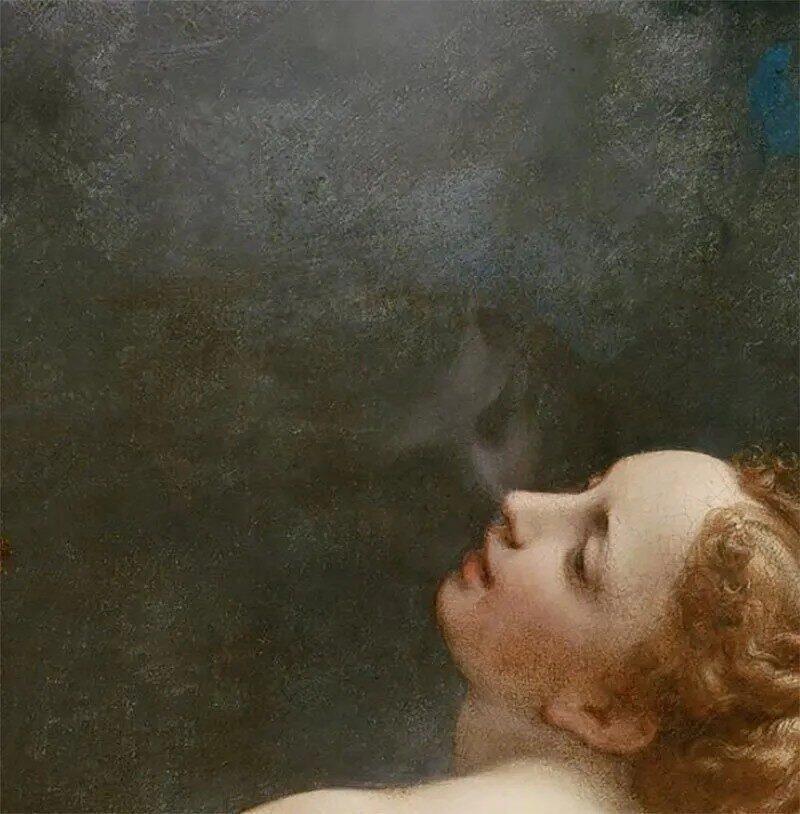
Two more paintings from the Loves of Jupiter series are in Vienna. Jupiter and Io, showing the god as a dark cloud enveloping the nymph, is one of Correggio's most famous images. The Abduction of Ganymede hangs nearby. Both are in the Italian, Spanish and French painting galleries on the first floor. Open Tuesday to Sunday (Thursday until 21:00).
Book Kunsthistorisches Museum Vienna tickets
Museo del Prado, Madrid
Noli me tangere (c. 1525) – Italian painting rooms
The Prado holds a small but important Correggio: the Noli me tangere, showing Christ appearing to the Magdalene in a garden setting. The landscape and soft light are characteristic of his mature style. Displayed in the Italian Renaissance rooms on the first floor.
Book Museo del Prado tickets
Galleria degli Uffizi, Florence
Madonna and Child in Glory, Rest on the Flight into Egypt – Emilian rooms
The Uffizi has several Correggio works in the Emilian painting section (second floor). The Adoration of the Child and the Rest on the Flight into Egypt show his devotional mode at smaller scale. The museum is crowded year-round; book timed entry at least a week in advance.
Book Galleria degli Uffizi tickets