Artist page

Where to See Benvenuto Cellini

Cellini (1500–1571) was a Florentine sculptor and goldsmith whose career moved between the Medici court, papal Rome, and the court of Francis I in France. His surviving works are concentrated in Florence, with key pieces in Vienna, Paris, and New York. This page maps the locations where you can see his sculptures, bronze reliefs, and goldsmith objects today.

The core of any Cellini itinerary is Florence: the Perseus with the Head of Medusa in the Loggia dei Lanzi, the bronze model and bust of Cosimo I at the Bargello, and the Crucifix at the Escorial (on deposit). Vienna holds the Saliera, his most famous goldsmith work. Use the map below to plan visits across multiple cities.

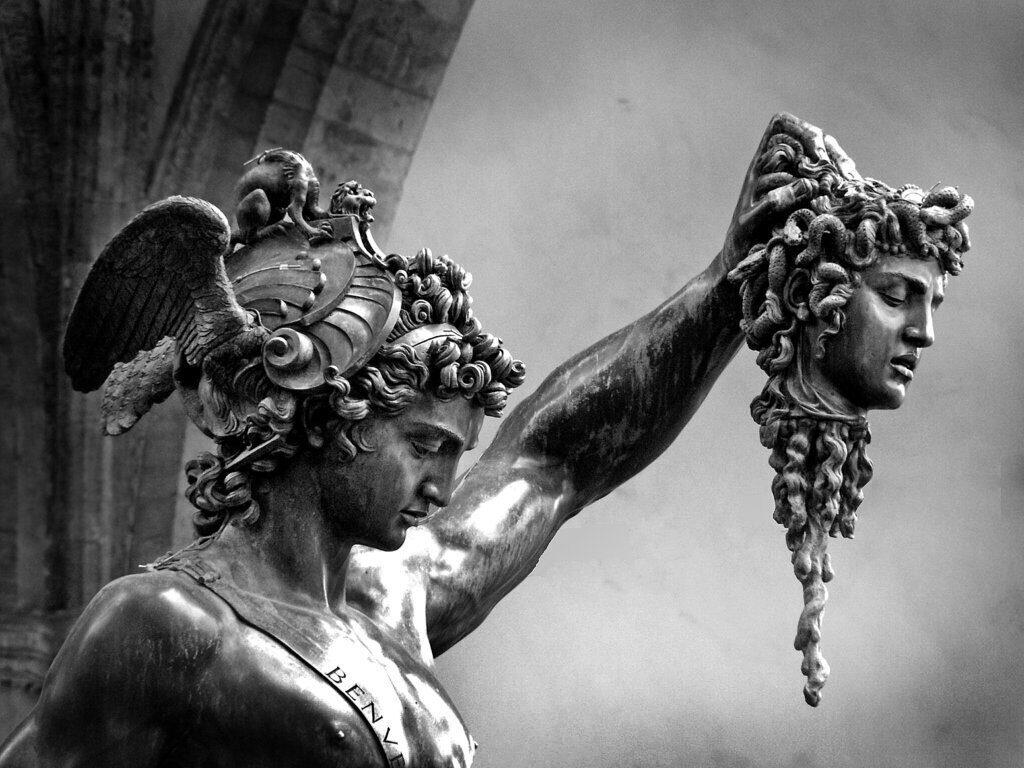
Benvenuto Cellini, Perseus with the Head of Medusa, Loggia dei Lanzi, Florence

Explore Benvenuto Cellini on the map

Tap to activate map

Key museums and sites for Cellini

ⓘ Opening hours and admission prices listed on this page are indicative and subject to change. Always verify current information on the official website of each venue before your visit.

Loggia dei Lanzi, Florence

Perseus with the Head of Medusa (1545–1554) – free, open-air, Piazza della Signoria

Cellini's bronze Perseus stands in the south arch of the Loggia, directly facing Palazzo Vecchio. The sculpture was commissioned by Duke Cosimo I de' Medici and cast in a single, technically daring pour. The marble base with four bronze statuettes (Jupiter, Mercury, Minerva, Danaë with the young Perseus) is a replica; the originals are inside the Bargello. Visible 24 hours a day, no ticket required.

Museo Nazionale del Bargello, Florence

Bronze Perseus model, bust of Cosimo I, Narcissus, Ganymede – ground floor and Salone di Donatello

The Bargello holds the largest indoor collection of Cellini sculptures. On the ground floor: the preparatory bronze model of Perseus (c. 1545), the four original relief statuettes from the Perseus base, and the marble Narcissus (c. 1548). The monumental bronze Bust of Cosimo I (1545–1548) is among the most striking Renaissance portrait busts. The restored marble Ganymede is nearby. Allow 1–2 hours. Less crowded than the Uffizi; booking recommended in summer.

Book Bargello tickets

Kunsthistorisches Museum, Vienna

Saliera (1540–1543) – Kunstkammer, mezzanine level

The Saliera (salt cellar) is Cellini's most celebrated goldsmith work: a gold-and-enamel table sculpture made for Francis I of France, depicting Neptune and Tellus. It is displayed in the Kunstkammer (Room XXIX), the museum's collection of precious objects on the mezzanine. The piece was famously stolen in 2003 and recovered in 2006. The Kunsthistorisches also holds related Mannerist works for context. Book timed-entry tickets online, especially on weekends.

Book Kunsthistorisches Museum tickets

Musée du Louvre, Paris

Nymph of Fontainebleau (1542–1543) – Denon Wing, Italian sculpture galleries

This large bronze lunette relief was originally designed for the entrance to Fontainebleau. It depicts a reclining nymph with deer and hounds, a highly finished decorative work made during Cellini's years at the French court (1540–1545). Located in the Denon Wing among the Italian Renaissance sculptures. The Louvre is extremely crowded; book well in advance (2+ weeks in summer) and arrive early or visit late afternoons.

Book Louvre guided tour tickets

Metropolitan Museum of Art, New York

Portrait bust (attributed), small bronzes – European Sculpture and Decorative Arts

The Met holds works attributed to Cellini and his workshop, including small bronzes and decorative pieces in the European Sculpture and Decorative Arts galleries on the first floor. The attribution of some pieces remains debated. Combine with the broader Italian Renaissance sculpture collection. General admission is pay-what-you-wish for New York residents; timed entry recommended for visitors.

Book Met guided tour tickets

Palazzo Vecchio, Florence

Cellini's Perseus restoration documents – Salone dei Cinquecento context

While Palazzo Vecchio does not hold major Cellini sculptures, the building is the political backdrop against which the Perseus was conceived: the Salone dei Cinquecento, Cosimo I's audience hall, stands directly behind the Loggia dei Lanzi. Visiting Palazzo Vecchio helps you understand the Medici programme of artistic propaganda that shaped Cellini's commission. The palace is a 1-minute walk from the Perseus.

Book Palazzo Vecchio tickets
How to approach Cellini

Cellini's art cannot be separated from its site, patron, and material process. His works were created for specific political contexts: the Perseus for Cosimo I's piazza, the Saliera for the French royal table, the Nymph for Fontainebleau's entrance. Understanding each piece requires knowing where it was meant to stand and who commissioned it.

  • Start in Florence: see the Perseus outdoors in the Loggia dei Lanzi, then visit the Bargello for the bronze model, bust of Cosimo I, Narcissus, and Ganymede.
  • In Vienna, the Saliera is the single most important goldsmith work by Cellini; it takes 15 minutes to study closely in the Kunstkammer.
  • In Paris, the Nymph of Fontainebleau at the Louvre completes the picture of his French court period.
  • Read Cellini's autobiography (La Vita, written c. 1558–1566) before or during the trip; it describes the casting of the Perseus in detail.

Main Cellini clusters

Florence

Loggia dei Lanzi, Bargello, Palazzo Vecchio

All three sites are within a 5-minute walk in central Florence. Start at the Loggia for the Perseus (free), cross to the Bargello for the bronze model and busts (allow 1–2 hours), and finish at Palazzo Vecchio for the Medici context. Combine with the Uffizi across the piazza.

Book Bargello tickets

Vienna

Kunsthistorisches Museum, Kunstkammer

The Saliera alone justifies a visit to the Kunstkammer. Plan at least 30 minutes for the room; the surrounding cabinets contain Habsburg goldsmith commissions that contextualise Cellini's work within European court culture. The museum is open Thursday until 9 PM (less crowded evenings).

Book Kunsthistorisches Museum tickets

Paris

Musée du Louvre, Denon Wing

The Nymph of Fontainebleau is in the Italian sculpture galleries (Denon Wing, ground floor). From there, it is a short walk to the French Crown Jewels in the Apollo Gallery, which include goldsmith works that reflect Cellini's influence on French decorative arts. Visit Wednesday or Friday evenings when the Louvre stays open until 9:45 PM.

Book Louvre guided tour

Best city pages for Cellini

Florence

The essential starting point: Loggia dei Lanzi, Bargello, Palazzo Vecchio, and the Uffizi all within walking distance. Florence holds the largest concentration of Cellini's surviving sculptures.

Vienna

Home of the Saliera at the Kunsthistorisches Museum. Vienna's Kunstkammer is the best place to see Cellini's goldsmith practice in context alongside Habsburg and Mannerist collecting.

Michelangelo

Cellini and Michelangelo both worked for the Medici and shaped Florentine sculpture in the mid-16th century. Comparing Cellini's polished virtuosity with Michelangelo's unfinished force (Accademia, Medici Chapels) enriches both itineraries.

Read Cellini on TheIntroverTraveler

Venice canal

Perseus by Benvenuto Cellini

A close reading of the Perseus in the Loggia dei Lanzi, from the dramatic casting to the political programme behind its placement in Piazza della Signoria.

Frequently asked questions

Where is the Perseus by Cellini in Florence?

The Perseus with the Head of Medusa (1545–1554) is under the Loggia dei Lanzi in Piazza della Signoria. It is free to view at any time, outdoors. The original bronze base reliefs are inside the Bargello, about 5 minutes' walk east.

Do I need to book the Bargello in advance?

During peak season (April to October), booking online is recommended to skip the queue. In winter, walk-in is usually possible. The Bargello is open daily 8:15 AM to 6:50 PM (closed 1st, 3rd, 5th Monday and 2nd, 4th Sunday of each month; check the official calendar). Cellini's works are on the ground floor.

Where is the Saliera by Cellini?

The Saliera (1540–1543) is at the Kunsthistorisches Museum in Vienna, in the Kunstkammer collection on the mezzanine level (Room XXIX). The museum is open Tuesday to Sunday, 10 AM – 6 PM, and Thursday until 9 PM.

Can I see all Cellini works in Florence in one day?

Yes. Start at the Loggia dei Lanzi (free, 15 minutes), walk to the Bargello for the bronze model, Cosimo I bust, Narcissus, and Ganymede (1–2 hours). Total time: about 2–3 hours including transit. Combine with Palazzo Vecchio or the Uffizi for a full day.

Are there Cellini works outside Italy?

Yes. The Saliera is in Vienna. The Nymph of Fontainebleau bronze relief is at the Louvre in Paris (Denon Wing). The Metropolitan Museum in New York holds attributed small bronzes. The V&A in London and the Getty in Los Angeles have minor attributed pieces.

Cellini, where technique became spectacle.

The casting of the Perseus was itself a performance: Cellini describes melting pewter plates and household goods to keep the bronze flowing. The finished work was not just a sculpture but proof that the artist had risked everything. That logic only becomes fully clear when you stand in the Loggia dei Lanzi, facing Palazzo Vecchio, and see the piazza as Cosimo I's stage.