Priority: in situ
Pio Monte della Misericordia
The Seven Works of Mercy (1607) is above the high altar, visible from the nave. The church is in the historic centre on Via dei Tribunali, a few minutes' walk from the Duomo and from Spaccanapoli. Opening hours are typically Monday–Saturday 09:00–14:30, but check the official site before visiting as hours vary. A small entry fee gives access to the upstairs pinacoteca, which holds seventeenth-century Neapolitan paintings and preparatory drawings. The altarpiece can be seen from the nave without paying.
Museum: essential
Museo e Real Bosco di Capodimonte
The Flagellation of Christ (c. 1607–1610) is the principal Caravaggio at Capodimonte, a large canvas, around 286 × 213 cm, painted for the De Sanctis chapel of San Domenico Maggiore and later acquired by the Bourbon royal collection. The museum also holds works from his circle and followers that help clarify the immediate Neapolitan influence of his style. Capodimonte is on a hill north of the city; allow 30–40 minutes from the historic centre by taxi or bus. The museum is large, plan at least three hours.
Museum: essential
Gallerie d'Italia, Via Toledo
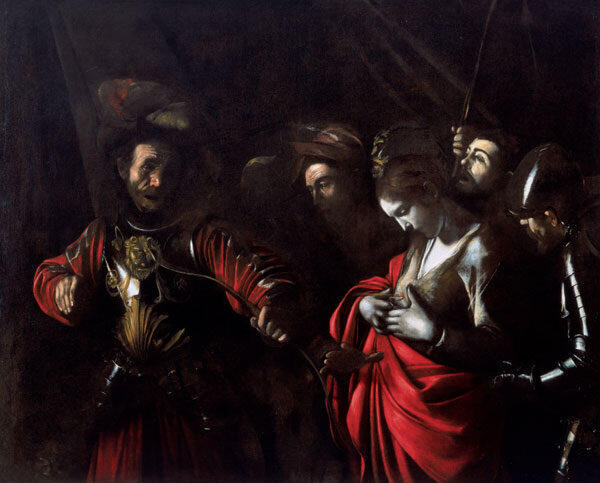
The Martyrdom of Saint Ursula (1610) is the third Caravaggio in Naples and his last known painting, completed in May 1610 just weeks before his death. It was commissioned by the Genoese banker Marcantonio Doria and depicts the exact moment of Ursula's killing, not the symbolic aftermath but the arrow entering her chest, Attila standing inches away. The canvas is part of the Intesa Sanpaolo collection and has been on display since 2022 at the new Gallerie d'Italia premises, Via Toledo 177 (the former Banco di Napoli building, designed by Marcello Piacentini). Note: until 2022 the painting was held at Palazzo Zevallos Stigliano, the collection has since moved to this larger site a short distance away on the same street. Opening hours: Tuesday–Friday 10:00–19:00, Saturday–Sunday 10:00–20:00.
Comparative stop
Naples as a city of Caravaggism
Caravaggio's two Neapolitan stays produced an immediate and lasting local tradition. Battistello Caracciolo, Artemisia Gentileschi (who worked in Naples from 1630), and Jusepe de Ribera all worked in or around Naples and all show the pressure of his example. Capodimonte's collection of seventeenth-century Neapolitan painting is the best place to read this transmission. The influence did not dissipate: it became the dominant register of Neapolitan sacred painting for two generations.