Priority visit
Pinacoteca Ambrosiana
The Basket of Fruit (c. 1599) is in the Sala della Medusa on the first floor. The museum occupies a palace adjacent to the Biblioteca Ambrosiana, near Piazza del Duomo: allow 90 minutes for the main rooms. The collection also holds a large number of Lombard and northern Italian paintings from the fifteenth to seventeenth century that provide direct context for understanding what Caravaggio grew up looking at: Foppa, Bramantino, Bergognone, Luini. Advance booking is recommended in high season.
Book Pinacoteca Ambrosiana tickets
Second stop
Pinacoteca di Brera
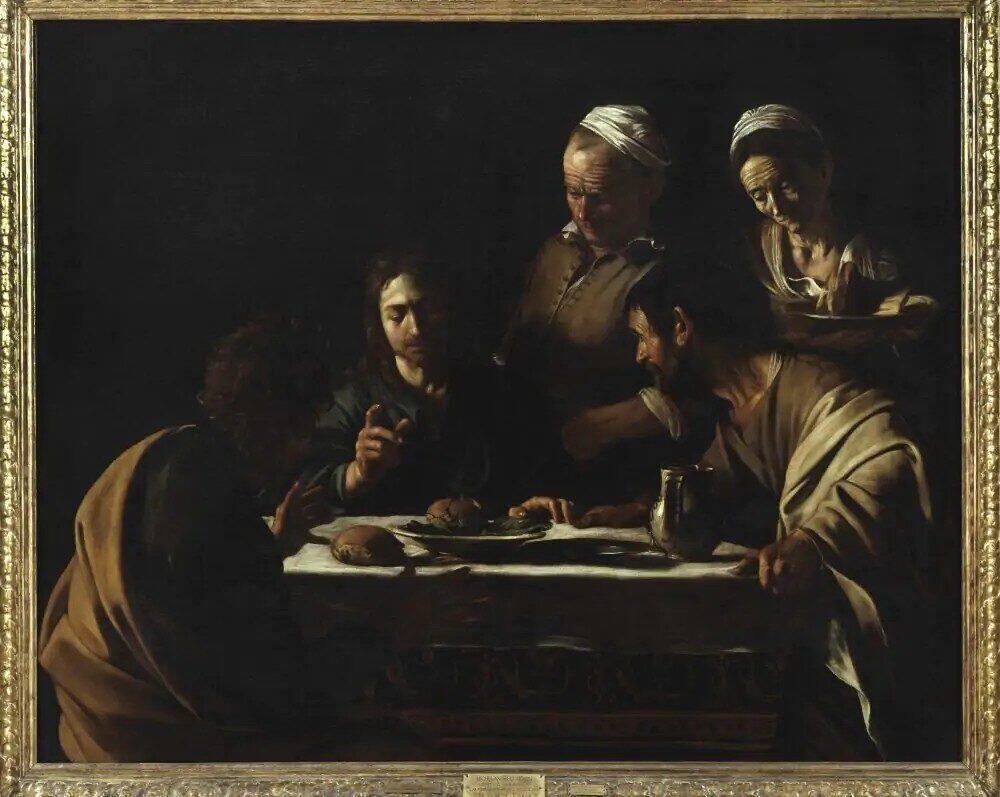
Brera holds a Supper at Emmaus (c. 1606) attributed to Caravaggio: a late work, painted after his flight from Rome, in which the drama of recognition is staged with characteristic intensity but with a gravity that reflects the post-1606 period. Attribution debates aside, the painting repays close attention. Brera is also the best single museum in Milan for reading Lombard painting as a tradition: Giovanni Bellini, Mantegna, Bramantino, Moretto, Moroni: painters whose handling of light and physical presence feeds directly into the visual world Caravaggio came from.
Book a guided tour of Pinacoteca di Brera
Lombard formation
What the Lombard context explains
Caravaggio's Roman novelty is often described as if it emerged from nowhere. It did not. The Lombard tradition he trained in was already characterized by an anti-classical preference for observed fact over ideal form: Moretto da Brescia's portraits, Moroni's ordinary sitters in ordinary clothes, Savoldo's figures caught in pools of dramatic light. These are not Caravaggio, but they are the visual habits his eye was formed by. Both Brera and the Ambrosiana let you see this formation directly rather than reading it in art-historical summaries.