ⓘ Opening hours and admission prices listed on this page are indicative and subject to change. Always verify current information on the official website of each venue before your visit.
Kunsthistorisches Museum, Vienna
12 paintings, Room X (Saal X), first floor – book at least 1 day ahead on weekends
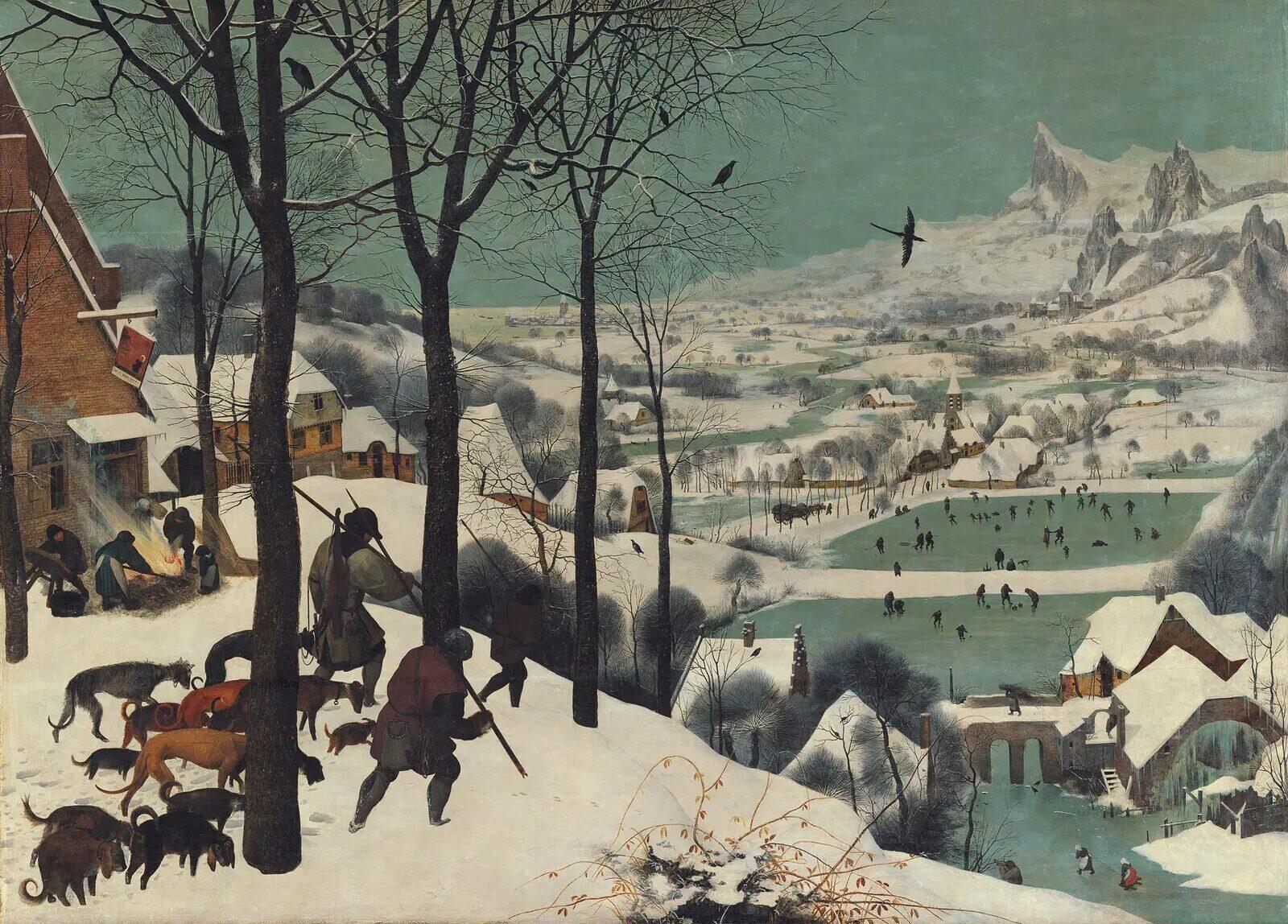
The world's largest Bruegel collection occupies Room X of the Picture Gallery. The five surviving panels from the Months cycle are here: Hunters in the Snow (January, 1565), The Gloomy Day (February, 1565), The Return of the Herd (November, 1565). Alongside these hang The Tower of Babel (1563), Peasant Wedding (c. 1567), Peasant Dance (c. 1567), The Fight Between Carnival and Lent (1559), Children's Games (1560), and The Conversion of Paul (1567). Open Tuesday to Sunday, 10:00–18:00 (Thursday until 21:00). Thursday evening is the quietest time to visit Room X.
Book Kunsthistorisches Museum tickets
Musées Royaux des Beaux-Arts, Brussels
Old Masters Museum, ground and first floors – no advance booking required
Brussels holds several key Bruegel paintings in the Old Masters section: The Fall of the Rebel Angels (1562), Landscape with the Fall of Icarus (attribution debated, c. 1560s), The Census at Bethlehem (1566), and Winter Landscape with Skaters and a Bird Trap (1565). The museum is free on the first Wednesday afternoon of each month. Allow 1.5–2 hours for the Bruegel rooms and related Flemish collections.
Visit Musées Royaux des Beaux-Arts website
Museum Mayer van den Bergh, Antwerp
Small museum, ground floor – rarely crowded, no booking needed
This intimate museum holds Dulle Griet (Mad Meg, c. 1563), one of Bruegel's most visually dense allegories of war and chaos. The painting was cleaned and restored in 2019, revealing vivid colour previously hidden under old varnish. The museum also contains a fine collection of medieval and Renaissance applied arts. Located in Antwerp's historic centre, about a 10-minute walk from the Cathedral of Our Lady and 15 minutes from the Rubenshuis.
Visit Museum Mayer van den Bergh website
Museo del Prado, Madrid
Room 55A, first floor – book ahead, especially spring and summer
The Prado holds The Triumph of Death (c. 1562–1563), Bruegel's panoramic vision of death overrunning the living, displayed in Room 55A alongside other Flemish works. The painting was thoroughly restored in 2020. The museum also has The Wine of Saint Martin's Day (c. 1565–1568), a large tempera on linen only rediscovered in 2010. Open Monday to Saturday 10:00–20:00, Sundays 10:00–19:00. Free entry the last two hours daily.
Book Museo del Prado tickets
National Gallery, London
Room 14, Sainsbury Wing – free admission, no booking required
The Adoration of the Kings (1564) hangs in Room 14 among the Early Netherlandish collection. It is a compact, tightly composed panel showing Bruegel's shift toward monumental figure painting. The National Gallery is free to enter and open daily 10:00–18:00 (Friday until 21:00). The Courtauld Gallery (about 15 minutes' walk east on the Strand) also holds Landscape with the Flight into Egypt.
Book National Gallery guided tour
Gemäldegalerie, Berlin
Rooms IV–V, Netherlandish painting wing – book online for skip-the-line
Berlin holds Netherlandish Proverbs (1559), one of Bruegel's most celebrated compositions: over 100 proverbs and idioms are enacted across a single village scene. Also here is Two Monkeys (1562), a small, enigmatic panel. The museum is at the Kulturforum, a short walk from Potsdamer Platz. Open Tuesday to Sunday 10:00–18:00 (Thursday until 20:00).
Book Gemäldegalerie Berlin tickets
Other locations with Bruegel works
Smaller holdings across Europe and the United States
Additional Bruegel paintings are held at: the Metropolitan Museum of Art, New York (The Harvesters, 1565, one of the Months cycle); the Frick Collection, New York (Three Soldiers, 1568, though sometimes not on display); the Musée Mayer van den Bergh, Antwerp (see above); the Alte Pinakothek, Munich (The Land of Cockaigne, 1567); and the Museum Boijmans Van Beuningen, Rotterdam (The Tower of Babel, small version, c. 1568). Each holds one or two works, so combining with other collections in the same city is the practical approach.