Essential museum
Uffizi Galleries: Rooms 10-14
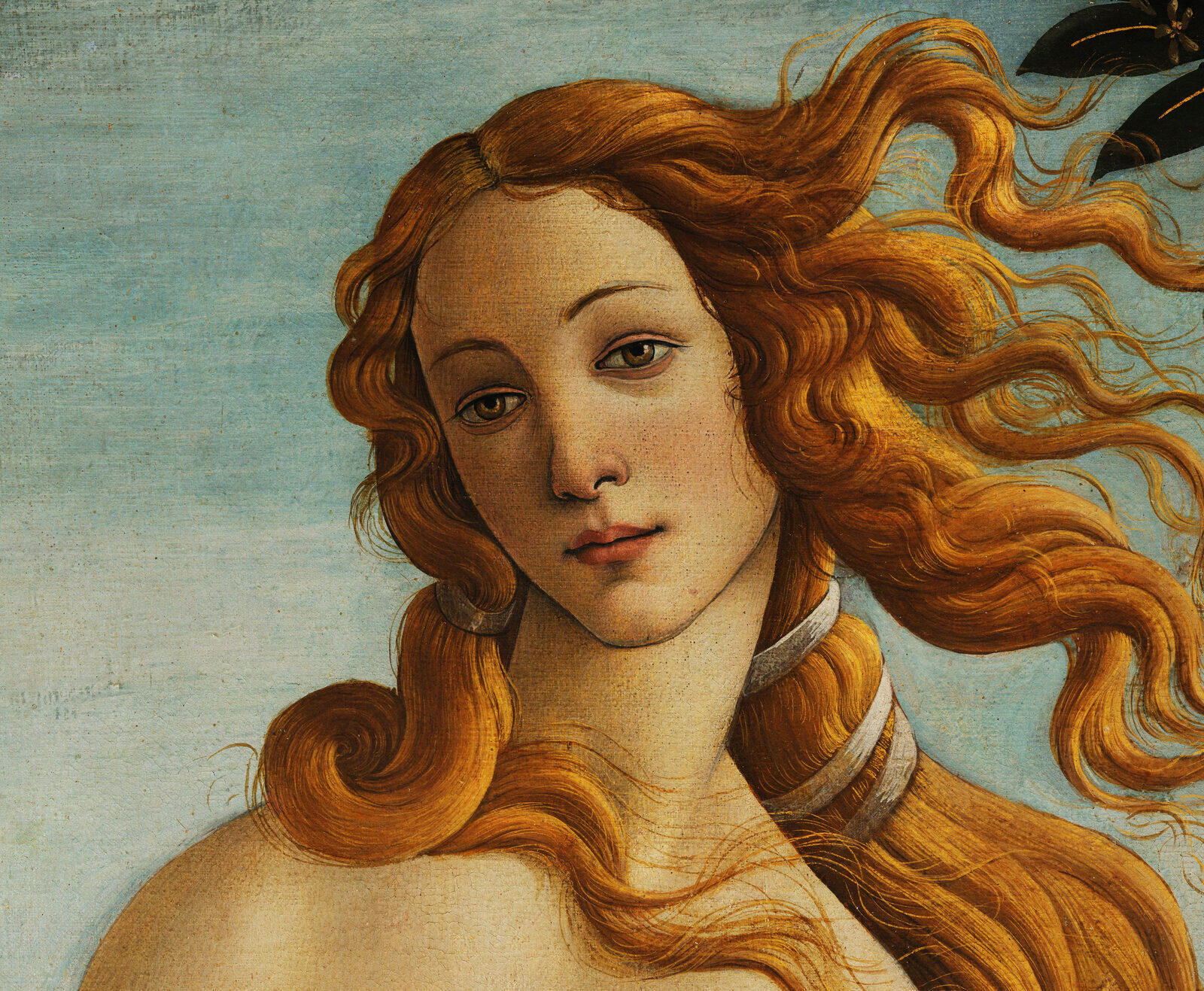
Rooms 10-14 in the first corridor hold the core of Botticelli's output: Primavera (c. 1477-82), commissioned for the Medici villa at Castello; The Birth of Venus (c. 1484-86); Pallas and the Centaur; the Adoration of the Magi, which contains his self-portrait in the right foreground; and the Return of Judith. Book in advance: this is the most visited section of one of Italy's most visited museums.
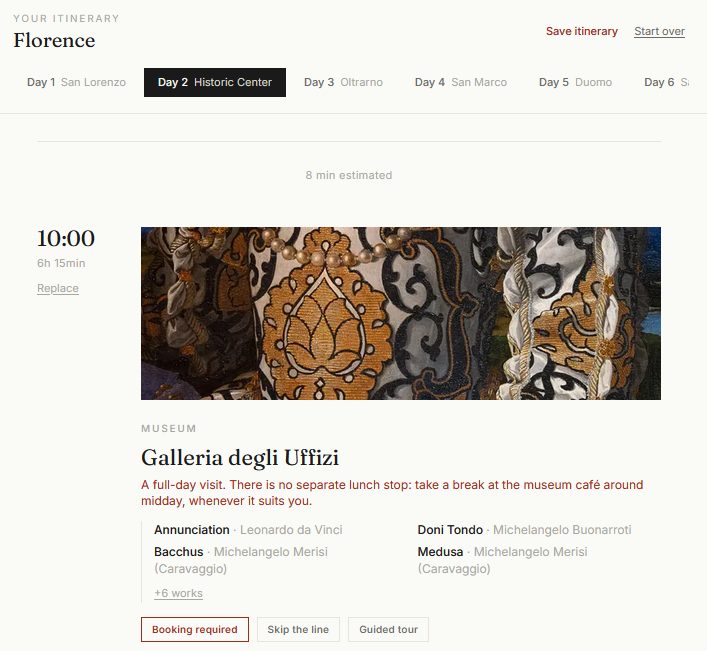
Book Uffizi skip-the-line tickets
Book a guided tour of the Uffizi
Essential church
Ognissanti: Saint Augustine and Botticelli's tomb
The Saint Augustine fresco (1480) hangs in the nave facing Ghirlandaio's Saint Jerome, painted the same year for the same church: a direct competition between the two painters that the Uffizi's room-by-room logic cannot recreate. Botticelli is buried here, in the right transept, beneath a simple tomb slab. Free to enter, ten minutes from the Uffizi, and almost always quiet.
Important museum
Palazzo Pitti: the Palatine Gallery
The Palatine Gallery across the Arno holds several Botticelli devotional works, including the Portrait of a Young Man and various Virgin and Child compositions. Less crowded than the Uffizi and worth adding if you have a full day. The combined Uffizi and Accademia ticket does not include Pitti; it requires a separate entry.
Book Palazzo Pitti tickets
Book a guided tour of Palazzo Pitti
Medici context
The Medici villas and the world of the Primavera
Primavera was commissioned for Lorenzo di Pierfrancesco de' Medici's villa at Castello, outside Florence. The Birth of Venus was likely made for the same patron. Both hung in private Medici spaces before entering the Uffizi: not public altarpieces but pictures for educated, humanist audiences. The Medici trail through Florence (Palazzo Medici Riccardi, San Lorenzo, the Laurentian Library) fills in the patronage world the map locates but cannot narrate.
Workshop context
Santa Maria Novella and the competitive Florentine scene
Santa Maria Novella contains Masaccio's Trinity alongside works by Ghirlandaio, Filippino Lippi and others who formed Botticelli's immediate competitive context. A walk through the church restores the visual world in which Botticelli learned to paint and against which his particular elegance was defined. Entry requires a ticket (the church is managed as a museum complex, not a free devotional space).
Practical note
Visit the Uffizi Botticelli rooms early
Rooms 10-14 are the most congested section of the Uffizi. By mid-morning tour groups fill the space and make sustained looking difficult. A first slot (opening time, typically 9am) or a late afternoon slot gives significantly more room. If you have a guided tour, confirm that the guide allocates time specifically to the Botticelli rooms rather than treating them as a pass-through.