Artist page

Where to See Hieronymus Bosch

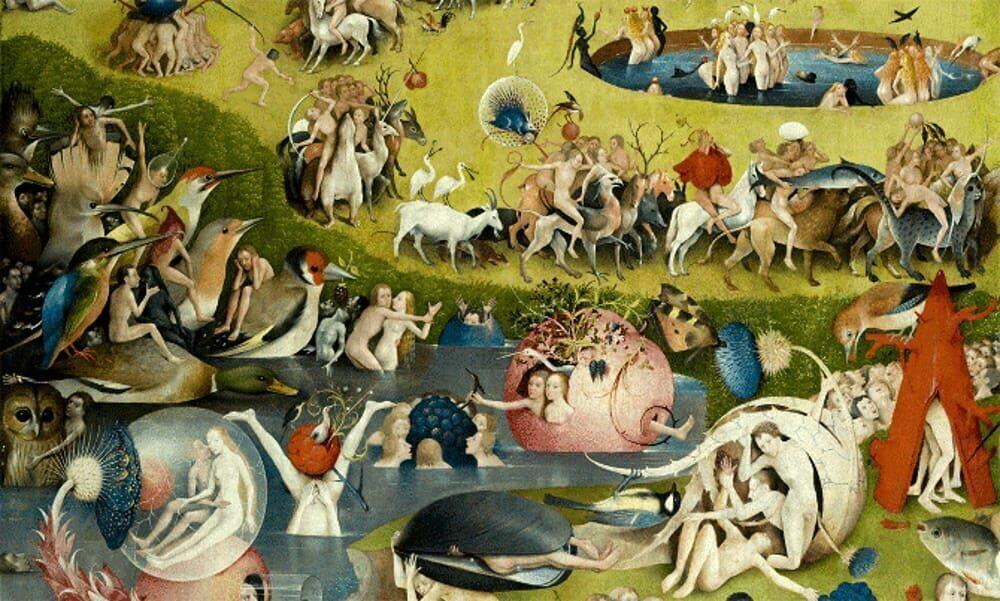
Bosch's surviving paintings are scattered across a handful of European museums, with the strongest concentration at the Museo del Prado in Madrid, which holds the Garden of Earthly Delights, the Haywain Triptych, and the Table of the Seven Deadly Sins. Other essential works hang in the Gemäldegalerie Berlin, Palazzo Ducale in Venice, the Museu Nacional de Arte Antiga in Lisbon, and Museum Boijmans Van Beuningen in Rotterdam. In his hometown of 's-Hertogenbosch, the Jheronimus Bosch Art Center presents the full oeuvre in reproduction alongside biographical context.

Use this page to locate every major Bosch site on the ArtAtlas interactive map, find practical booking advice for the key museums, and plan visits across the cities that hold his work.

Detail from Hieronymus Bosch's Garden of Earthly Delights

Explore Bosch on the map

Tap to activate map

Key museums for Hieronymus Bosch

ⓘ Opening hours and admission prices listed on this page are indicative and subject to change. Always verify current information on the official website of each venue before your visit.

Museo del Prado, Madrid

Rooms 56A and 57A, ground floor, Villanueva building – Book at least 2–3 days ahead for weekends

The Prado holds six works attributed to Bosch, making it the single most important museum for his art. Room 56A displays the Garden of Earthly Delights (c. 1490–1510), the Haywain Triptych (c. 1516), and the Adoration of the Magi (c. 1494). The Table of the Seven Deadly Sins (c. 1505–1510) and the Extraction of the Stone of Madness (c. 1501–1505) are nearby. These works entered the Spanish royal collection through Philip II, who was an avid Bosch collector. Allow at least 90 minutes just for the Bosch rooms, and visit early morning or late afternoon to avoid the densest crowds.

Book Museo del Prado ticketsPrado guided tour

Gemäldegalerie, Berlin

Gallery III, early Netherlandish section – less crowded than the Prado, walk-in usually fine

The Gemäldegalerie holds St. John on Patmos (c. 1489), with a grisaille Passion of Christ on the reverse, displayed in the early Netherlandish rooms alongside works by van Eyck and van der Weyden. The museum also holds a Last Judgment fragment attributed to Bosch's workshop. The Gemäldegalerie is at the Kulturforum, a 10-minute walk from Potsdamer Platz and near the Neue Nationalgalerie.

Book Gemäldegalerie Berlin tickets

Palazzo Ducale, Venice

Book online in advance, especially April–October – combined tickets available

The Palazzo Ducale holds Bosch's triptychs of the Hermit Saints (St. Jerome, St. Anthony, St. Giles) and the Crucifixion of St. Julia (also called Triptych of the Martyrdom of St. Liberata), both c. 1500–1504. These were part of Cardinal Grimani's collection, bequeathed to the Venetian Republic in 1523. The paintings are displayed in the upper rooms. The Gallerie dell'Accademia, a 15-minute walk away, holds two further Bosch works: The Vision of Tondal and a fragment from the Hell panel, also from the Grimani bequest.

Book Palazzo Ducale ticketsPalazzo Ducale guided tour

Museu Nacional de Arte Antiga, Lisbon

Second floor, Flemish painting gallery – free on Sundays until 14:00

The MNAA holds the Temptation of St. Anthony triptych (c. 1501), one of Bosch's most elaborate compositions. The central panel shows St. Anthony surrounded by demonic figures amid ruins and fire. The work entered Portuguese collections in the 16th century. The museum is in the Santos district, reachable by tram 15E from Praça do Comércio.

Visit Museu Nacional de Arte Antiga (official site)

Museum Boijmans Van Beuningen, Rotterdam

Currently partially closed for renovation; check website before visiting

The Boijmans holds The Pedlar (also known as The Wayfarer, c. 1500), painted on the exterior panels of the former Haywain in Rotterdam's version, and attributed drawings. When the main building reopens, these are displayed in the medieval and early modern Netherlandish section. The museum's Depot Boijmans Van Beuningen (the visible storage building) may have works on display during renovation. Rotterdam is approximately one hour from 's-Hertogenbosch by train.

Visit Museum Boijmans Van Beuningen (official site)

Kunsthistorisches Museum, Vienna

Picture Gallery, first floor – Book online to skip queues

The KHM holds a Christ Carrying the Cross attributed to Bosch or close follower, and the Last Judgment triptych (attribution debated, sometimes given to a Bosch follower). These are displayed in the early Netherlandish rooms alongside Bruegel's famous cycle. A visit to the KHM naturally pairs Bosch with Bruegel the Elder, whose Hunters in the Snow and Tower of Babel are in adjacent galleries.

Book Kunsthistorisches Museum Vienna tickets

Jheronimus Bosch Art Center, 's-Hertogenbosch

Open daily 10:00–17:00, closed Mondays in winter – no advance booking needed

Located in the former Sint-Jacobskerk in Bosch's hometown, the Art Center does not hold original paintings but presents full-scale reproductions of all known Bosch works, organized thematically. It serves as an essential orientation visit: you can study the complete oeuvre in one place before traveling to see originals in Madrid, Venice, or Lisbon. The center also covers Bosch's biography, his membership in the Brotherhood of Our Lady, and the cultural world of late-medieval Brabant. Sint-Janskathedraal, a few minutes' walk away, preserves the font where Bosch may have been baptized.

Visit Jheronimus Bosch Art Center (official site)

Museum voor Schone Kunsten, Ghent

First floor, Flemish primitives section

The Ghent museum holds Christ Carrying the Cross (c. 1510–1516), a striking close-up composition of grotesque faces pressing against Christ, quite different from the narrative panoramas of Bosch's triptychs. Some scholars attribute this to a follower rather than to Bosch himself, but it remains a major work in the Bosch orbit. The museum is a 20-minute walk from Sint-Baafskathedraal, home to the van Eyck Ghent Altarpiece.

Visit Museum voor Schone Kunsten Ghent (official site)
How to approach Bosch

With only about 25 surviving paintings, Bosch's oeuvre is small enough to plan around. Start with Madrid's Prado (six works), then consider Venice, Lisbon, Berlin, and Vienna as secondary clusters. Attribution debates affect several paintings, so distinguishing between autograph works, workshop pieces, and follower copies is important.

  • Start with the Prado: it holds the core triptychs and moral allegories, including the Garden of Earthly Delights and the Haywain.
  • Visit 's-Hertogenbosch for context: the Jheronimus Bosch Art Center and Sint-Janskathedraal connect the work to Bosch's life and the religious culture of 15th-century Brabant.
  • Combine Bosch with Bruegel: Vienna's Kunsthistorisches Museum lets you see both artists in adjacent galleries, tracing the line from Bosch's moral allegories to Bruegel's panoramic social observations.
  • Check attribution status: works in Ghent, Vienna, and some other museums carry disputed attributions. The ArtAtlas map notes these distinctions where relevant.

Main Bosch clusters

Madrid

Museo del Prado: the essential Bosch collection

Six Bosch paintings in Rooms 56A–57A, including the Garden of Earthly Delights, Haywain Triptych, and Adoration of the Magi. Philip II's collecting passion made Madrid the world capital of Bosch. Book timed entry at least 2–3 days ahead for weekends. Visit early morning for the quietest experience in the Bosch galleries.

's-Hertogenbosch

Bosch's hometown: Art Center and Sint-Janskathedraal

The Jheronimus Bosch Art Center (in the former Sint-Jacobskerk) presents full-scale reproductions of every known Bosch work, organized by theme. Walk to Sint-Janskathedraal to see the church Bosch knew, then explore the market square where he lived. No original paintings survive in the city, but the biographical context is essential.

Venice – Lisbon – Berlin

Secondary clusters across Europe

Venice's Palazzo Ducale holds two triptychs from the Grimani collection. Lisbon's MNAA has the elaborate Temptation of St. Anthony. Berlin's Gemäldegalerie displays St. John on Patmos. Each museum adds one or two major works and a different collecting history. Plan these as additions to the Madrid core.

Best city pages for Bosch

Madrid

Home to the Prado's six Bosch paintings. The Madrid city page covers the full museum district, including practical booking advice for the Prado, nearby stops at the Thyssen-Bornemisza and Reina Sofía, and walking routes between sites.

Open the full ArtAtlas map

See every geolocated Bosch work at once: Madrid, Venice, Lisbon, Berlin, Vienna, Ghent, Rotterdam, and 's-Hertogenbosch. Filter by museum or combine with other artists like Bruegel for multi-stop trip planning.

Continue with Bruegel

Bruegel the Elder admired and extended Bosch's visual vocabulary. Vienna's Kunsthistorisches Museum displays both artists in adjacent rooms, making it the ideal city for comparing their approaches to allegory, landscape, and moral narrative.

FAQ

Where is Bosch's Garden of Earthly Delights?

In the Museo del Prado, Madrid, Room 56A on the ground floor of the Villanueva building. The triptych is displayed open, with a mirror positioned so you can also see the grisaille exterior panels depicting the third day of Creation.

Do I need to book the Prado in advance to see Bosch?

Yes, booking 2–3 days ahead is recommended, especially for weekends and peak season (March through June, September through October). Timed-entry tickets reduce queuing. The Bosch rooms can get crowded midday; aim for the first hour after opening or late afternoon.
Book Prado tickets here.

Are there original Bosch paintings in 's-Hertogenbosch?

No. The Jheronimus Bosch Art Center presents high-quality reproductions of the full oeuvre, not originals. The value of visiting is biographical and contextual: you see the city where Bosch lived and worked, the churches he knew, and the complete scope of his paintings presented thematically in one place.

Which Bosch works are in Venice?

The Palazzo Ducale holds two triptychs: the Hermit Saints (featuring St. Jerome, St. Anthony, and St. Giles) and the Crucifixion of St. Julia, both c. 1500–1504. They came from Cardinal Grimani's collection. The Gallerie dell'Accademia, a 15-minute walk away, holds two further Bosch works from the same Grimani bequest. Venice is therefore the second most important city in Europe for Bosch after Madrid.
Book Palazzo Ducale tickets.

Can I combine Bosch and Bruegel in one trip?

Yes. The most efficient pairing is Vienna's Kunsthistorisches Museum, which holds works attributed to Bosch alongside Bruegel's major paintings in adjacent galleries. You can also connect 's-Hertogenbosch (Bosch's hometown) with Brussels and Antwerp for Bruegel: the train between these Dutch and Belgian cities takes 1–2 hours.

FAQ

Why use a map for Bosch?

Because Bosch’s works are inseparable from collection history, museum context, and the religious cultures that shaped their meaning. Cities and institutions change how his art is perceived and understood.

Is Bosch mainly a painter on this page?

Yes. Painting remains central, but the page is built to include triptychs, museum collections, churches, and major sites that illuminate the broader geography of his work and reception.

Where should I start?

Start with Madrid. It is the primary city for understanding Bosch’s art in relation to major holdings, dynastic collecting, moral allegory, and the enduring force of his visual imagination.

Bosch, where painting learned to hallucinate morality.

If other painters persuade through order, Bosch unsettles through proliferation. Bodies mutate, objects conspire, sin becomes architecture, and meaning never stays still for long. That logic becomes fully intelligible only when it is returned to the museums, cities, and religious imagination that made it possible.